Marrakech can be exciting for children: tiled courtyards, garden paths, fruit stalls, fountains, horse-drawn carriages and the evening energy of Jemaa el-Fna all turn the city into a sensory experience. It can also become tiring quickly. Heat, motorbikes, uneven medina lanes, noise and long palace visits are harder for a child than for an adult building a holiday checklist.
The solution is not to avoid the old city. It is to plan Marrakech at a family pace: one concentrated cultural visit in the morning, a proper midday reset, and one flexible activity later. Three days gives most families enough variety without making every hour a negotiation.
This guide focuses specifically on visiting Marrakech with kids. For an adult-oriented overview of neighborhoods and accommodation, use our where to stay in Marrakech guide.
Is Marrakech Good for Families?
Marrakech works best for families who prepare for its intensity. Moroccan family life is visible everywhere, and children are usually welcomed warmly in cafes and restaurants. The city also offers a useful mix of short cultural visits and outdoor breaks.
The challenging part is movement. Pavements may be narrow or interrupted, the medina surface is not consistently smooth, and scooters can pass close in busy lanes. Summer heat changes what is reasonable, especially with babies or toddlers. A hotel pool, courtyard, shaded garden or quiet room is not wasted holiday time; it is part of a workable plan.
The official Marrakech tourism guide has a useful overview of family activities in Marrakech. Treat any listed times and prices as details to recheck directly with the venue.
How Many Days Do You Need With Children?
Three days is a good first family visit:
- One day: a garden, a short medina walk and Jemaa el-Fna before it becomes too late.
- Two days: add one palace or museum and time in Gueliz.
- Three days: include a slower activity, pool break or easy excursion.
- Four or more days: alternate city days with a mountain, countryside or resort day.
Do not count arrival day as a full sightseeing day if your flight lands late or children have crossed time zones. Finding the accommodation inside the medina, eating and sleeping may be enough.
Where to Stay in Marrakech With Kids
Medina: atmosphere with access questions
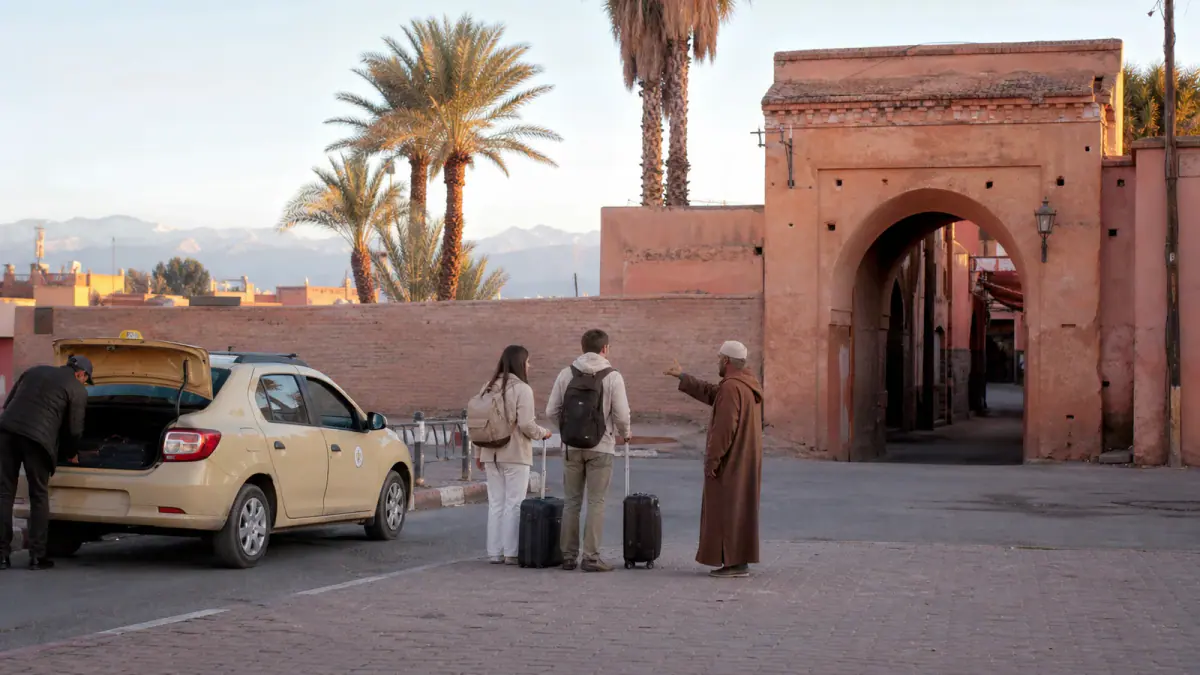
A riad can be magical for children, particularly around a courtyard. However, “in the medina” can mean two minutes or twenty minutes from a vehicle-access point. Ask the property for the exact walking time with luggage, whether a porter is available, and whether the final lanes are comfortable after dark.
Check railings, steep stairs, unfenced plunge pools and rooftop edges if traveling with a toddler. Traditional design is not automatically childproof. Also ask whether the family room is genuinely connected or simply two rooms near each other.
Gueliz: easier transport and daily logistics
Gueliz offers wider streets, easier taxi access, supermarkets, pharmacies and modern restaurants. It is a practical base for families using a stroller or making frequent returns to the room.
You give up the experience of sleeping inside the old city, but you gain simpler arrivals and departures. A short taxi to the medina can be a fair exchange.
Hivernage and outer resorts
Hivernage suits families wanting larger hotels and easier roads. Resorts beyond the center may offer space and pools, but confirm the shuttle timetable and cost. A low room price loses value if every meal and city visit needs a private transfer.
Before booking, ask about pool supervision, cot availability, lift access, breakfast time, air-conditioning, laundry and the nearest pharmacy.
A Family-Paced Three-Day Marrakech Itinerary
Day 1: orientation, a garden and early Jemaa el-Fna
Keep the first morning light. Walk around your accommodation, identify the nearest vehicle-access point and save its map pin. If staying in the medina, let children notice doors, bread ovens, cats and craft materials without turning the walk into a long history lecture.
Choose one garden for late morning. Jardin Majorelle has vivid color and manageable paths, but timed tickets should be booked through the official Jardin Majorelle website. The garden states that it is wheelchair accessible; families should still consider their own stroller width and the busiest visitor periods.
Return for lunch and rest. In warmer months, this break should cover the hottest part of the day.
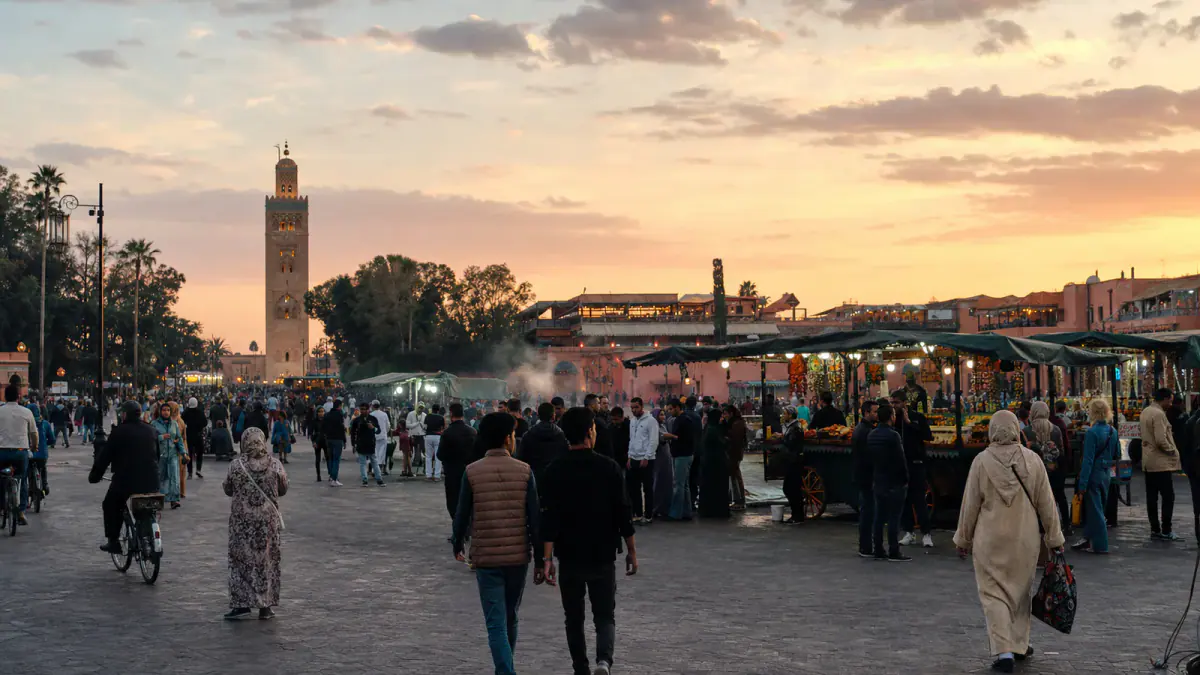
Go to Jemaa el-Fna in the late afternoon, before young children are overtired. Watch the square from the edge or a terrace first. It becomes louder and denser after sunset, so leaving early is sensible, not a missed experience.
Avoid animal encounters that make you uncomfortable. Do not let anyone place an animal on a child for a photograph without clear consent and a price agreed beforehand. A family can enjoy the music, food-stall movement and atmosphere without participating in every performance.
Day 2: one historic interior and a quiet courtyard
Choose either Bahia Palace, Ben Youssef Madrasa or another historic interior—not all of them. The architecture is easier for children to absorb when they have a mission: find three tile patterns, compare painted ceilings or draw a courtyard afterward.
Read our Marrakech historic architecture guide to choose the building that best matches your interests. Verify opening information on the official venue or tourism page before leaving.
After the visit, take a shaded break. A courtyard museum or garden can work better than more souk shopping. The official tourism directory lists Marrakech museums, parks and monuments, but schedules change.
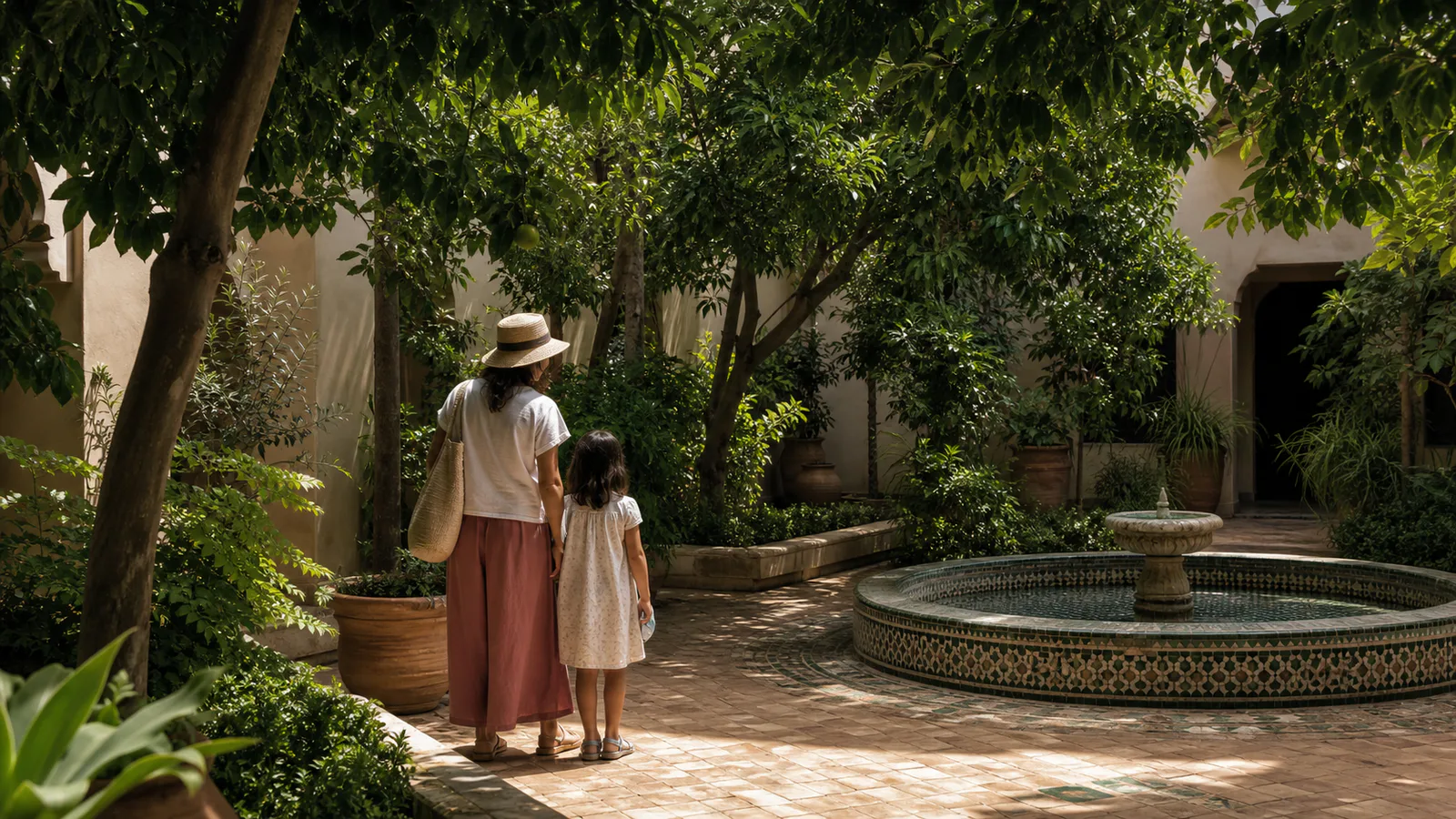
An illustrative family rest stop in a Marrakech-style courtyard; it does not depict a specific named garden.
Spend the late afternoon in Gueliz or at your accommodation pool. Families do not need to return to the main square every night. A simple dinner near the hotel can protect the next day.
Day 3: choose movement or recovery
For an easy outdoor morning, consider Menara Gardens, Cyber Park or another open space after confirming current access. The Marrakech tourism board’s garden overview provides ideas, though details should be verified.
Older children may enjoy a cooking workshop if the provider states the minimum age, allergy policy and level of hands-on participation. A workshop where children only watch adults for three hours is not automatically family-friendly.
Alternatively, use the day as recovery: swim, have a long lunch, buy a small souvenir and revisit one favorite place. If the family still has energy, an organized excursion can work, but ask about driving time, seat belts, car seats, toilets and walking difficulty before paying.
Imlil can introduce mountain landscapes, but it is not a casual pushchair stroll. Use our Imlil travel guide to understand terrain and transport before choosing it as a family day trip.
Medina Safety With Children
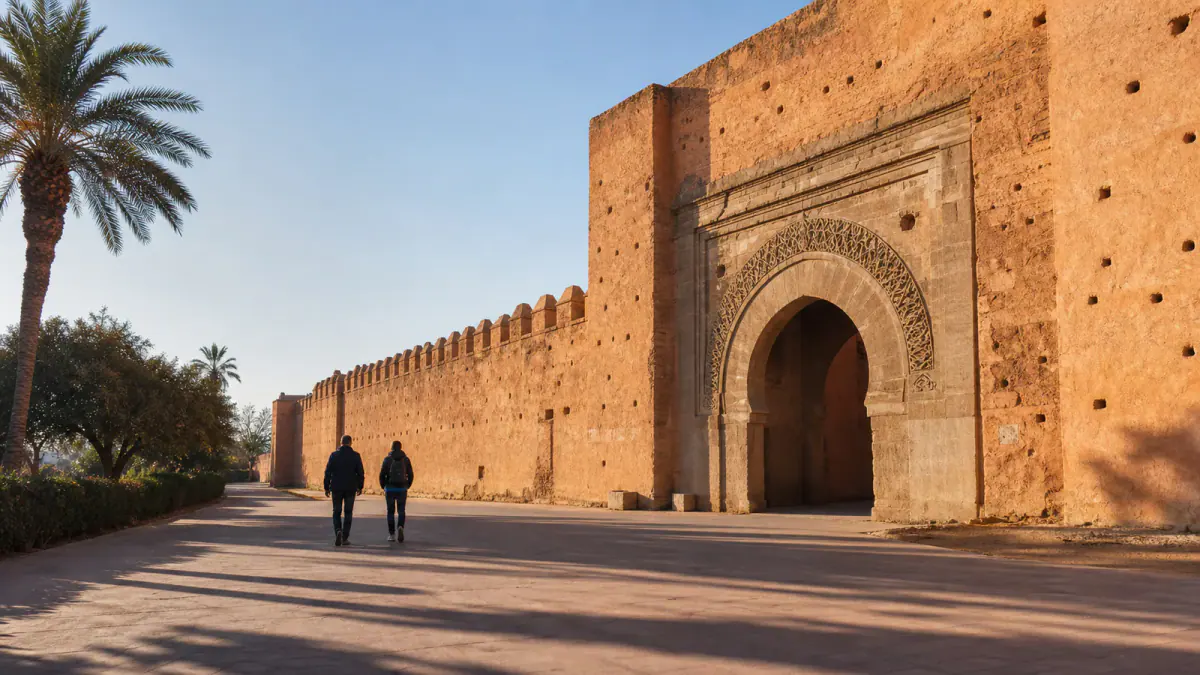
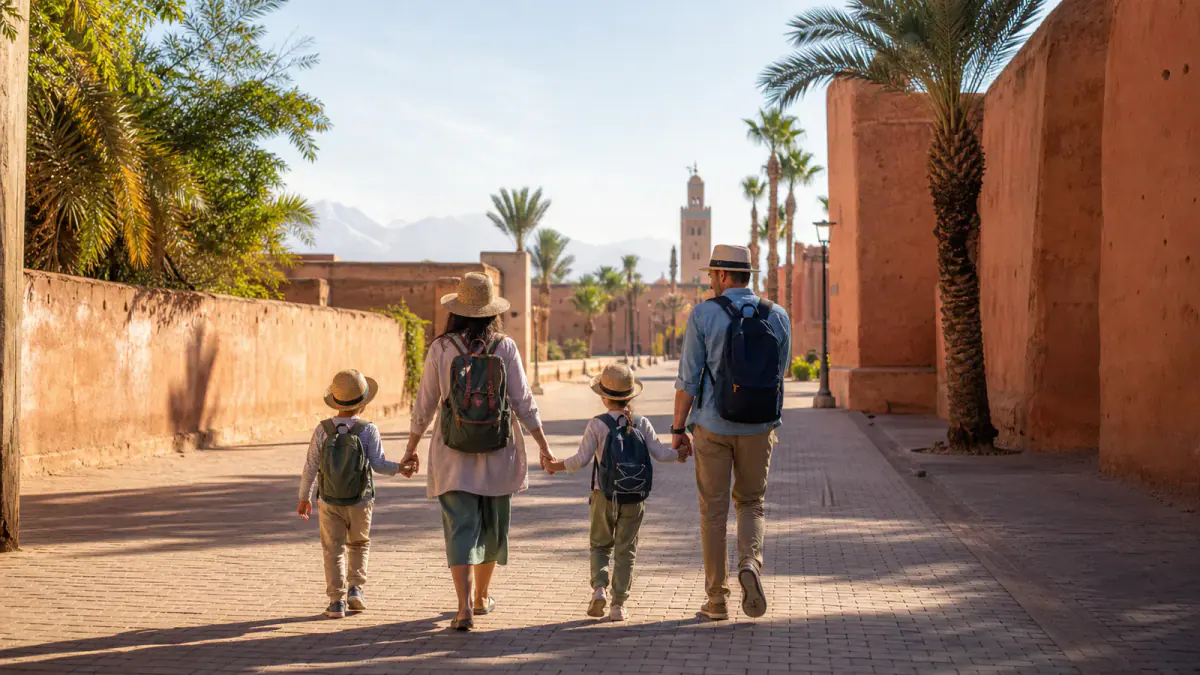
The medina is shared space, not a pedestrian theme park. Scooters, bicycles, carts, residents and visitors use the same lanes. Keep young children on the wall side where possible and hold hands in busy passages. Adults should not walk while staring continuously at a phone map.
Set a simple plan in case the family separates. Older children should know the accommodation name and carry a written phone number. Younger children can have a card in a zipped pocket. Choose an obvious meeting point rather than saying “we will find each other.”
Avoid displaying passports and large amounts of cash. The official tourism site publishes useful Marrakech contacts; save current emergency details before the trip.
Strollers, Baby Carriers and Accessibility
A sturdy narrow stroller can work in Gueliz, airports and some gardens, but medina lanes include thresholds, broken surfaces and crowds. A carrier is often easier for short old-city walks, provided the temperature is safe for both adult and baby.
Do not assume a riad has a lift. Ask about every staircase between the entrance, room, breakfast area and roof. If someone in the family requires step-free access, request a precise route from the property and venue rather than relying only on an accessibility icon.
Taxis may not have child seats. Families needing a specific restraint should arrange it in advance with a reputable transfer company and confirm the actual seat type—not just the words “child seat.”
Heat, Hydration and Air Quality
In hot weather, schedule outdoor walking early and shorten it aggressively. Shade does not remove heat risk. Children need water offered regularly rather than only when they ask.
Use hats, light breathable clothing and sunscreen. A wet cloth and a calm indoor lunch can make a substantial difference. Never leave a child in a parked vehicle, even briefly.
Winter days can be mild while evenings feel cold, especially in courtyard buildings. Pack a layer and ask whether the room is heated, not only air-conditioned.
Food smoke and crowded air around Jemaa el-Fna may bother children with asthma or sensory sensitivities. View the square from a terrace or go earlier when it is calmer.
Eating in Marrakech With Kids
Moroccan food offers many shareable choices: bread, grilled meats, couscous, tagines, soups, fruit and simple salads. Ask whether a dish is spicy rather than assuming; flavor from cumin, ginger or preserved lemon does not necessarily mean chili heat.
Choose busy restaurants with good food turnover, wash hands before eating and use bottled or safely filtered water according to your family’s health needs. If a child has allergies, carry a translated card naming the allergen and explaining cross-contact. A verbal “no nuts” may not cover oils, garnishes or shared preparation.
Breakfast can be an easy introduction: msemen, bread, yogurt, eggs and fruit. Our Moroccan msemen guide can help children recognize the flaky flatbread.
Keep familiar snacks for transfer days and queues. A hungry child is unlikely to appreciate the perfect cultural lunch selected by an adult.
Souks and Shopping as a Family
Give each child a small fixed souvenir budget. This turns bargaining into a practical lesson and avoids repeated negotiations. Adults should confirm whether a price is per item or for the group before accepting.
Ask before touching fragile crafts or photographing makers. Do not promise a purchase simply to keep a demonstration going. If the interaction becomes uncomfortable, say no politely and leave.
For deeper context on workshops, bargaining and respectful photography, read our Marrakech culture and etiquette guide.
Activities to Assess Carefully
Horse-drawn carriages
If considering a carriage, inspect the horse’s condition and decline if welfare concerns you. Agree on route, duration and total price before boarding.
Camel or quad-bike excursions
Ask for operator insurance, age limits, helmets, safety briefing and transfer restraints. A promotional photo is not evidence of a safe child-sized helmet. Families can skip an activity when equipment is unsuitable.
Hammams
Traditional hammams and hotel spas have different rules and levels of privacy. Ask whether children are admitted, which hours apply, what swimwear or washing items are required, and whether the experience is suitable for a child who dislikes heat or touch.
Atlas and Agafay trips
Confirm total vehicle time, road conditions, shade, toilet stops and the exact walking component. “Family-friendly” is too vague; ask what a five-year-old will physically do.
Visiting Marrakech With a Baby
With a baby, make the plan even smaller. One outing in the morning and one near the accommodation later is enough. Choose lodging for quiet sleep, temperature control and easy access rather than rooftop appearance.
Ask whether bottled water can be heated safely, whether a mini-fridge is available and where nappies or formula can be purchased. Bring more essential supplies than you would for a city with a familiar retail system.
Protect feeding and nap routines where possible. Marrakech will still be there after the nap.
Visiting With Teenagers
Teenagers often respond better to choice than compulsory sightseeing. Offer two options: a photography-focused medina walk or a garden; a cooking workshop or design museum; a pool afternoon or a carefully selected market budget.
Discuss photography ethics. A visually interesting person is not public decoration, and payment does not replace consent. Encourage teens to create a small visual story about patterns, doors, food preparation or public space instead of collecting close portraits.
What to Pack
Bring:
- refillable bottles and a plan for safe water;
- hats, sunscreen and light layers;
- closed comfortable shoes;
- hand sanitizer and basic medicines recommended by your clinician;
- a small first-aid kit;
- child identification and emergency contacts;
- familiar snacks;
- a carrier or suitable stroller;
- downloaded maps and accommodation pins;
- plug adapters and charging power.
Medication rules and travel-health advice depend on your country and child. Consult an appropriate official health source or clinician rather than a blog for individual medical decisions.
Common Family Mistakes
- Planning adult-length days with no midday rest.
- Booking a beautiful riad without checking vehicle access or stairs.
- Assuming every taxi provides a child restraint.
- Keeping children in Jemaa el-Fna after they become overwhelmed.
- Scheduling a long excursion immediately after arrival.
- Treating pools, animals or quad bikes as safe without checking supervision and equipment.
- Trying to recover the value of a trip by seeing every paid attraction.
The best family itinerary is the one everyone can still enjoy on day three.
Final Takeaway
Marrakech with kids works when adults reduce the pace. Pick one meaningful cultural stop, one restorative space and one flexible family activity each day. Verify access and opening details, protect the midday break, and make transport safety questions specific.
Children do not need to understand every dynasty to remember Marrakech. They may remember a fountain, warm bread, a blue garden wall or the moment the square filled with sound. A thoughtful itinerary leaves room for those memories while keeping the family comfortable.