Rabat is one of the easiest worthwhile day trips from Casablanca. The two cities are linked by frequent rail services, Rabat’s central station opens directly onto the walkable Ville Nouvelle, and the capital’s main historic areas fit into a day without the exhausting pace required in a larger medina.
The key is to plan the journey around stations and return time—not to force every Rabat attraction into eight hours. This guide covers that door-to-door logic: which Casablanca station to use, where to get off in Rabat, a realistic route, what to do with luggage, and which stop to remove when time runs short.
If you are already sleeping in Rabat and only need the city route, use our dedicated self-guided one-day Rabat itinerary instead. This page is specifically for a same-day rail trip from Casablanca.
Rabat Day Trip at a Glance
- Best transport: Train from Casa Port or Casa Voyageurs.
- Best Rabat arrival for sightseeing: Rabat Ville in most cases.
- Comfortable visit length: About seven to nine hours in Rabat, excluding rail travel.
- Core route: Hassan Tower and the Mohammed V Mausoleum, Kasbah of the Oudayas, medina lunch, then one afternoon choice.
- Best afternoon choice for history: Chellah.
- Best afternoon choice for an easier day: Mohammed VI Museum or a slow central walk.
- What not to combine: Chellah, a long beach stop, Salé and multiple museums in one day.
- Return rule: Choose a target train and keep a later backup in mind.
Train times, fares and operating details change. Check the official ONCF Voyages planner for your exact date rather than relying on a timetable copied into a blog post.
Is Rabat Worth a Day Trip from Casablanca?
Yes, especially if your Morocco trip is based in Casablanca for business, a flight connection or family. Rabat offers a different urban experience without requiring another hotel check-in.
Casablanca is larger, faster and more commercially intense. Rabat is the political capital, with broad central avenues, formal institutions, a manageable medina, Atlantic air and historic sites spread around the Bouregreg estuary. The Moroccan National Tourist Office’s Rabat overview highlights the same combination of Oudayas, Chellah, coast and modern city.
A day trip is a good fit if you:
- prefer independent rail travel to an organized tour;
- want architecture and history without a difficult medina;
- are comfortable walking several kilometers;
- can leave Casablanca in the morning and return after dinner;
- do not need to see every museum or explore Salé in depth.
Stay overnight instead if you want an unhurried Chellah visit, beach time, the contemporary art museum, the botanical garden and a full walk in Salé. Our broader Rabat two-day travel guide covers neighborhoods and accommodation.
Choosing Your Casablanca Station
Casablanca has several railway stations, and choosing the nearest useful departure point saves more time than chasing a train that leaves a few minutes earlier.
Casa Port
Casa Port is usually convenient when staying around the Old Medina, United Nations Square, the city center or the port side of Casablanca. It is a terminus, which can make the boarding experience easier to understand: enter the concourse, check the departure board and find the platform.
Not every service pattern is identical, so confirm that the train shown in the planner serves Rabat. Do not assume that a schedule seen for a weekday applies on a holiday or during Ramadan.
Casa Voyageurs
Casa Voyageurs is the main interchange for many long-distance routes. It may be the better choice if you are staying east of the center, arriving on another train, or connecting from the airport route.
The station is busier than Casa Port. Arrive with enough time to find the correct platform, especially if you need to collect a ticket or have not used Moroccan rail before.
Do Not Depart from the Airport Without Checking the Connection
Mohammed V International Airport is not on the direct Casablanca–Rabat city service. A same-day trip immediately after landing may involve a transfer and leave you carrying luggage. Unless your arrival is early and your plans are flexible, go to your Casablanca accommodation first or travel onward as part of a multi-city itinerary.
Buying the Train Ticket
Use ONCF’s official website or station ticket office. Search using the station names shown in the planner, not simply “Casablanca” and “Rabat,” because the city has multiple choices.
Before payment, verify:
- departure station;
- arrival station;
- travel date;
- departure time;
- train number or service;
- class;
- passenger details;
- change and refund rules.
Keep the ticket or QR code available throughout the journey. If it is on your phone, save a screenshot in case mobile data is weak and keep enough battery for the return.
First class can provide a quieter carriage and an assigned or more structured seating experience depending on the service. Second class is the ordinary choice and is suitable for this short intercity journey. The difference that matters most is not status but whether you value a calmer carriage during busy periods.
Avoid publishing a rigid “correct fare” in your notes. Prices can vary by service, class, purchase conditions and date. The amount in the official booking flow is the amount to trust.
Rabat Ville or Rabat Agdal?
For this itinerary, Rabat Ville is normally the most useful arrival. It sits on Avenue Mohammed V near the parliament area, central cafés, tram connections and the medina. You begin sightseeing almost immediately.
Rabat Agdal is a large modern station farther southwest. It makes sense if your first stop, accommodation or appointment is in Agdal or Hay Riad. For a classic day trip, getting off there usually adds another urban transfer before the historic route begins.
Check the stops shown on your selected train. If the service calls at both, do not leave the train at Agdal simply because it is the first Rabat station announced.
A Realistic Rabat Day-Trip Route
The route below assumes arrival at Rabat Ville in the morning and departure from the same station in the evening. It gives the major historic areas enough time without turning the visit into a race.
1. Rabat Ville to Hassan Tower
After leaving the station, orient yourself on Avenue Mohammed V. You can use the tram, take a petit taxi or walk toward the Hassan district. Walking lets you see the capital’s formal avenues, but it also consumes energy you may prefer to save for the historic sites.
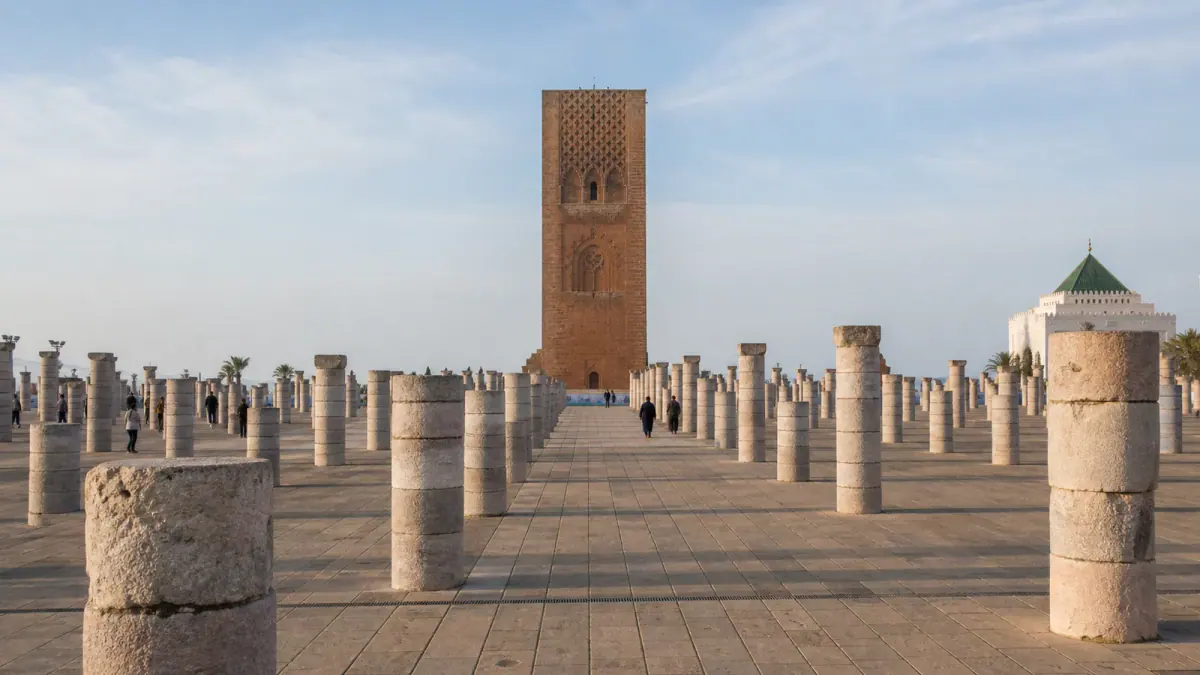
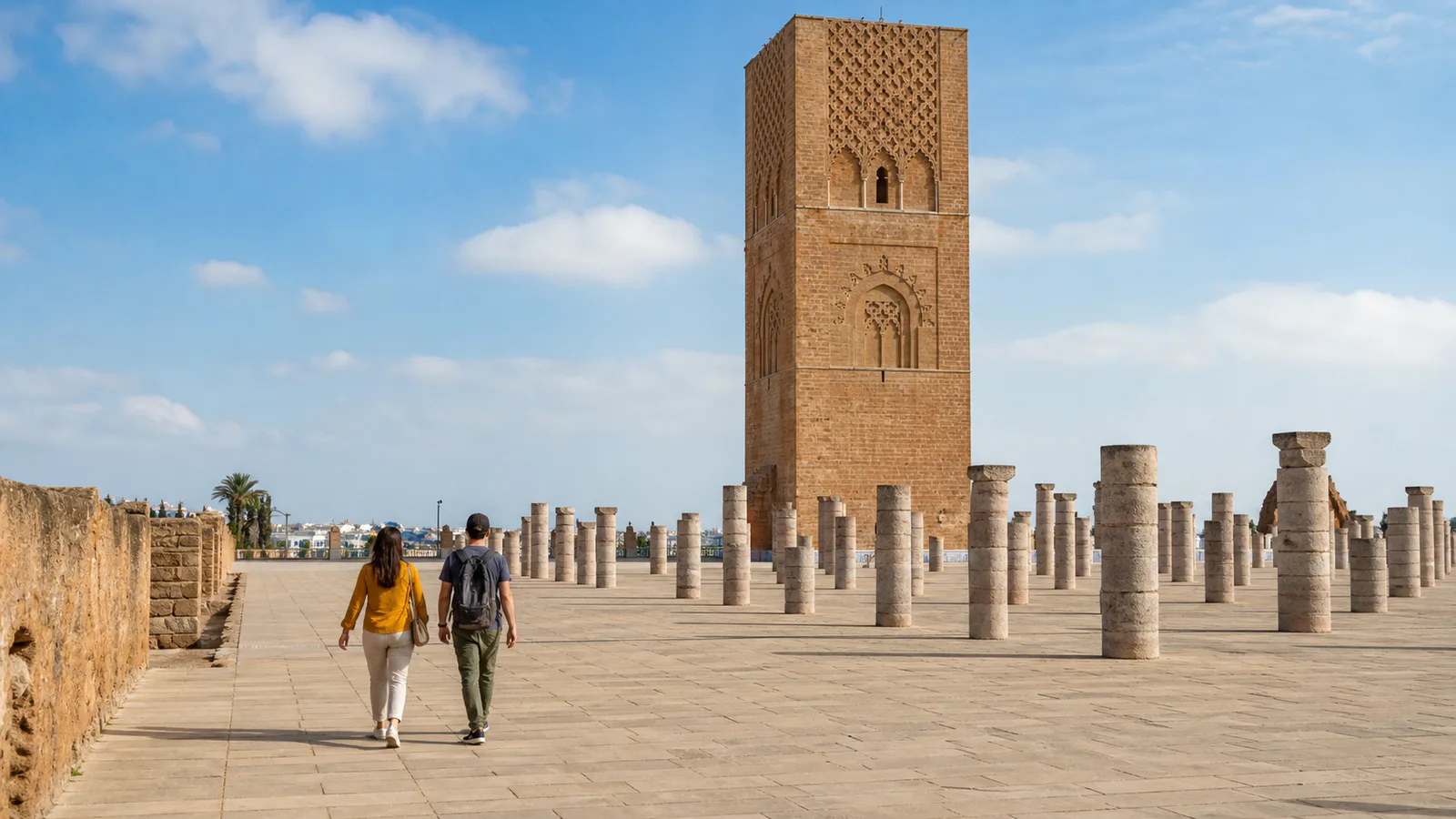
Hassan Tower is the unfinished minaret of an ambitious Almohad mosque project begun under Sultan Yaqub al-Mansur in the late twelfth century. The rows of columns across the esplanade help visitors read the intended scale of the mosque. The neighboring Mausoleum of Mohammed V belongs to a much later period and creates a striking architectural conversation across the same ceremonial space.
Allow about an hour, longer if an official opening or access condition changes the flow. Dress respectfully around the mausoleum, keep voices low and follow instructions on site.
2. Hassan Tower to the Kasbah of the Oudayas
The distance looks short across the Bouregreg side of central Rabat, but roads and elevation shape the route. A petit taxi is efficient if you want to protect your afternoon time. Walking is pleasant in mild weather if you are comfortable navigating.
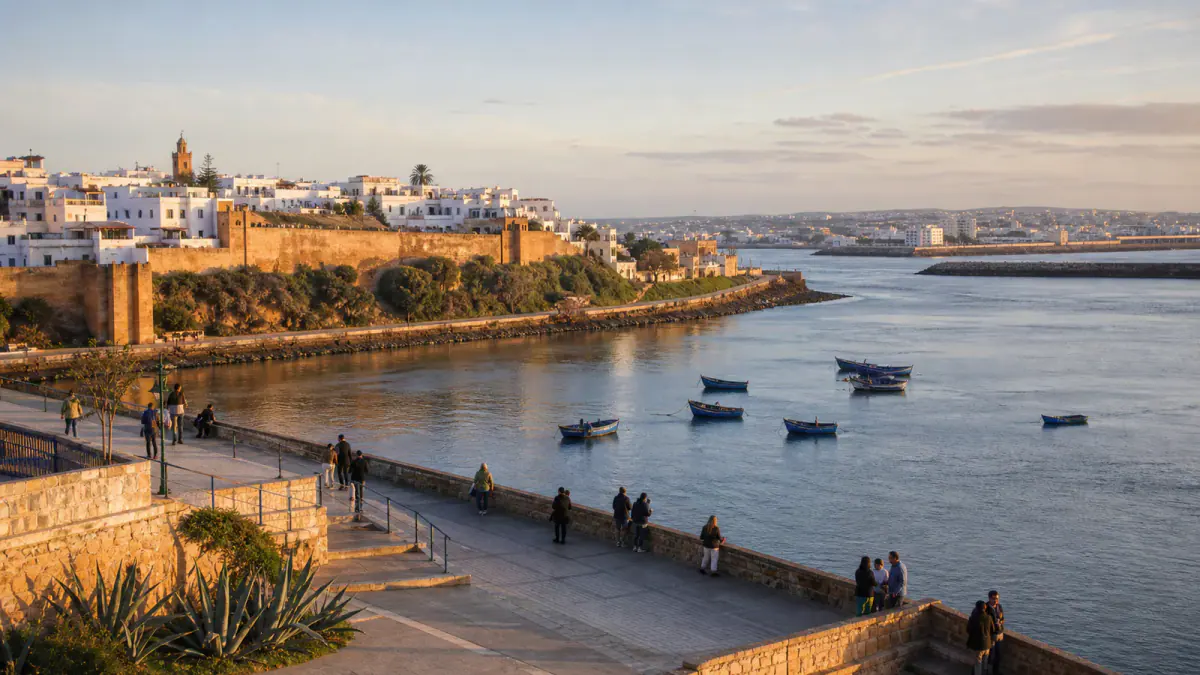
Enter the kasbah through Bab Oudaia and let the lanes lead toward the river-and-ocean viewpoint. The white-and-blue palette is only one layer of the place; the fortified setting, Andalusian garden and relationship to the estuary matter more than finding a particular photo lane.
People live in the kasbah. Do not photograph residents through doorways, block narrow paths for portraits or treat a private terrace as scenery. The viewpoint above the Bouregreg is a natural pause before lunch.
3. Walk Through the Medina for Lunch
From the Oudayas, continue toward Rabat’s medina. It is more rectilinear and generally easier to navigate than the old cities of Fes or Marrakech. Rue des Consuls is the best-known craft axis, but the visit does not need to become a shopping mission.
Choose lunch based on time and appetite. A full tagine can be slow; grilled fish, Moroccan salads, harira, sandwiches or a daily dish may suit a day trip better. Ask the price before ordering when it is not displayed and keep small cash.
Rabat’s medina is a useful place to reset because it connects the Oudayas side with the central city. After lunch, you can return toward Rabat Ville or continue to an afternoon site by taxi.
4. Choose One Afternoon Branch
Trying to complete every possible stop is the most common day-trip mistake. Choose one of these branches.
Option A: Chellah
Chellah is the strongest choice for travelers interested in archaeology, layered history and gardens. The walled site contains traces connected with ancient Sala and a later Marinid necropolis. Its atmosphere is spacious and contemplative, so it deserves more than a rushed photo stop.
Take a taxi from the medina or center, confirm the site is open, and allow enough time for walking on uneven surfaces. Then continue to Rabat Ville by taxi for your return.
This option creates the fullest historic day, but it also involves the most transport. Skip it if you arrived late, the weather is very hot, or someone in your group tires easily.
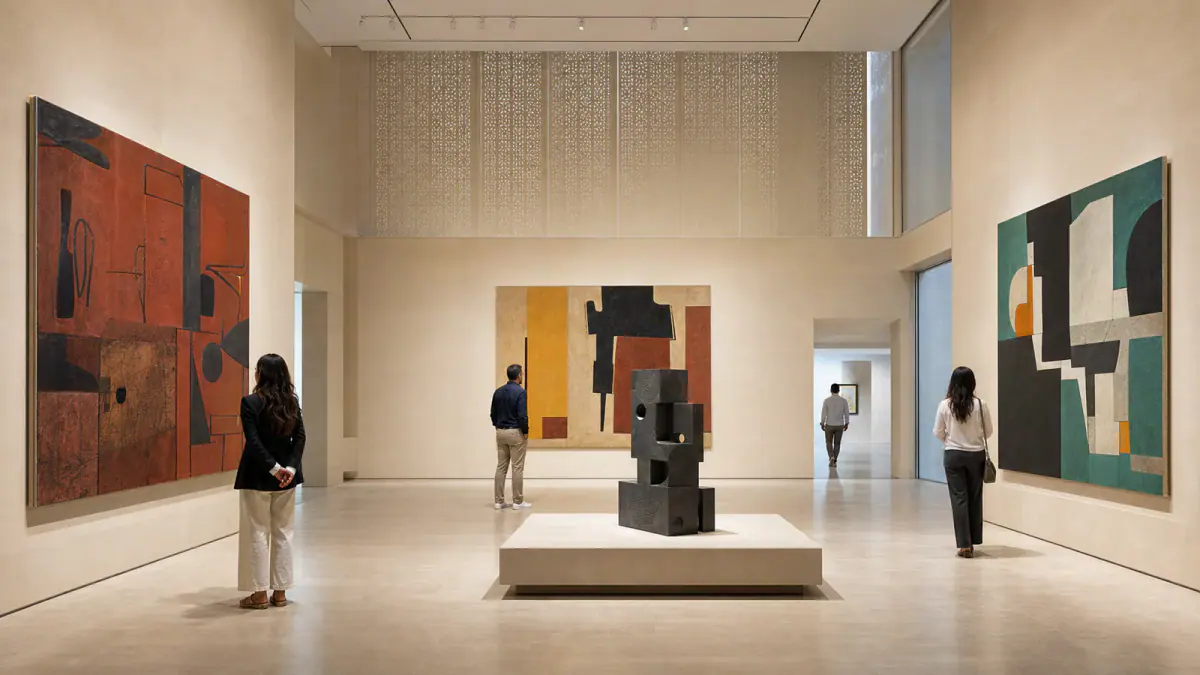
Option B: Mohammed VI Museum and the Ville Nouvelle
For a lower-stress day, return toward Avenue Mohammed V and choose a central museum, café or architectural walk. This keeps you close to Rabat Ville and reduces the chance of a tense return.
Museum opening days and temporary exhibitions can change, so check the institution directly. This branch works especially well in rain or strong afternoon heat.
Option C: Bouregreg and an Early Dinner
If the light and coastal atmosphere are what drew you to Rabat, stay near the river rather than crossing the city for Chellah. Walk a manageable part of the waterfront, sit for tea, then return to the station with time for an early dinner.
This is not the “incomplete” version. It is often the day people enjoy most.
Using the Rabat–Salé Tram
Rabat’s tram is useful for central corridors and removes the need to negotiate every short taxi ride. The official Rabat–Salé Tramway site provides a live route search, schedules, ticket information and network map.
The operator currently describes a two-line network linking Rabat and Salé, including railway and major activity areas. A single ticket has validation rules and a time window; check the official ticket page for the current fare and conditions.
Practical tram habits:
- Buy before boarding where required.
- Validate every time you board, including after a transfer.
- Keep the ticket until the trip ends.
- Check the direction as well as the line number.
- Do not assume the nearest-looking stop serves your destination.
- Give yourself extra time when learning the network.
The tram does not deliver you to every monument entrance. It works best as the backbone of the day, combined with walking and an occasional petit taxi.
Petit Taxis and Walking
Rabat’s blue petit taxis operate within the city. Ask the driver to use the meter where applicable. If a fixed amount is proposed, clarify it before departure. Carry small notes because change can be a recurring problem.
Official taxis may carry more than one passenger heading in a compatible direction. If you want a private, door-to-door arrangement, clarify that before getting in.
Central Rabat is walkable, but the complete historic route is not one compact pedestrian circuit. Hassan Tower, the Oudayas and Chellah form a broad triangle. A day visitor who insists on walking every connection may arrive at the best site too tired to enjoy it.
Wear shoes with grip for polished pavements, slopes and uneven historic surfaces. Atlantic wind can make Rabat cooler than Casablanca feels inland; bring a light layer outside summer.
What to Do with Luggage
The easiest day trip begins and ends at the same Casablanca accommodation, with only a small day bag. If you are checking out that morning, ask the hotel or riad to store your suitcase until you return.
Do not build the plan around assumed station lockers. Facilities, size limits and availability can change. Confirm directly with the station or ONCF before arriving. A large rolling suitcase will make the Oudayas lanes and Chellah surfaces unpleasant even if you can technically carry it.
If Rabat is actually your next overnight stop, do not treat the move as a day trip. Travel with your luggage, leave it at your Rabat accommodation, follow a shorter afternoon route and continue the next day.
Return-Train Strategy
The return deserves as much attention as the outward journey.
Choose a preferred departure before leaving Casablanca, then note a later service that could work if lunch or transport takes longer than expected. Whether a ticket can be changed depends on its conditions; a later train is not automatically interchangeable.
Aim to reach Rabat Ville well before departure. The buffer gives you time to:
- confirm the platform;
- buy food or water;
- handle a changed display;
- use the facilities;
- solve a ticket issue without panic.
If you are returning for a flight, theatre performance, fixed dinner or last connection, take an earlier train. Intercity transport is reliable enough for ordinary planning, but no travel system removes the risk of disruption.
Casa Port and Casa Voyageurs are not interchangeable endpoints when your hotel is waiting on one side of Casablanca. Confirm where the return train terminates and plan the final city transfer.
Budget Categories
Instead of quoting a total that will age quickly, budget by category:
- Casablanca taxi or tram to the departure station;
- round-trip ONCF ticket;
- Rabat tram tickets and one or two petit taxis;
- monument or museum admission;
- lunch, water and coffee;
- shopping;
- an emergency reserve.
Paying by card is increasingly common in formal businesses, but small cash remains useful for taxis, snacks and market purchases. Keep cash divided rather than opening a large wallet in a busy space.
Accessibility and Family Adjustments
The rail journey and modern stations can be easier than a road excursion, but the sightseeing route includes slopes, cobbles, curbs and uneven heritage surfaces.
For limited mobility, arrive at Rabat Ville, use taxis between major zones and choose Hassan Tower plus a central museum or waterfront pause. Confirm step-free access with individual sites rather than assuming every historic entrance is accessible.
With children, remove Chellah if the day already includes a long train ride and extensive walking. The Oudayas viewpoint and open Hassan Tower esplanade provide visual variety, but adults still need to supervise near roads, walls and platform edges.
Carry water, sun protection and a simple snack. A relaxed lunch and one good afternoon choice are better than a family schedule built around five admissions.
When to Postpone the Day Trip
Reconsider the plan when:
- your train arrival would leave fewer than five useful hours in Rabat;
- heavy rain makes the walking route unpleasant;
- a major event changes central access;
- extreme heat would turn Chellah into an endurance test;
- you must make an inflexible evening connection;
- someone in the group needs a rest day.
Rabat is close enough to Casablanca that postponing is not a failure. A well-paced half day can also work: Hassan Tower, the Oudayas, medina lunch, then the train back.
Common Planning Mistakes
Using the wrong Casablanca station: Choose based on where you are staying and what the official planner shows.
Getting off at Rabat Agdal by default: Rabat Ville is usually better for the classic historic route.
Taking luggage through the medina: Store it in Casablanca or at your Rabat accommodation.
Walking every connection: Use the tram or a taxi to preserve time and energy.
Leaving Chellah until too late: Check current access and make it the clear afternoon choice.
Buying a return with no buffer: Keep station time in the schedule, not only sightseeing time.
Treating Salé as a quick extra: Salé deserves its own half day; crossing the river without a plan dilutes both cities.
Final Takeaway
A Casablanca-to-Rabat day trip succeeds because the logistics are simple enough to leave room for the city. Depart from the station that fits your location, arrive at Rabat Ville, build the morning around Hassan Tower and the Oudayas, and choose only one meaningful afternoon branch.
Do not measure the day by how many pins disappear from a map. Rabat’s appeal is its breathing room: ceremonial architecture, a lived-in kasbah, the Bouregreg and a capital that rarely needs to shout for attention.
For the exact hour-by-hour walking sequence, continue with our self-guided Rabat itinerary. If this day convinces you to stay longer, use the Rabat two-day planning guide.