A Moroccan Sahara desert trip is one of the most memorable journeys in Morocco, but it is also one of the easiest to plan badly. The dunes are far from the big cities, the route choices are not all the same, and a one-night desert tour can feel magical or rushed depending on where you start and how much time you allow.
This guide explains the main Sahara options in Morocco, especially Merzouga, Erg Chebbi, Zagora and Mhamid. It also covers how many days you need, what happens at a desert camp, what to pack, and how to travel with more respect for the landscape and the communities who live around it.
Quick Sahara Trip Planner
- Best months: October to April for cooler days and cold but beautiful nights.
- Hottest period: June to September, when daytime heat can be intense and travel needs extra caution.
- Best classic dunes: Erg Chebbi near Merzouga.
- Closer from Marrakech: Zagora, though the dunes are smaller and the journey is still long.
- Better for slower travel: Mhamid and Erg Chigaga, often with a 4x4 transfer and a wilder feeling.
- Minimum time: Three days from Marrakech or Fes, but four days feels much more balanced.
Merzouga, Zagora or Mhamid: Which Desert Should You Choose?
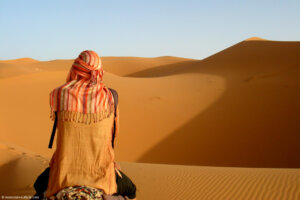
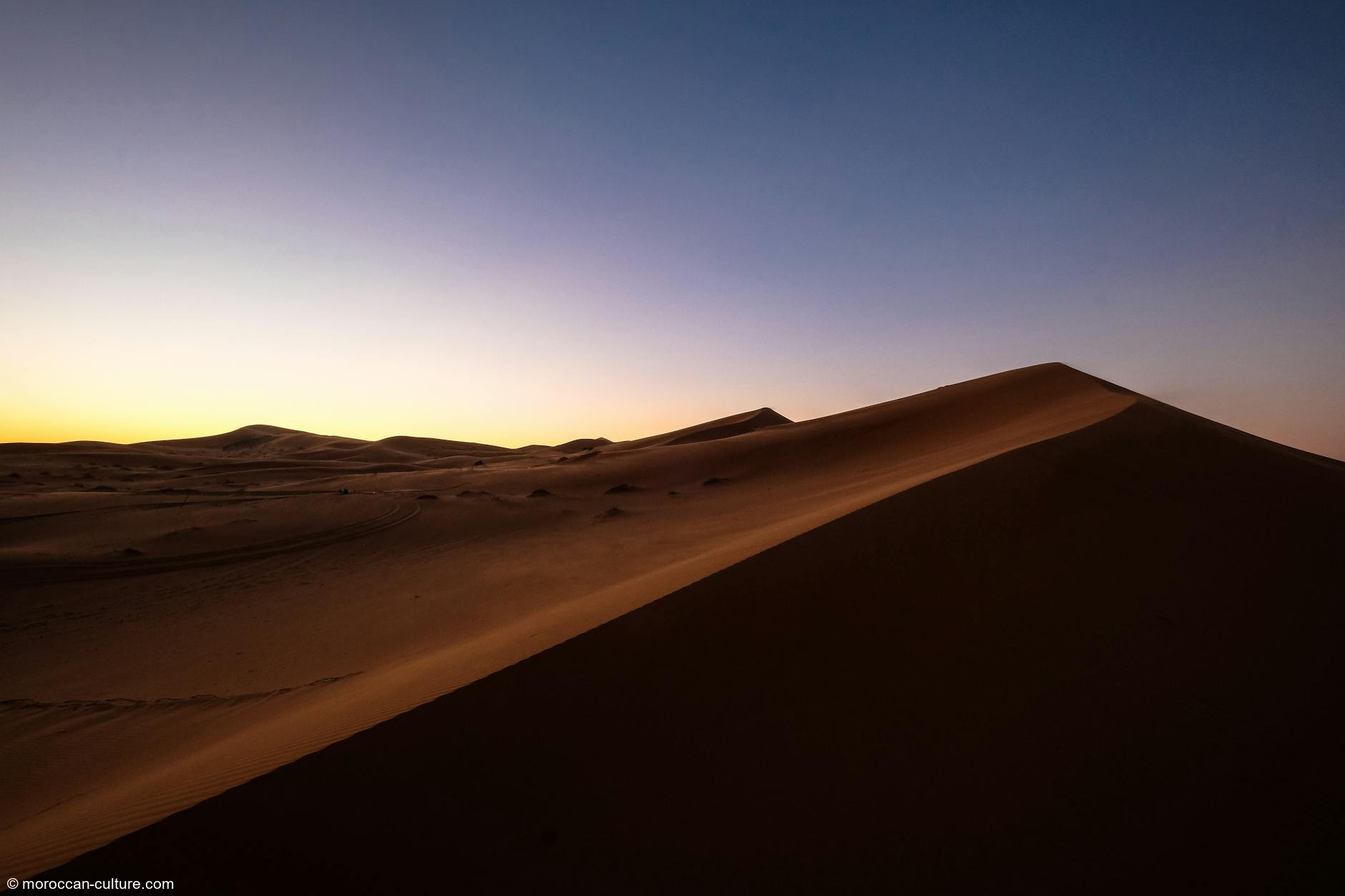
Most first-time visitors imagine tall orange dunes, camel silhouettes at sunset, and a night under bright stars. For that classic scene, Merzouga and the Erg Chebbi dunes are usually the safest choice. The dunes are dramatic, accessible, and surrounded by guesthouses and camps at different comfort levels.
Merzouga and Erg Chebbi
Merzouga works well if you want impressive dunes, a wide choice of camps, and a route that can connect Marrakech, the Dades Valley, Todra Gorge, Midelt and Fes. The downside is distance. From Marrakech, the journey is long, so a two-day return trip is too rushed for most travelers. A three-day tour is possible, while four days gives you more breathing room.
Zagora
Zagora is often sold as the quick desert option from Marrakech. It is useful when your schedule is short, and the route through the High Atlas and Draa Valley is beautiful. Still, travelers should know that Zagora is not the same as the high dunes of Erg Chebbi. Choose it for a taste of desert scenery, palm groves and road-trip landscapes, not for the biggest dunes.
Mhamid and Erg Chigaga
Mhamid is farther south, near the end of the paved road, and it can lead to Erg Chigaga. This area suits travelers who want a quieter, more remote desert experience. It usually needs more planning, a reliable driver, and often a 4x4 transfer. The reward is a less crowded atmosphere and a stronger sense of open desert.
How Many Days Do You Need?
A Morocco Sahara trip is not only about the night in camp. The road itself is part of the experience: kasbahs, mountain passes, valleys, palm groves, fossil towns and changing colors. Trying to compress all of that into too little time often means sitting in a vehicle for most of the trip.
- Two days from Marrakech: Better for Zagora than Merzouga, and still fast.
- Three days to Merzouga: The common minimum for Marrakech to Merzouga and back.
- Four days or more: Better pacing, more stops, and less fatigue.
- Fes to Marrakech via Merzouga: A smart route if your Morocco itinerary includes both imperial cities.
What Happens at a Desert Camp?
A typical desert camp experience begins near the edge of the dunes. Depending on the camp and your preference, you may travel by camel, 4x4, or both. Sunset is usually the main moment of the evening, followed by dinner, tea, music around the camp, and time outside under the stars. In the morning, many travelers wake early for sunrise before returning to the village or continuing the route.
Camp quality varies a lot. Budget camps may have shared bathrooms and simple bedding, while luxury camps may include private tents, better insulation, private bathrooms and more comfortable meals. Always check what is included before booking: transfer method, dinner, breakfast, water, heating, private bathroom, luggage handling and cancellation rules.
What to Pack for the Moroccan Sahara
Desert packing is about sun, dust and temperature swings. Days can be bright and warm, while nights can become surprisingly cold, especially from November to February. A small overnight bag is better than a large suitcase inside the dunes.
- Light layers for daytime and a warm jacket or fleece for night.
- Sunglasses, sunscreen and lip balm.
- A scarf or cheich to protect your face from sun and sand.
- Comfortable closed shoes or sturdy sandals for sand and camp paths.
- A power bank, because charging can be limited in some camps.
- Reusable water bottle and any personal medication.
- Small cash for tips, snacks and local stops.
Safety, Heat and Road Fatigue
The biggest practical challenge is not danger in the dunes; it is distance, heat and fatigue. Choose a driver or tour operator with good communication and realistic timing. Avoid itineraries that promise too many stops in too little time. In summer, ask about air conditioning, water stops and whether the camp adjusts activities around the strongest heat.
If you have asthma, mobility concerns, heat sensitivity or young children, mention this before booking. Camel rides can be uncomfortable for some travelers, and most operators can arrange a 4x4 transfer instead. Good planning makes the desert feel peaceful rather than stressful.
Respectful Desert Travel
The Sahara is not an empty backdrop. Amazigh communities, nomadic families, drivers, guides, musicians, cooks and camp teams all shape the experience. A better trip supports local people fairly and treats the desert as a living place, not just a photo scene.
Ask who owns or operates the camp, whether guides are locally based, and how animals are cared for. If you take a camel ride, look for healthy animals, reasonable ride lengths and handlers who treat them calmly. Carry out plastic waste, avoid loud music away from camp areas, and ask before photographing people.
Common Mistakes to Avoid
- Booking Merzouga as a two-day return trip from Marrakech and underestimating the driving time.
- Choosing only by the cheapest price without checking camp conditions.
- Expecting Zagora to look exactly like Erg Chebbi.
- Packing only summer clothes and getting cold after sunset.
- Planning too many cities immediately after the desert without a rest buffer.
Helpful Route Ideas
Marrakech to Merzouga and Back
This classic route usually passes the High Atlas, Ait Ben Haddou, Ouarzazate, Dades Valley or Todra Gorge, then Merzouga. Three days is common, but four days allows slower stops and a better second night after the camp.
Fes to Marrakech via Merzouga
This is one of the most efficient desert routes because you avoid returning on the same road. It can connect cedar forests, Middle Atlas towns, the Ziz Valley, Erg Chebbi and the southern kasbah route before reaching Marrakech.
Marrakech to Zagora
This shorter desert itinerary is useful when time is limited. It works best for travelers who value the Draa Valley, kasbah scenery and a simple overnight desert atmosphere more than huge dunes.
Final Advice
For most first-time travelers, the best Moroccan Sahara desert trip is not the fastest one; it is the one with enough time to enjoy the road, arrive before sunset, sleep comfortably, and leave without feeling exhausted. Choose Merzouga for the most iconic dunes, Zagora for a shorter taste from Marrakech, and Mhamid or Erg Chigaga for a more remote journey.
If your itinerary also includes major cities, connect the desert with Marrakech, Fes, or a wider Morocco travel guide. The desert is strongest when it is part of a well-paced journey, not a box checked in a hurry.