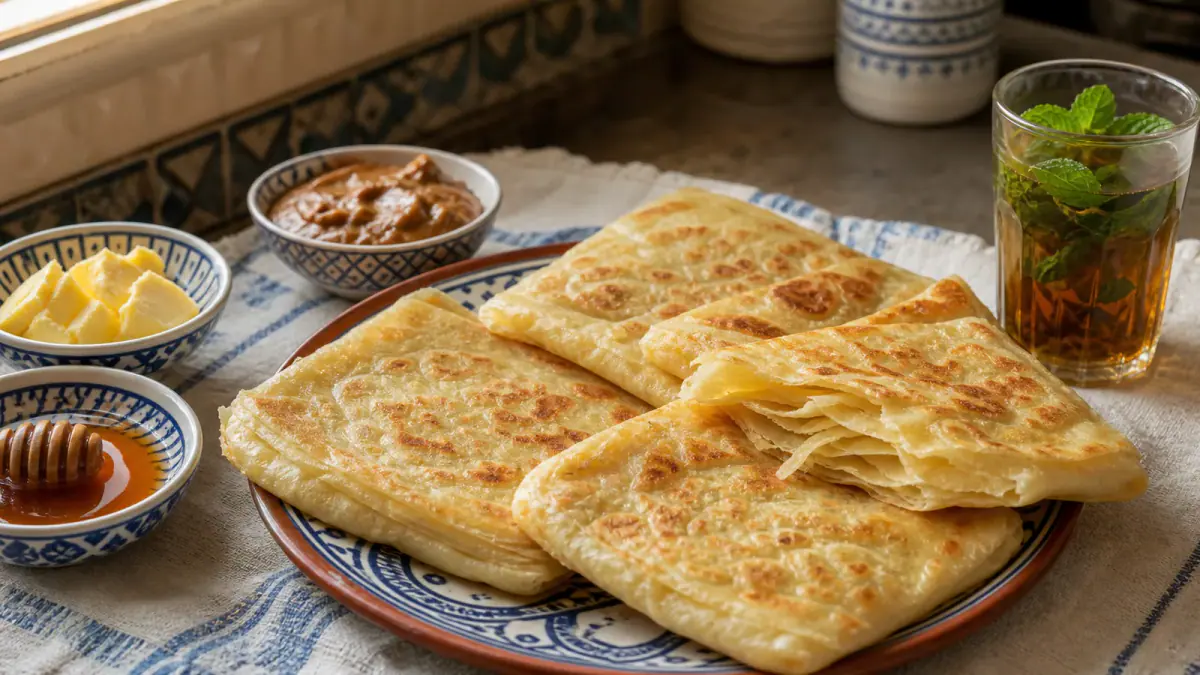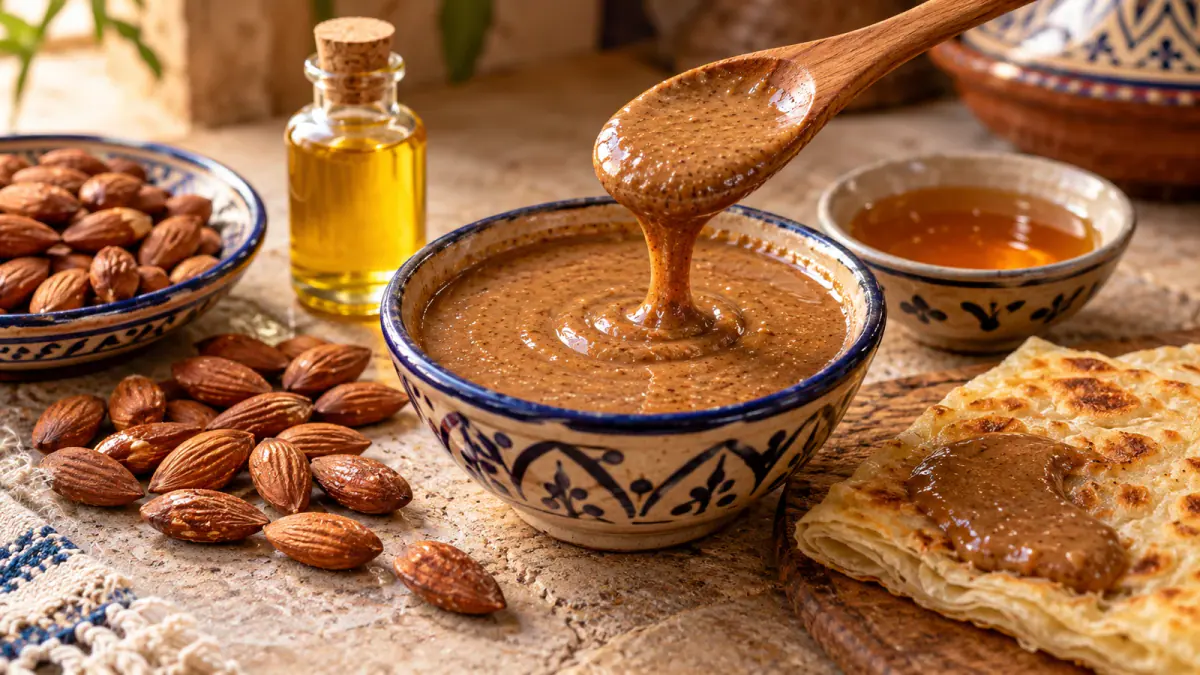
Amlou is a Moroccan dip or spread made from roasted almonds, culinary argan oil and honey. Grind the almonds, incorporate the oil gradually and sweeten to taste. It belongs naturally beside warm bread or msemen, with a consistency that can range from a thick spread to a flowing dip.
This amlou recipe gives you a small-batch starting formula and explains how to adjust it to your ingredients and equipment. It is an editorial adaptation of published preparation methods, rather than a claim of a kitchen-tested family recipe. Choose food-grade argan oil and aim for the texture you enjoy.
Amlou recipe at a glance
| Detail | Plan |
|---|---|
| Main ingredients | Roasted almonds, culinary argan oil and honey |
| Batch size | Approximately 320–380 g, depending on additions |
| Active preparation | Allow about 15–20 minutes with roasted almonds |
| Additional time | Roasting and cooling if starting with raw almonds |
| Equipment | Food processor or a grinder suitable for nuts |
| Intended texture | Thick but spoonable, or looser for dipping |
| Serve with | Khobz, msemen, harcha or baghrir |
Preparation time depends on your machine and how finely you grind the nuts. Start with a small batch that your equipment can process effectively.
What makes amlou Moroccan?
The distinctive ingredient is culinary argan oil. The Moroccan National Tourist Office’s gastronomy guide identifies almond, honey and argan amlou as a southern specialty associated with Agadir.
The oil also carries a wider cultural history. UNESCO’s record of practices and knowledge concerning the argan tree recognizes the skills used to produce and work with argan oil in southwestern Morocco. That recognition concerns community knowledge, rather than a certification for any individual jar of amlou.
For the broader setting, our Moroccan food guide explains regional ingredients and shared meals. Here, the focus is preparing and serving the spread itself.
Ingredients for a small batch
- 200 g unsalted roasted almonds, with skins on if you like a deeper color;
- 75 ml culinary argan oil to start, with up to 25 ml more for adjustment;
- 50 g runny honey to start, with up to 25 g more to taste.
The optional additions are part of the stated batch-size range. You do not need to use all of them. Taste and inspect the mixture before adding more oil or honey.
Published formulas differ. Authentic World Food’s preparation uses the same three-ingredient base and describes a loose dip. Moroccan chef Nargisse Benkabbou’s amlou recipe at My Moroccan Food distinguishes a thicker spread from a thinner version. The starting quantities here favor gradual adjustment rather than one mandatory consistency.
Choosing the almonds
Use almonds that smell fresh and taste pleasantly roasted. Unsalted nuts give you control over seasoning. Keeping the skins changes the color and adds small flecks; removing them produces a paler result.
Avoid sweetened or heavily seasoned snack almonds. Their coatings can change both the sweetness and the way the mixture grinds. If you use ready-roasted almonds, you can begin at the grinding step.
Choosing culinary argan oil
The label should clearly identify the oil as edible or intended for culinary use. A bottle sold as a hair or skincare product is not a substitute for a food ingredient.
Check the ingredient list, producer information and storage instructions. A bottle’s price or a souvenir-shop description does not establish what it contains. For this recipe, the oil should be something you would confidently serve as food.
Choosing the honey
Use a honey you enjoy on its own. A strongly flavored honey will stand out in the finished amlou; a milder one lets the almonds and oil remain more prominent.
If the honey is crystallized, gently warm the closed jar in warm water until it flows more easily. Avoid introducing water into the amlou to loosen it. The oil is the ingredient for adjusting flow.
Step 1: Roast raw almonds if needed
Skip this step when using roasted almonds. For raw ones, spread them in a single layer on a tray and roast at 160°C, checking after about ten minutes and then frequently. Stir for even roasting and remove them when fragrant and lightly browned inside.
Cool before grinding. Oven behavior and almond size vary, so use the aroma and the color of a cut nut as well as the clock. Dark, scorched nuts would give the whole batch a bitter edge.
Step 2: Grind the almonds
Place the almonds in a food processor suitable for nuts. Pulse to break them down, then process in short intervals, scraping the bowl when the machine is stopped. Aim for a fine meal that begins to clump.
A small spice grinder may need several batches. Follow its capacity and run-time limits, and let it rest if it becomes hot. A machine designed only for liquids may not handle a dry nut mixture well.
The finer the almonds, the smoother the result. A home processor may leave a slight graininess; that is a texture choice, provided you do not leave large hard pieces.
Step 3: Add the oil gradually
Transfer the ground almonds to a bowl or continue with a suitable processor. Incorporate the starting oil in small additions until the mixture is evenly combined. Stop and inspect the texture before using the extra oil.
For a dipping consistency, add more oil a teaspoon at a time. It is easier to loosen a thick mixture than to recover one that has become much thinner than intended.
Step 4: Add honey and taste
Mix in the starting honey gradually. Taste a little amlou on a piece of plain bread, then decide whether to add more. That gives a better impression of the serving balance than tasting a large spoonful alone.
Pause before making several adjustments at once. If you add oil and honey together, it becomes harder to tell which change improved the batch. Aim for a clear roasted-almond flavor with sweetness that suits you.
Troubleshooting the texture
| What you notice | Likely explanation | Adjustment |
|---|---|---|
| Large almond pieces | Nuts were not ground finely enough | Grind further before adding more ingredients |
| Mixture is too thick | Too little oil for your preferred consistency | Incorporate a teaspoon of oil, then check again |
| Mixture is too thin | More oil than the ground nuts can comfortably hold | Blend in additional finely ground roasted almonds |
| Sweetness overwhelms the nuts | Honey is strong or the amount is high | Make an unsweetened almond-and-oil portion and combine gradually |
| Bitter flavor | Almonds may be scorched or an ingredient may be stale | Check the ingredients; dilution cannot restore their quality |
| Oil collects on top after resting | The mixture has separated | Stir thoroughly before serving |
Separation alone is different from spoilage. Do not assume stirring fixes an off smell, visible mold or contamination. If an ingredient seems wrong before mixing, replacing it is easier than trying to rescue a finished jar.
Serving amlou with msemen and breakfast bread
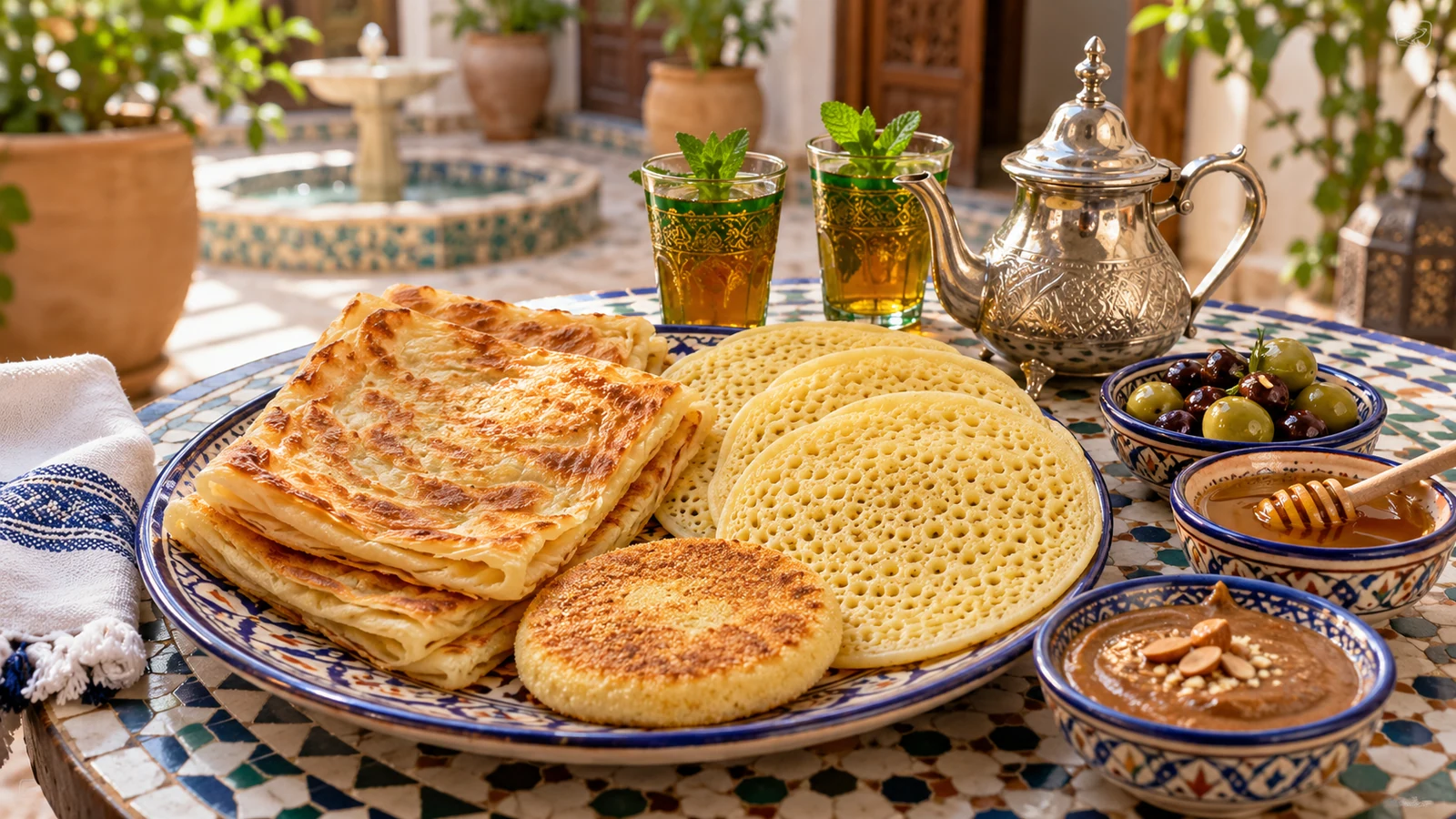
AI-generated serving illustration; it does not show a tested batch.
Serve a small bowl of amlou with warm bread. You can dip a torn piece into a loose mixture or spread a thicker version across the bread. Start with a modest serving because the combination is rich.
Msemen works particularly well for comparing textures: browned outer layers, a chewy middle and a smooth almond accompaniment. Our msemen recipe covers the flatbread if you want to prepare both at home.
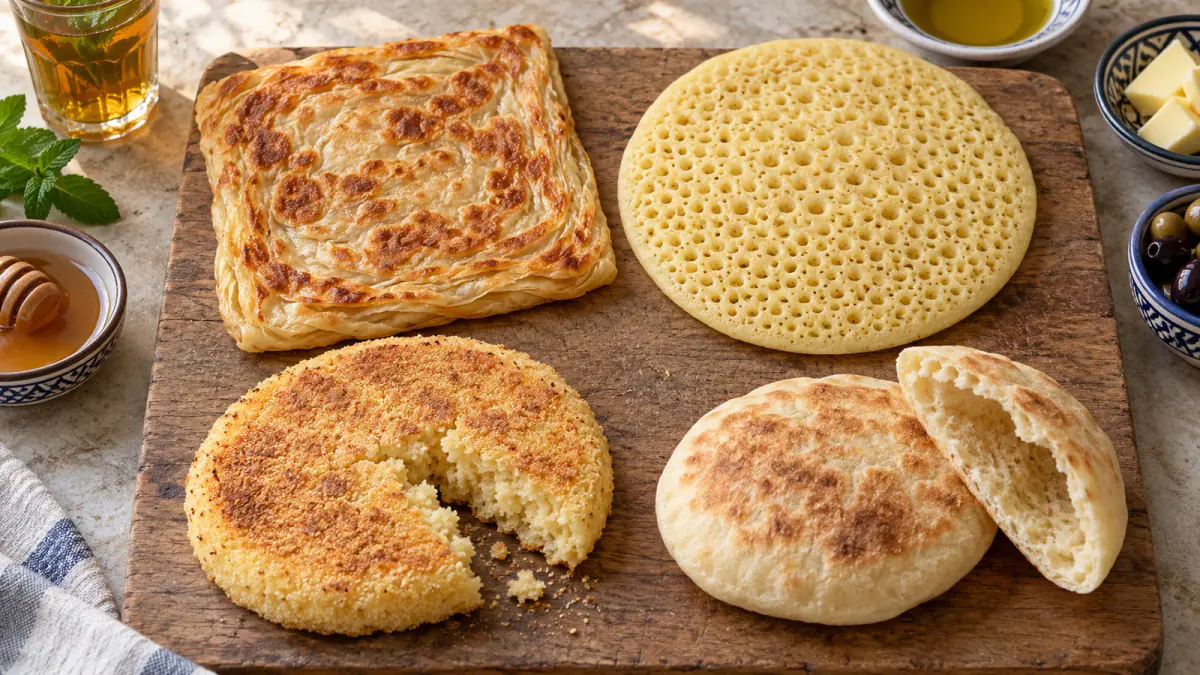
Baghrir holds amlou in its little holes, while harcha offers a crumbly contrast. For help recognizing them, see our Moroccan breakfast guide. Tea or coffee completes the table; our mint tea guide explains the former.
Keep accompaniments in separate bowls when serving several people. Guests can control sweetness and quantity, and the bread stays useful for both savory and sweet pairings.
Storage and making ahead
Transfer amlou to a clean, dry, tightly closed container and label it with the preparation date. Refrigerate homemade batches, especially in a warm kitchen, and use a clean, dry spoon to serve.
Refrigeration can make the mixture firmer. Take out only the amount you plan to eat, let it soften briefly and stir before serving. Avoid repeatedly dipping bread into the storage jar.
This recipe does not establish a validated shelf life. Ingredient freshness, handling and storage conditions matter; make a manageable quantity rather than treating it as a long-term pantry preserve. For purchased amlou, follow the manufacturer’s instructions and use-by guidance.
Substitutions and ingredient questions
Can I replace argan oil with olive oil?
You can make an almond-and-honey spread with an edible oil you enjoy, but the flavor will change. Label it as an adaptation so guests know what they are tasting. Culinary argan oil supplies the defining flavor of the version described here.
Can I use almond butter?
Plain roasted almond butter can be a shortcut. Check that it has no added sugar or other oils, then add argan oil and honey gradually. Its initial texture may already be much smoother and looser than your freshly ground almonds.
Is amlou vegan?
The honey version here is not vegan. Replacing honey with a suitable plant-based syrup creates an adaptation with a different flavor. Check that substitution directly rather than assuming every jar uses the same formula.
Is amlou gluten-free or dairy-free?
The three listed ingredients contain neither wheat nor dairy, but labels and preparation conditions still matter. The serving bread usually contains wheat and may contain dairy. For an allergy or intolerance, assess the whole plate.
Does every amlou contain almonds?
This recipe does. Products sold as amlou can use different nuts or blends, so read their labels. If buying a jar in Morocco, ask about both the nuts and the oil instead of relying on the name alone.
A final preparation checklist
Choose fresh almonds and edible argan oil, grind the nuts finely, and add the liquids in stages. Taste on bread before increasing sweetness, keep the storage jar clean and adjust the consistency to how you will serve it. Those choices matter more than making your amlou look exactly like a photograph.