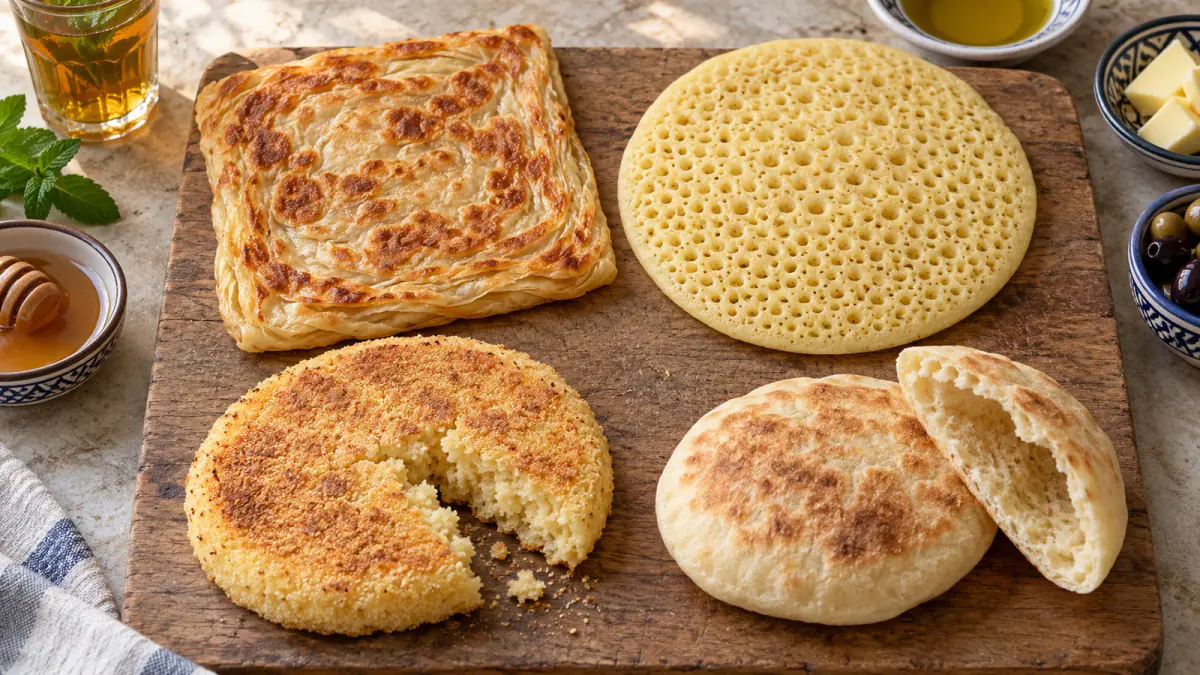
Msemen, baghrir, harcha and batbout are different preparations, even when an English menu calls several of them pancakes. Msemen starts with stretched and folded dough; baghrir with poured batter; harcha with a semolina mixture pressed into rounds; and batbout with a kneaded dough shaped for stovetop cooking. Choose the structure you want before choosing a recipe.
This is a cooking comparison for home use. If you are deciding what to order at a café or riad, our Moroccan breakfast guide focuses on the meal itself. Here, the useful question is what you want to make and which part of the process needs your attention.
Compare the four at a glance
| Preparation | Starting form | Characteristic texture | Main practical focus |
|---|---|---|---|
| Msemen | Soft dough stretched into a thin sheet and folded | Layers with a browned surface | Resting, stretching and keeping the folds even |
| Baghrir | Flowing semolina-based batter | Soft upper surface with many holes | Batter condition, resting and pan response |
| Harcha | Semolina mixture shaped or pressed as directed | Grainy, tender crumb | Hydration, gentle transfer and heat through the center |
| Batbout | Kneaded dough formed into rounds | Soft bread, often with a pocket | Rise, even shaping and gentle pan handling |
Recipes vary within each style. The table describes useful distinctions, not rules that override a particular author’s complete method.
Msemen: choose it for layers
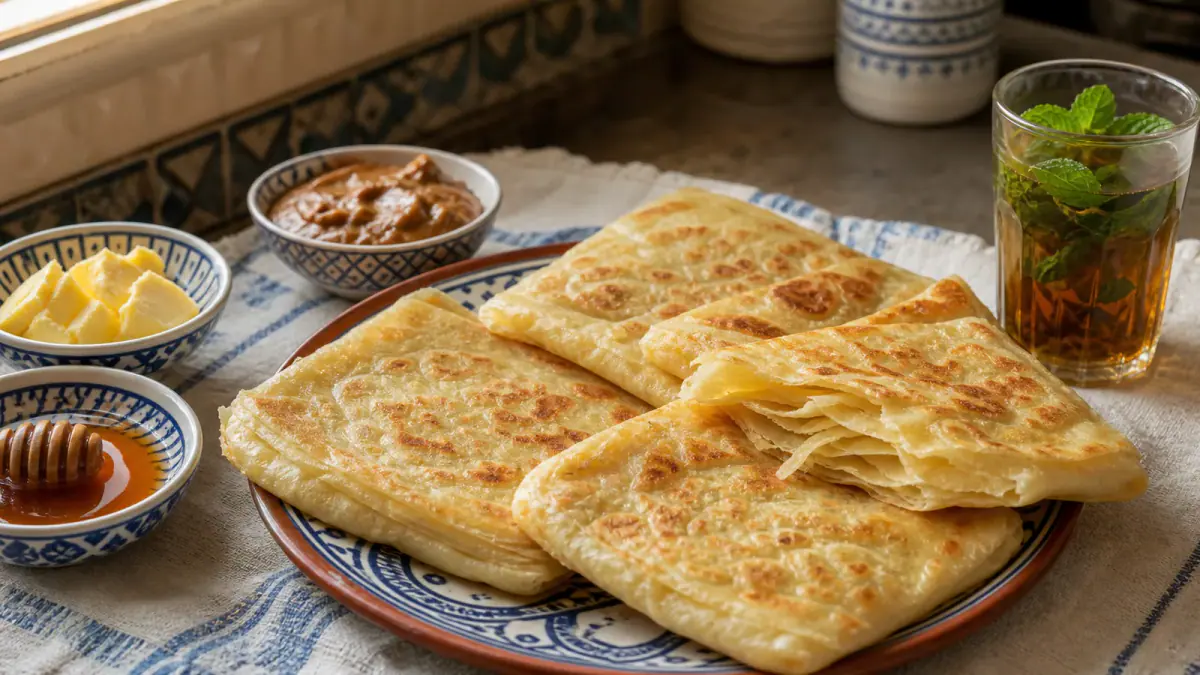
Msemen’s distinctive feature is the folded sheet. The square shape helps you recognize many versions, but the preparation is about building separate layers inside the dough. A round bread is not automatically batbout, and a square outline alone does not demonstrate good lamination.
Our msemen recipe gives the dough and folding sequence. For another published preparation, Christine Benlafquih’s msemen method explains this style of griddled flatbread.
If the round, coiled bread is what you had in mind, our msemen versus meloui comparison explains that separate shaping question.
What deserves your attention
Allow time for the dough to rest and work on one manageable piece. Thin stretching is a skill you can improve across several attempts. If you rush the rest or hide a difficult dough under extra flour, the next stage can become harder rather than easier.
Keep the folded pieces protected while they wait. Once in the pan, remember that a thick central fold can need more cooking than a thin corner. Judge the whole piece, not just the first browned patch.
When it fits your breakfast plan
Msemen suits someone who wants a layered bread and is willing to spend time on handling. If the morning is short, making cooked pieces ahead may be more practical than stretching dough immediately before breakfast.
Our freezing and reheating guide covers cooked plain pieces and explains why filled ones need their own food-safety considerations. It also separates warming the center from finishing the surface.
Baghrir: choose it for a soft porous pancake
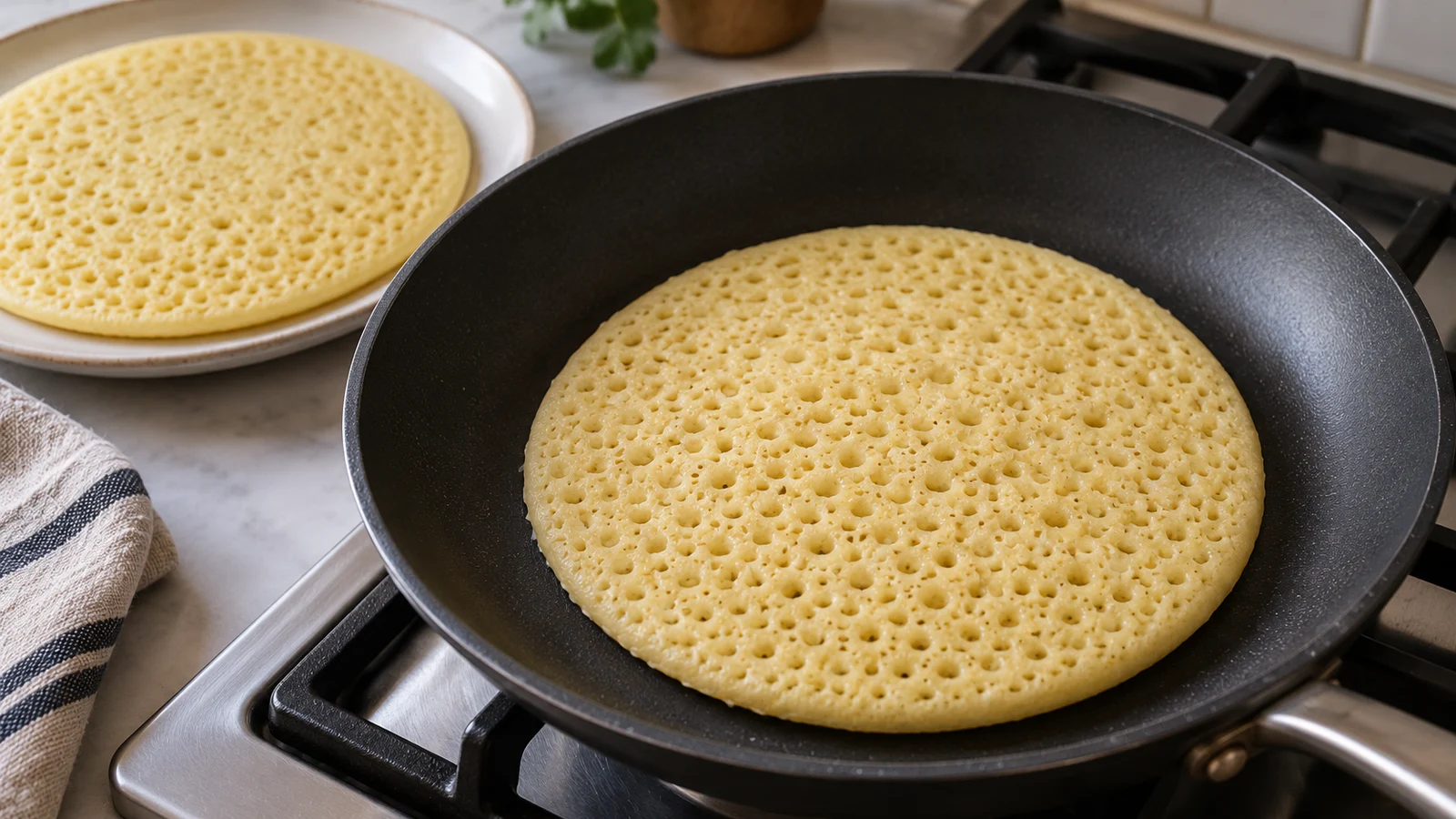
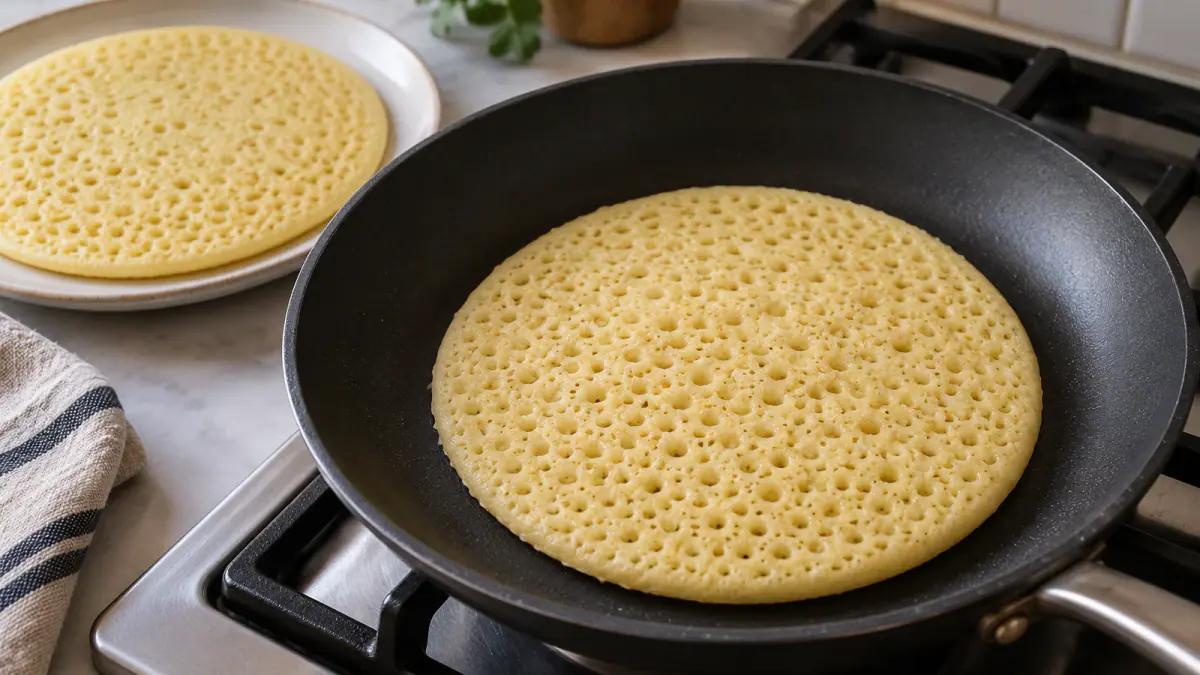
AI-generated baghrir illustration.
Baghrir is poured into the pan rather than stretched on the worktop. Its familiar porous top makes it easy to distinguish from layered msemen. A thick American pancake is not the right visual reference for the batter or finished texture.
For the similar-looking British food, see baghrir versus crumpets: shared holes do not mean interchangeable batters.
Cooking With Alia’s baghrir method provides a complete published preparation. Select one recipe and keep its ingredient proportions, blending and resting instructions together.
What deserves your attention
Observe how the batter pours and what the first small pancake does. If the top is smooth, check the consistency and the recipe’s resting cues before making large additions. If the bottom darkens while the top remains wet, examine the heat and portion size.
The baghrir no-holes guide gives a diagnostic order. Its central suggestion is to make one controlled change at a time; a better pancake is easier to repeat when you know what improved it.
When it fits your breakfast plan
Choose baghrir when you want a soft pancake and prefer working with batter rather than stretching dough. Allow for the rest specified by your recipe and cook a small test first. A honeycomb surface makes a natural place for an accompaniment, but toppings do not replace checking that the batter has cooked fully.
Harcha: choose it for semolina crumb
Harcha is useful when you want the grain of semolina to remain part of the eating texture. Many versions are formed into small rounds or a larger disc. They need supported handling rather than the stretching used for msemen.
Cooking With Alia’s butter-and-milk harcha gives one example. Other formulas use different liquids or fats, so do not combine their quantities without a deliberate plan.
What deserves your attention
Check the mixture after its required rest. Watch the thickness when shaping and allow the first face to establish structure before flipping. A brittle transfer or a rushed slice can break an otherwise usable round.
The harcha crumbling guide separates failures during shaping, turning and slicing. That is a more useful starting point than assuming every crumb means you need to add flour.
When it fits your breakfast plan
Small harcha rounds can be convenient when your pan and spatula can support them easily. They work with a topping on the side or a filling if the cooked texture permits splitting. Let a very hot round cool slightly before trying to cut it neatly.
Batbout: choose it for soft stovetop bread
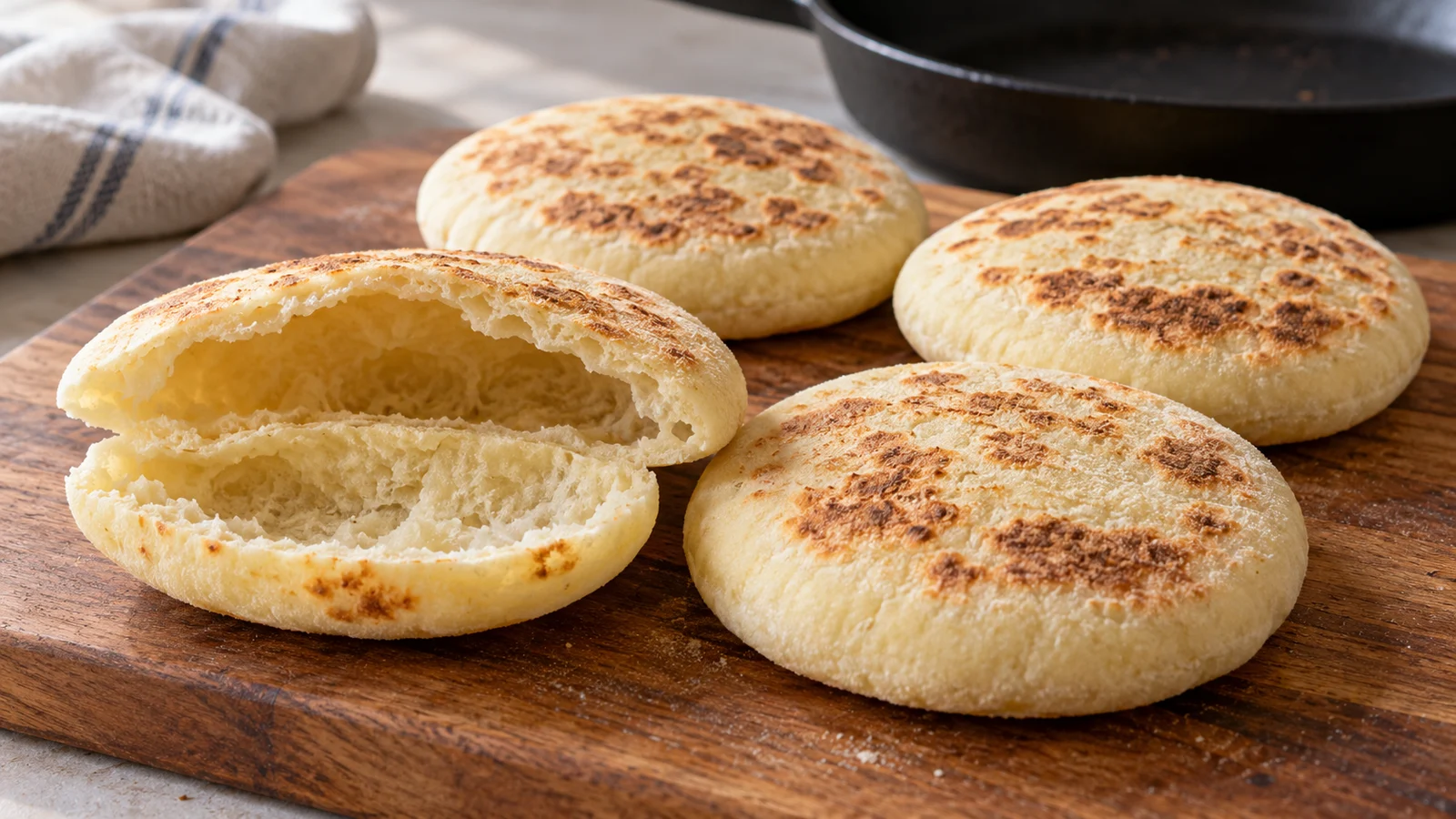
AI-generated batbout illustration.
Batbout is a kneaded bread preparation. It is often made to open into a pocket, though shapes, thickness and naming vary. That makes it useful for fillings as well as a simple breakfast accompaniment.
Cooking With Alia’s batbout method describes a flour-and-fine-semolina dough. Follow its rise, shaping and pan instructions, or those of another complete recipe, rather than applying the one-sided cooking approach used for familiar baghrir.
What deserves your attention
Keep shaped rounds even and protected while they wait. Transfer them gently and use the pan setting specified by the method. Watch both the bread’s expansion and its cooking; puffing alone is not a universal test for every aspect of doneness.
The batbout puffing guide explains how to compare successful and unsuccessful rounds in one batch. That comparison may reveal a handling or shaping difference without requiring a new formula.
When it fits your breakfast plan
Choose batbout when you want a soft bread or a pocket for filling. Plan for the dough stages before breakfast. If a fully cooked round lacks a pocket, a topping can still suit it; the day’s meal does not have to depend on every piece inflating perfectly.
Which one should you make first?
Choose by the process you are comfortable with, not by a claim that one bread is effortless for everyone. A cook used to batter may prefer baghrir. Someone who enjoys kneading and rolling may choose batbout. If laminated flatbreads interest you, msemen gives you that handling practice.
| You want to practice | A useful choice | Plan ahead for |
|---|---|---|
| Pouring and judging pan response | Baghrir | Recipe-directed rest and a small test pancake |
| Pressing and gently turning a grainy round | Harcha | Hydration check and supported transfer |
| Kneading and shaping a risen dough | Batbout | Rise, covered rounds and consistent thickness |
| Stretching and folding thin dough | Msemen | Several resting and handling stages |
Make a small first batch and choose one bread. Preparing all four together adds competing bowls, timers and pan conditions. After you know one method, add a second on another morning.
Can the ingredients be shared?
Some preparations use overlapping ingredients, but their proportions and structures differ. Sharing a bag of semolina does not mean sharing one dough. Read each recipe before buying and note whether it asks for fine semolina, a specific durum product, or another grind.
The semolina ingredient guide helps you shop across these methods. Fat, milk, egg and sweetener choices also vary, so check the actual formula if a dietary preference matters. A bread’s name or plain appearance is not a complete ingredient list.
Keep the serving simple
Plan one calm first attempt
The evening before, save one complete recipe and check the ingredient packets. In the morning, clear enough worktop for the selected process: bowls and a ladle for baghrir, supported shaping space for harcha, covered rounds for batbout, or an oiled stretching area for msemen. Prepare a place for cooked pieces before heating the pan. Start with one small portion and check it before committing the rest. This sequence leaves room to adjust the cooking without juggling a finished drink, toppings and several uncooked preparations at once. On a later morning, repeat the same bread with the successful notes before adding another style to the table.
Pick one bread and an accompaniment you enjoy. Try the first piece plain so you can understand its texture before adding a topping. Then choose a sweet or savory pairing from the breakfast guide.
For a shared table, explain the bread names rather than calling everything pancakes. The distinction helps guests choose, and it helps you remember which technique worked. A brief note on the recipe and pan is enough to make the next breakfast easier to plan.