For Moroccan breakfast breads, choose the semolina grind specified by the recipe. Fine semolina is commonly called for in baghrir batter, msemen dough and batbout; harcha methods also need their stated grind. A bag marked only “semolina” is a reason to inspect the product more closely, not proof that it will work in every preparation.
The shopping problem is simple: two yellow wheat products can look similar in a cupboard while behaving differently in a bowl. This guide helps you compare labels, match the ingredient to a method and make a deliberate substitution when the exact product is unavailable.
A quick guide by bread
| What you are making | What to check in the recipe | Why the distinction matters |
|---|---|---|
| Baghrir | Fine semolina or the stated durum product | You are aiming for a smooth, flowing batter |
| Msemen | Grind used in the dough and between layers | Thin stretching and light dusting need separate attention |
| Harcha | Semolina type and hydration instructions | The grain is a defining part of the crumb |
| Batbout | Semolina or durum flour and its proportion | The dough must still knead and shape as described |
This is a reading guide, not a universal formula. Keep the original quantities and method together. If the author offers substitutions, prefer those to a guess based only on color.
What semolina is
King Arthur Baking’s semolina explanation describes the familiar durum-wheat product and the confusion that can arise when “semolina” is used loosely. Cornmeal, couscous and ordinary white flour are not interchangeable simply because a shop places them nearby.
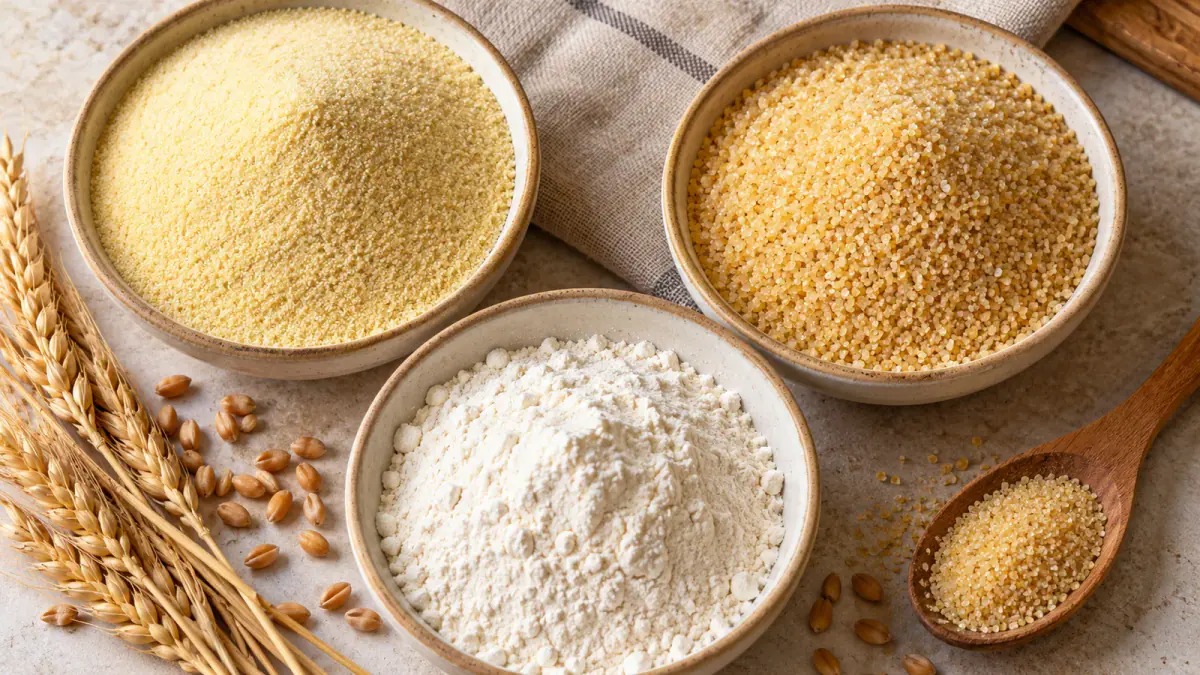
In practical shopping terms, separate two questions: what is the product made from, and how finely is it milled? The ingredient list helps with the first; the manufacturer’s description and texture help with the second.
Fine semolina
A fine product has smaller particles than a coarse one from the same range. Labels may use terms such as fine, extra fine, semoule fine or semoule extra-fine. These descriptions are useful starting points, but different suppliers do not necessarily share one precise grain-size standard.
If you are shopping online, look for a close-up, a manufacturer’s description or an intended use. A distant photo of a yellow bag is not enough. Save the product name when a batch turns out well so you can buy it again.
Coarse semolina
Coarse semolina has a more pronounced grain. It can be useful in preparations designed for that texture, but buying it for a fine-semolina recipe is a substitution. Do not assume a longer rest automatically makes the two products equivalent.
When a recipe offers a coarse-grind variation, use the accompanying method. A change in particle size may require a different approach, and the original water amount alone may not tell you what to do.
Durum flour and finot
Finot, fino and related spellings appear in Moroccan recipe writing and retail descriptions. Check what the author means and what the manufacturer supplies. Avoid relying on a spelling alone as a guarantee of identical texture.
For a concrete example, Cooking With Alia’s batbout recipe identifies fino as fine semolina. That tells you how the term is used in that particular method. A different shop may describe its products differently, so compare the bag with the recipe rather than treating the name as a universal specification.
What to buy for baghrir
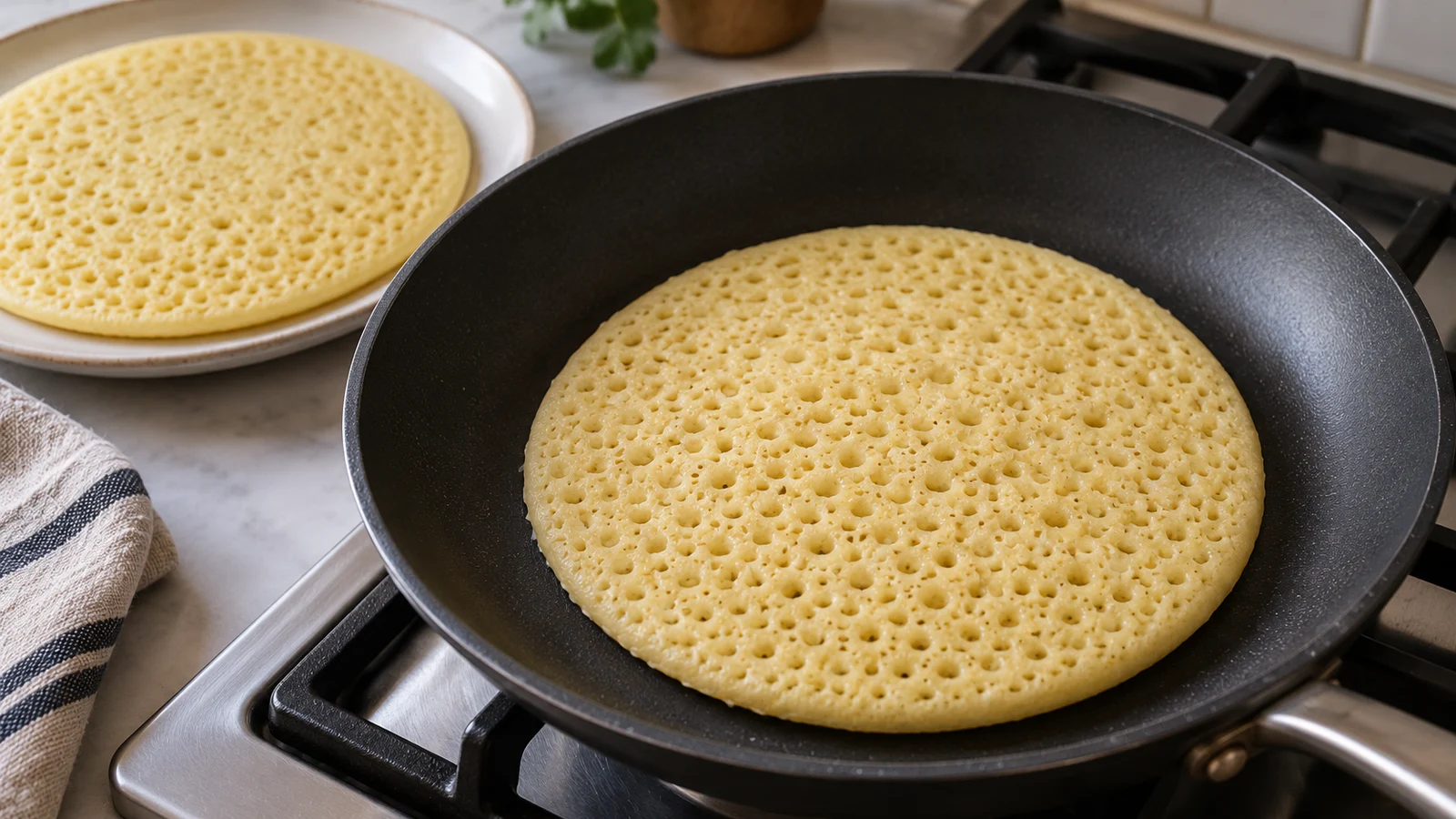
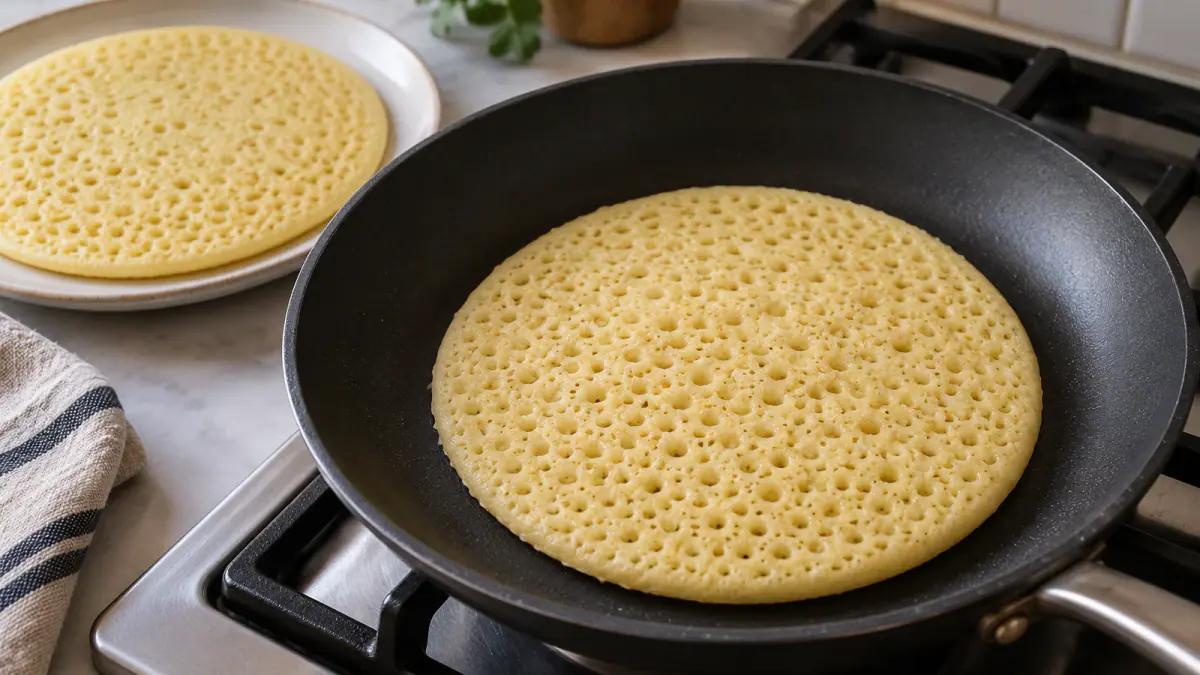
AI-generated serving illustration; the actual pancake is your texture check.
Read the recipe’s ingredient line carefully. Cooking With Alia’s baghrir method is a useful reference for the relationship between its ingredients and blended batter. Follow the selected formula through the resting and cooking stages before deciding the ingredient needs replacing.
If the only product available is much coarser than specified, look for a recipe designed for it. Do not begin with the expectation that extra blending will necessarily reproduce the author’s result. That creates a second problem before the pan is even heated.
When baghrir fails, save a photo of the packet with your cooking notes. Our baghrir no-holes guide uses that information to separate an ingredient mismatch from a pan or timing issue.
What to buy for harcha
Harcha puts the semolina texture at the center of the preparation. Follow the grind, fat, liquid and resting instructions as a set. A formula based on butter and milk is not automatically equivalent to one based on oil and water.
If you are choosing between two packets, use the one that most closely matches the recipe description. Buying the correct ingredient is more predictable than planning to correct an unfamiliar mixture with extra liquid afterward.
If you already have a different grind, note it as a deliberate variation and keep the batch small. Our crumbly harcha guide explains why the stage where it breaks is also important; semolina choice alone cannot diagnose every problem.
What to buy for msemen and batbout
Msemen asks you to work with a thin stretched sheet, while batbout asks you to shape a kneaded dough into rounds. The semolina is part of those different processes, so a shared ingredient name does not make the recipes interchangeable.
For msemen, check whether the recipe uses the same product in the dough and for dusting between folds. Measure a light dusting as directed rather than adding handfuls of grain to compensate for sticky dough. Our msemen preparation guide explains resting and folding separately.
For batbout, keep the stated flour proportions intact on the first attempt. If you change the semolina, white flour and water together, it becomes hard to determine which substitution caused a dense or awkward dough. The batbout puffing guide covers shaping and pan conditions after ingredient selection.
Substitutions to approach carefully
| Product in your cupboard | Why it needs a closer look | Better decision |
|---|---|---|
| Couscous | It is a prepared granular product, not simply a bag of raw milled semolina | Buy the specified semolina |
| Cornmeal or polenta | It comes from maize and has different properties | Use a cornmeal recipe |
| All-purpose flour | It changes a semolina-based formula | Follow an explicit tested substitution from the author |
| A packet marked pasta semolina | Intended use alone does not establish the grind | Check particle size and manufacturer details |
| A mixed instant product | It may contain added ingredients | Read the full ingredient list before using it |
Substitution advice is most useful when it belongs to the recipe being followed. A tip from a pasta page is not automatically a successful adjustment for harcha or baghrir.
Shop with a short checklist
For an unfamiliar packet, write a four-line shopping note: grain, grind, ingredients, intended recipe. An example is “durum wheat; fine; plain semolina; baghrir formula saved on phone.” Compare that note with the manufacturer’s description. If a retailer supplies only a vague title, ask for the ingredient list and grind before buying. For a refill sold without its original packaging, request the same information and keep the receipt or product details. That small record is particularly useful if you later need to identify a changed ingredient or compare two batches.
Before paying, check the grain, grind, ingredient list and package condition. Photograph the recipe’s ingredient line if that helps you compare in the shop. For an online order, read the description before relying on a search result’s title.
Buy a manageable quantity for your first attempt with an unfamiliar product. A large bargain bag is less useful if its grind does not suit the breads you want to make. Once it works, record the supplier and exact name.
Store according to the packet instructions and keep the label, especially if you transfer the contents into a jar. Note the opening date and protect the product from moisture. If there are signs of pests or damage, use a fresh suitable packet.
Questions about semolina labels
Is semolina gluten-free?
Durum-wheat semolina contains gluten. Its yellow color and grainy appearance do not make it a gluten-free alternative to wheat flour. Choose a recipe specifically developed for the dietary requirement rather than swapping by appearance.
Can I grind coarse semolina at home?
You may reduce its particle size with suitable equipment, but the result is not automatically identical to a commercial fine product. Treat it as an experiment, follow equipment guidance and try a small batch.
Does the most expensive packet work best?
Price does not establish suitability. The useful match is between the recipe and the ingredient specification, followed by your actual cooking result.
Should I change the water when changing brands?
Begin with the recipe’s instructions and watch its texture cues. If adjustment is allowed, make it gradually and record it. A brand change is a reason to pay attention, not a reason to invent a new ratio in advance.
Keep the label with the result
The most useful shopping record is a successful batch linked to an exact product. Save the packet name beside your recipe notes, including any small adjustment you made. That turns “fine semolina” from a vague shopping request into an ingredient you know how to use in your own kitchen.