When harcha crumbles, first identify when it falls apart: in the uncooked mixture, on the way to the pan, during the flip, or under the knife. Those are different problems. A round that holds together until you slice it piping hot does not need the same response as dough that cannot be shaped at all.
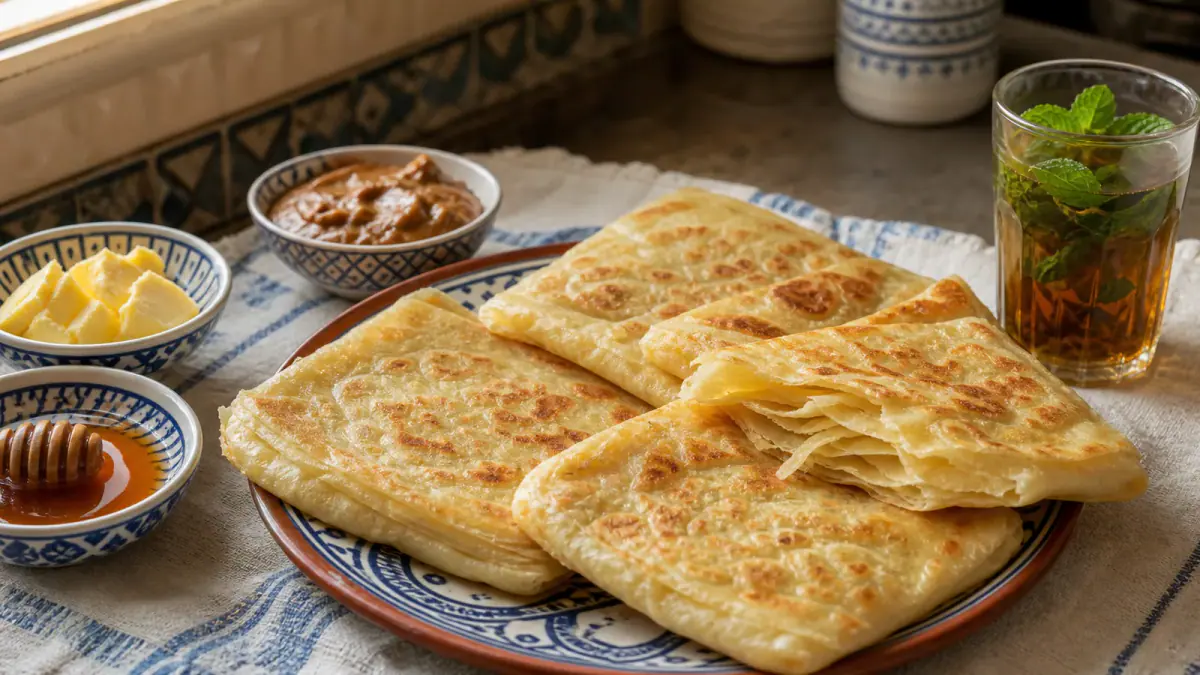
Harcha has a naturally grainy crumb. A few crumbs on the plate are expected; a disc that disintegrates before you can serve it calls for a closer look. This guide focuses on semolina griddle harcha, which differs from the folded flatbread in our msemen recipe.
Locate the failure before changing the recipe
| When it breaks | What to check first | Practical response |
|---|---|---|
| Before shaping | Ingredient measurements and post-rest texture | Reassess the mixture after the prescribed rest |
| During transfer | Size, thickness and support underneath | Try a smaller round with a broad spatula |
| During the first flip | Whether the first face has set | Let it cook sufficiently before turning |
| Brown outside, fragile inside | Heat relative to thickness | Use gentler heat and a more even round |
| Only when sliced | Temperature and knife technique | Let it cool slightly and support it on a board |
Do not add flour automatically. It changes a semolina bread’s texture and may hide the original problem. Work from the formula you started with and make a note of any ingredient substitution.
Understand the style of harcha you are making
Published harcha recipes are not identical. Alia’s butter-and-milk harcha and her oil-and-water version use different ingredient combinations. Both are useful references, but their quantities should not be mixed casually.
Choose one method for the batch. If you take the semolina from one recipe, the liquid from another and the resting time from a short video, the resulting texture becomes harder to interpret. Save the complete formula before shopping or mixing.
Check whether it makes small rounds or a larger disc. A large harcha needs more support when turning; a small one may be easier to handle while you learn. Size is a practical choice, but changing it also changes how quickly the center cooks.
Expect a crumb, not stretchable dough
Do not use the feel of msemen or pizza dough as your target. Harcha is not shaped by stretching a thin elastic sheet. Trying to knead it until it behaves that way can send you into unnecessary flour additions and a different result.
Read the recipe’s texture description. If there is a video, look at how the mixture is pressed or placed in the pan. The useful comparison is the author’s mixture at the same stage, not another bread after a completely different process.
Check the semolina and the resting stage
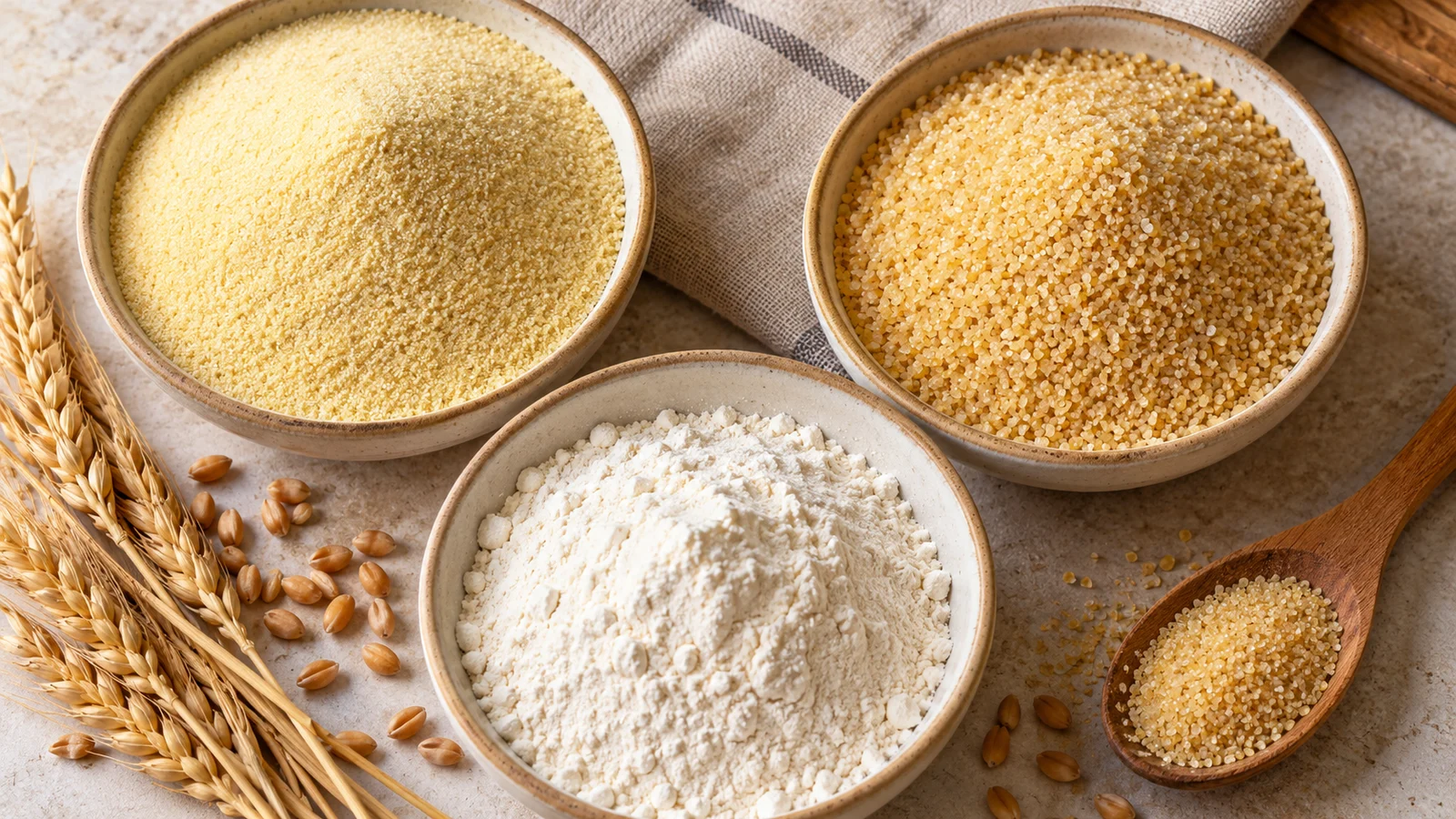
AI-generated ingredient illustration; use the recipe and product label to choose a grind.
Look at the semolina bag and confirm the grind. Our semolina shopping guide explains the distinction between ingredient names and particle size. If your recipe says fine semolina, buying a coarse product is a substantive change rather than a harmless label difference.
Give the mixture its prescribed rest before deciding that it needs a correction. Alia’s butter-and-milk method specifically describes the mixture becoming drier as the semolina absorbs liquid, then checking whether a little more milk is needed. Follow that staged assessment rather than deciding on the final texture immediately after mixing.
Make the smallest useful correction
If the chosen recipe permits extra liquid and the rested mixture is clearly too dry, add it gradually. Mix, reassess and shape a small test portion. There is no universal rescue quantity because the original measurements and semolina product may differ.
If the mixture is very wet, check for a measuring mistake before tipping in more semolina. An error in one ingredient cannot always be repaired by adding another. Write down what you change so a successful correction can be repeated.
For broader ingredient context, King Arthur Baking’s semolina overview explains durum wheat and the uses of this milled product. It does not supply a substitute hydration ratio for every Moroccan bread.
Shape for easier handling
Try a simple handling check before modifying a bowl that looks otherwise correct. Make two small rounds of similar thickness. Transfer the first with your usual utensil, and support the second across its underside with a broader spatula. If only the unsupported one breaks, changing the liquid is unlikely to be the most useful next step. If both crumble before reaching the pan, return to the mixture and its post-rest texture. This comparison also helps you decide whether a larger harcha is practical with the equipment you have, rather than choosing its size only for the serving plate.
A neat outline is less useful than an even thickness. Press a small disc without leaving a thin rim and a heavy center. Thin edges can color while the middle is still delicate, making the whole round difficult to turn cleanly.
For a first test, choose a size your spatula can support. Keep the next disc similar so you can tell whether a change in heat or cooking time helped. A large harcha may look attractive on a serving plate, but it is not the easiest shape for diagnosing a fragile mixture.
Support the round during transfer
Slide a broad spatula beneath it and avoid lifting from a single edge. If you use paper as a shaping aid, follow your recipe’s transfer method, remove the paper before cooking, and keep it away from flames and hot burners.
If the raw round breaks on the way to the pan, pause before changing the liquid. Try a smaller disc and a better-supported transfer first. This separates a handling problem from an ingredient problem without altering the bowl.
Match the pan heat to the thickness
A dark underside and an unsettled center suggest you should review the heat and size together. The butter-and-milk reference uses gentle cooking after heating the pan; the oil-and-water reference has its own directions. Follow the method that belongs to your formula.
Let the first face establish enough structure before flipping. A spatula pushed into a still-fragile underside can break a correctly mixed harcha. Move deliberately, support the whole disc, and avoid pressing or prodding repeatedly just to check it.
If the outside is browning too quickly, reduce the heat for the next test and wait for the pan to respond. A burner adjustment is not instant. Keep the portion and thickness comparable so you can judge the change fairly.
Inspect the inside as well as the color
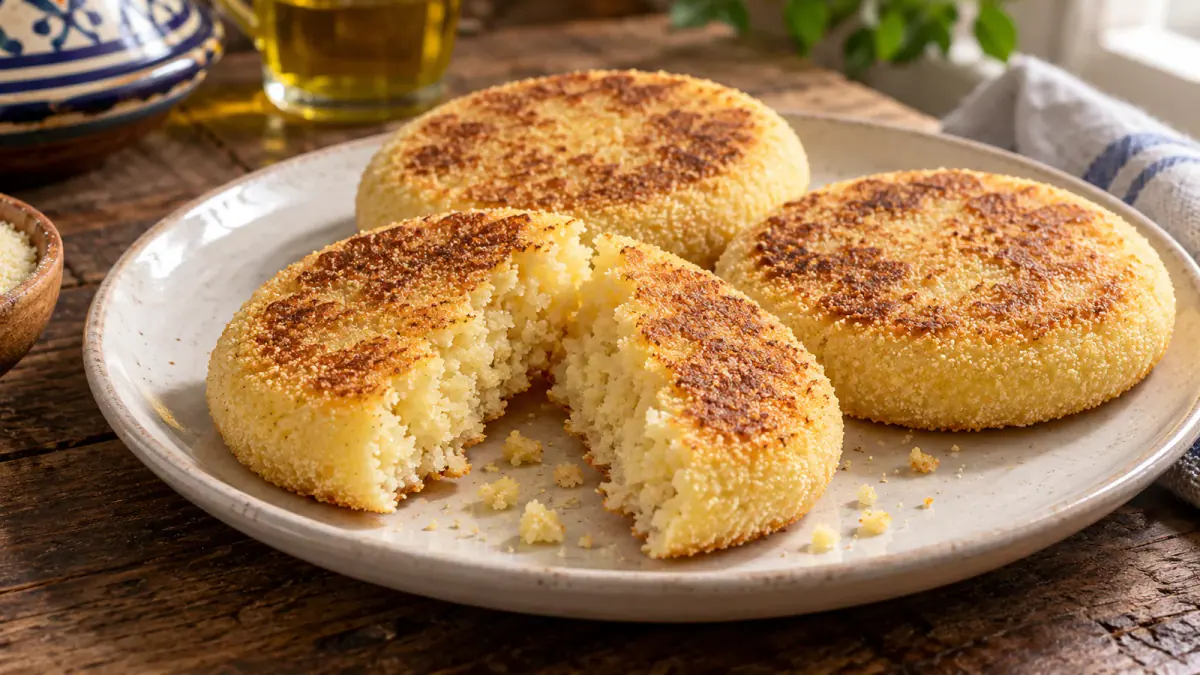
Use the small test round to check the center after it has cooled enough to handle. The surface can look attractive while the interior is not ready. A picture of golden harcha is therefore a serving illustration, not proof of doneness.
If the center remains undercooked, continue working on heat, thickness and the recipe’s cooking instructions. Do not serve it just because both sides are brown. Once the test behaves properly, use the same shaping approach for the remaining mixture.
Slice after a brief pause
Alia’s butter-and-milk preparation recommends slight cooling and a sharp knife before splitting harcha. That distinction matters: breaking under a knife while very hot does not necessarily mean the whole recipe was too dry.
Place the round on a board, support it gently and cut without crushing it. For a particularly delicate harcha, serve it whole with a topping beside it rather than forcing a horizontal split. Small pieces can also be pleasant for dipping.
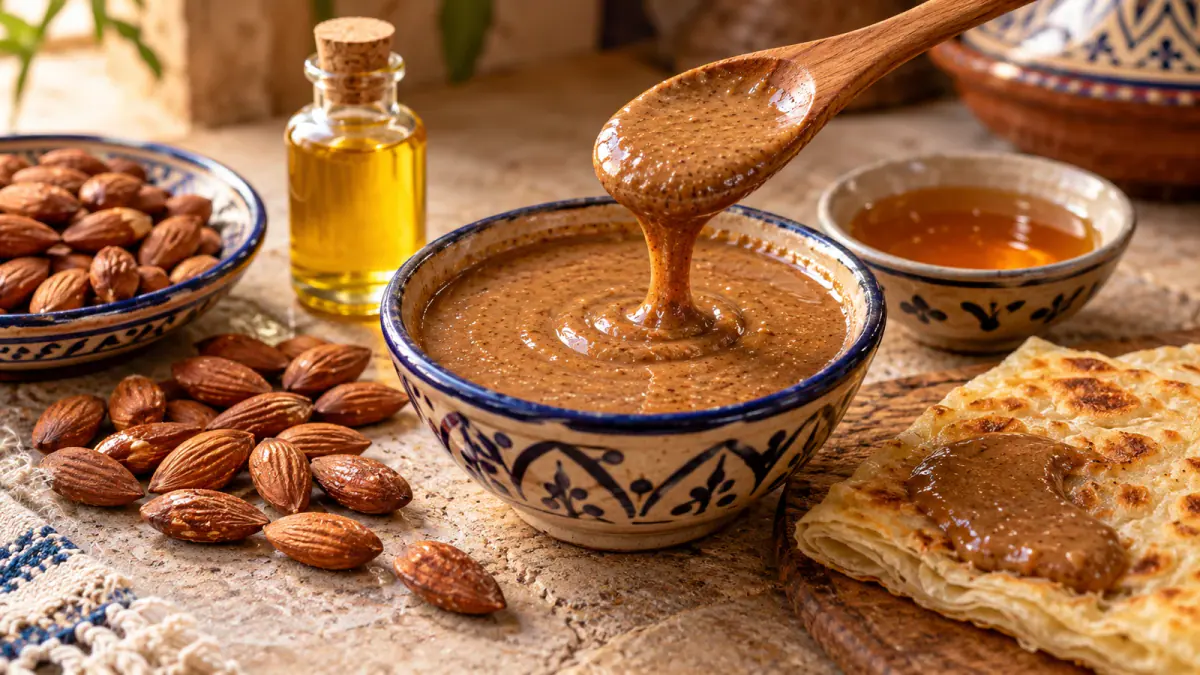
Our amlou preparation guide offers a serving idea, while the Moroccan breakfast guide explains sweet and savory pairings. Add toppings after cooking; do not use them to conceal an underdone center.
Questions about crumbly harcha
Is harcha meant to be crumbly?
Its grainy texture can shed a few crumbs. The practical target is a cooked round you can lift and eat, rather than a bread that must have the elastic crumb of a yeast loaf.
Should I add an egg to hold it together?
Use a recipe designed with egg if that is the version you want. Adding one as a rescue changes the liquid and structure, so it is not a universal correction for the methods discussed here.
Can I replace semolina with ordinary flour?
That would produce a different preparation. Start with the ingredient named by your recipe, and treat a flour-based version as its own formula.
Can broken pieces still be served?
If they are fully cooked and appropriately handled, presentation alone does not make them unusable. Serve small pieces with an accompaniment, and record where the round broke so you can improve the next batch.
A useful note for next time
Record the recipe, semolina product, disc size, pan and stage where the break occurred. One sentence can be enough: “Held together in pan; crumbled when cut immediately.” That note points you toward handling on the next attempt and prevents an unnecessary overhaul of the ingredient quantities.