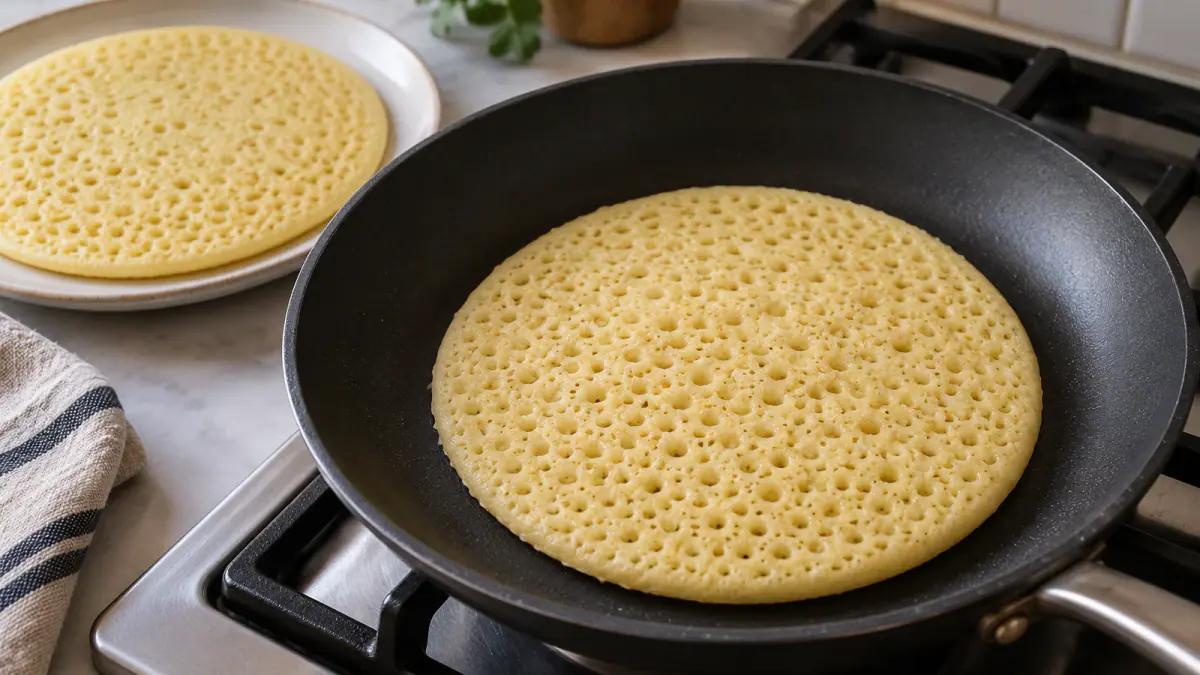
Baghrir and crumpets both have a porous surface, but they are different preparations. Moroccan baghrir is generally a thin, soft semolina pancake poured directly into a pan. A British crumpet is usually a thicker flour-based round, often cooked in a ring and toasted for serving. The holes are a useful resemblance, not evidence that the batters can be substituted without changes.
The differences at a glance
| Feature | Baghrir | Crumpets |
|---|---|---|
| Typical dry base | Fine semolina, sometimes with flour | Wheat flour |
| Shape | A spreading pancake | A thicker round, often held by a ring |
| Surface | Many small openings across a soft top | Holes opening through a deeper, spongy round |
| Cooking | Usually cooked on one side | A longer first-side cook; some recipes briefly turn them |
| Serving | Often warm with honey and butter | Often toasted with butter or jam |
These describe the linked preparations below. Recipes vary, including their liquids and leavening; neither name guarantees a particular ingredient list.
Compare actual recipes, not just photographs
Alia’s baghrir recipe combines fine semolina, flour, water, yeast and baking powder. It is an example of a semolina-led batter with no milk or eggs in the listed pancake ingredients. Honey and butter belong to its accompaniment, so distinguish the pancake from what is poured over it.
PJ Hamel’s crumpets for King Arthur Baking use all-purpose flour, water, milk, butter, yeast and baking powder. The method puts the batter into greased rings and recommends toasting for serving. That is one published formula, not proof that every crumpet contains milk or butter.
The practical difference is what the recipe asks the batter to do. A mixture intended to spread as a pancake and one held in a ring do not need the same handling. Pick the food you want, then follow its complete recipe, including resting and heat instructions.
Do you flip baghrir or crumpets?
Baghrir is usually cooked with the porous face upward until the surface has set. However, Christine Benlafquih’s baghrir notes describe regional versions that are briefly turned. “Never flipped anywhere” would be too absolute.
Crumpet methods vary too. Hamel turns hers to finish cooking and lightly color the top, while explaining that a pale top is more traditional. A browned upper face therefore does not, on its own, tell you whether a pictured round is a crumpet or baghrir.
Can you use crumpet batter to make baghrir?
Treat that as a recipe experiment rather than an equivalent substitution. Pouring a crumpet formula without its ring does not add semolina or reproduce a particular baghrir method. Likewise, cooking baghrir in a ring does not automatically turn it into a crumpet.
For baghrir, start with a complete baghrir formula. If the surface stays smooth, our baghrir no-holes guide helps you check consistency, resting and pan response before changing the whole bowl. For ingredient labels, see fine versus coarse semolina.
Which should you choose?
- For a Moroccan breakfast pancake, choose baghrir and plan its accompaniment separately.
- For a thicker round to toast, start with a crumpet recipe and check whether it calls for rings.
- For dietary requirements, read the actual batter and toppings rather than relying on either food’s name. Semolina is wheat; it is not a gluten-free alternative to flour.
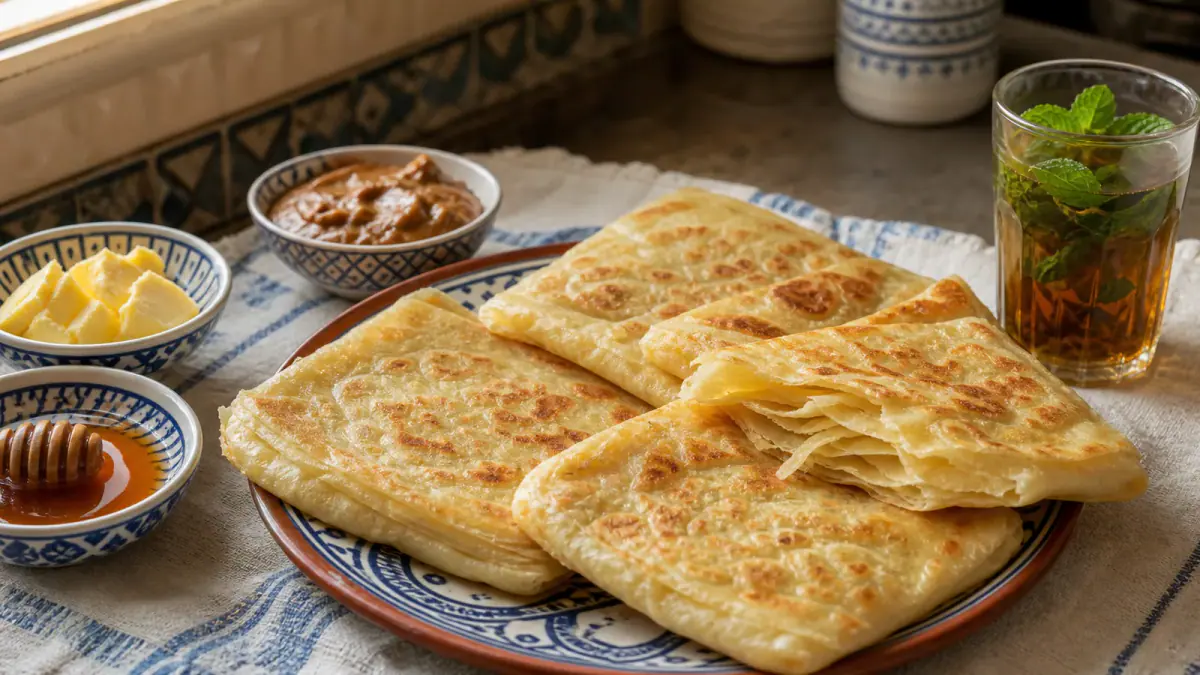
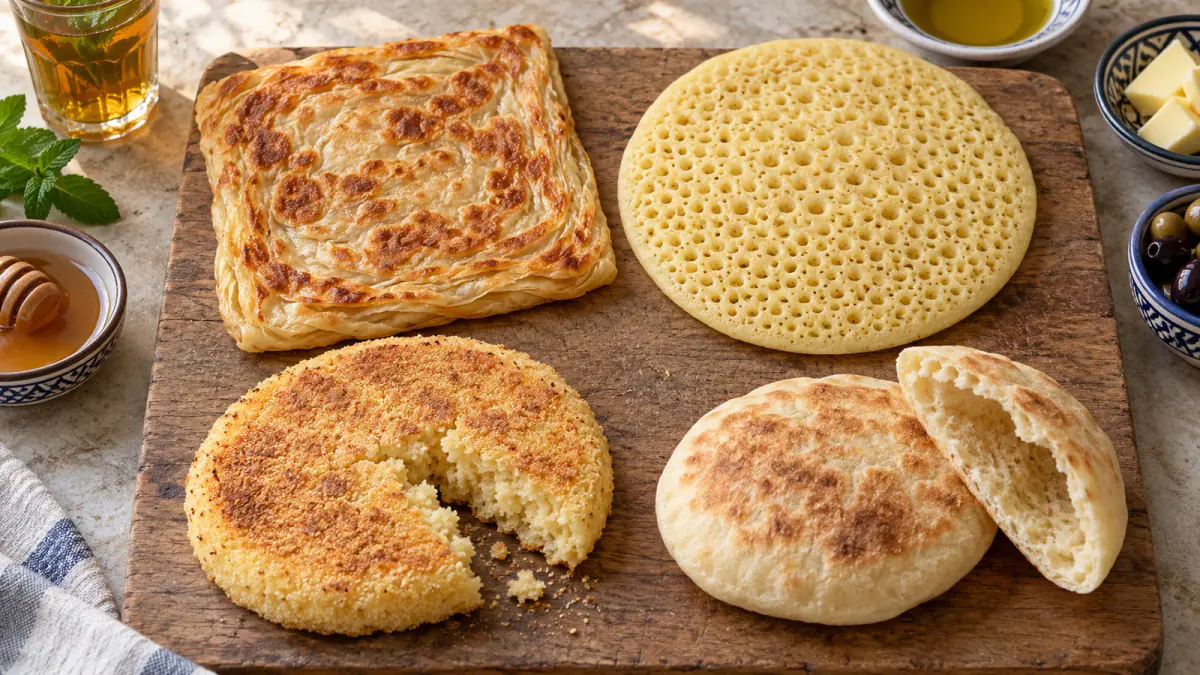
If you meant the square, folded Moroccan bread, that is msemen. Our Moroccan breakfast bread comparison explains how it differs from baghrir, harcha and batbout.