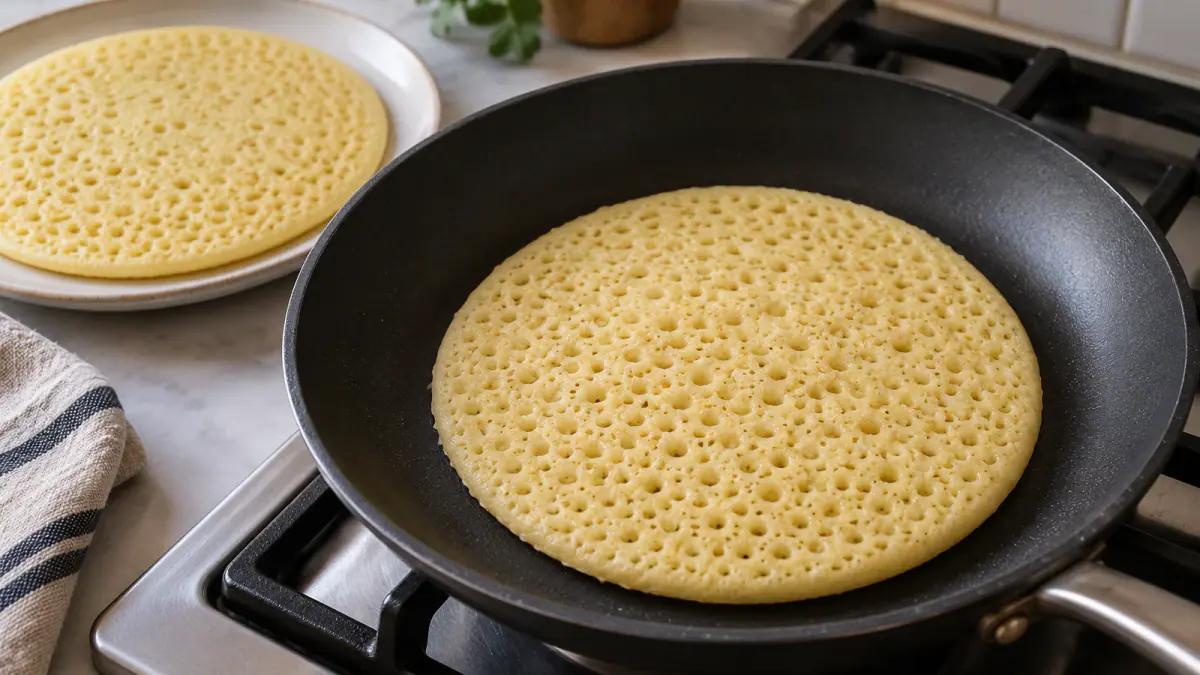
If your baghrir has no holes, check how the batter pours, whether it has rested as your recipe requires, and what happens when a small pancake meets the pan. A smooth top is a clue, but it cannot identify the cause on its own. Test one small portion before adding anything to the whole bowl.
Baghrir, also spelled beghrir, should have a soft, porous upper surface. It is not supposed to behave like the square folded dough in our msemen recipe. This guide helps you troubleshoot a baghrir formula you already have; it does not ask you to combine quantities from several recipes.
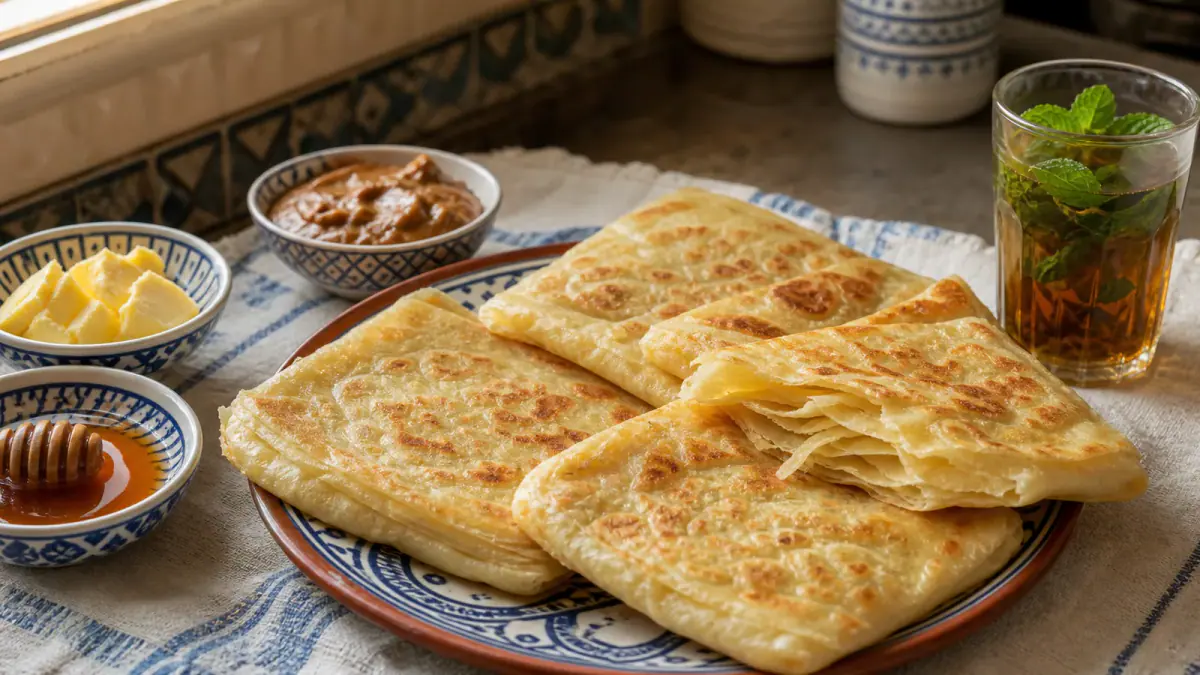
If you are checking which pancake your recipe describes, our baghrir versus crumpets comparison explains the batter and cooking differences before you start troubleshooting.
Start with the symptom you can see
| What happens | First thing to inspect | A useful next test |
|---|---|---|
| Batter sits in a mound | Consistency after resting | Check whether your recipe permits a small water adjustment |
| Underside darkens while top stays wet | Heat and portion thickness | Cook a smaller pancake over gentler heat |
| Batter spreads but stays flat | Leavening and recipe timing | Review yeast type, freshness and resting instructions |
| Holes appear unevenly | Pan contact and heat distribution | Try the same batter in another suitable pan |
| First pancake works, later ones struggle | Pan temperature or batter change | Pause and compare the new conditions with the first test |
These are starting points, not diagnoses. Two problems can produce similar pancakes. Keep the first test small so you have enough batter left to investigate without guessing at a rescue formula.
Check the batter before blaming the pan
Scoop up a little batter and watch it fall from the ladle. Does it pour continuously, or drop in heavy clumps? Does the surface settle, or stay ridged? Compare those observations with the recipe’s description or preparation video.
In Christine Benlafquih’s baghrir notes, consistency and pan choice are both important. She describes a flowing batter and suggests a modest water adjustment when it is too thick. That advice applies to her formula; it is not a reason to pour unlimited water into every baghrir mixture.
For your own batch, keep any adjustment small and measured. Put a portion in a separate cup if you want to compare it with the original. Record the change, cook it, and inspect the result before deciding whether to treat the remainder the same way.
Check the semolina label
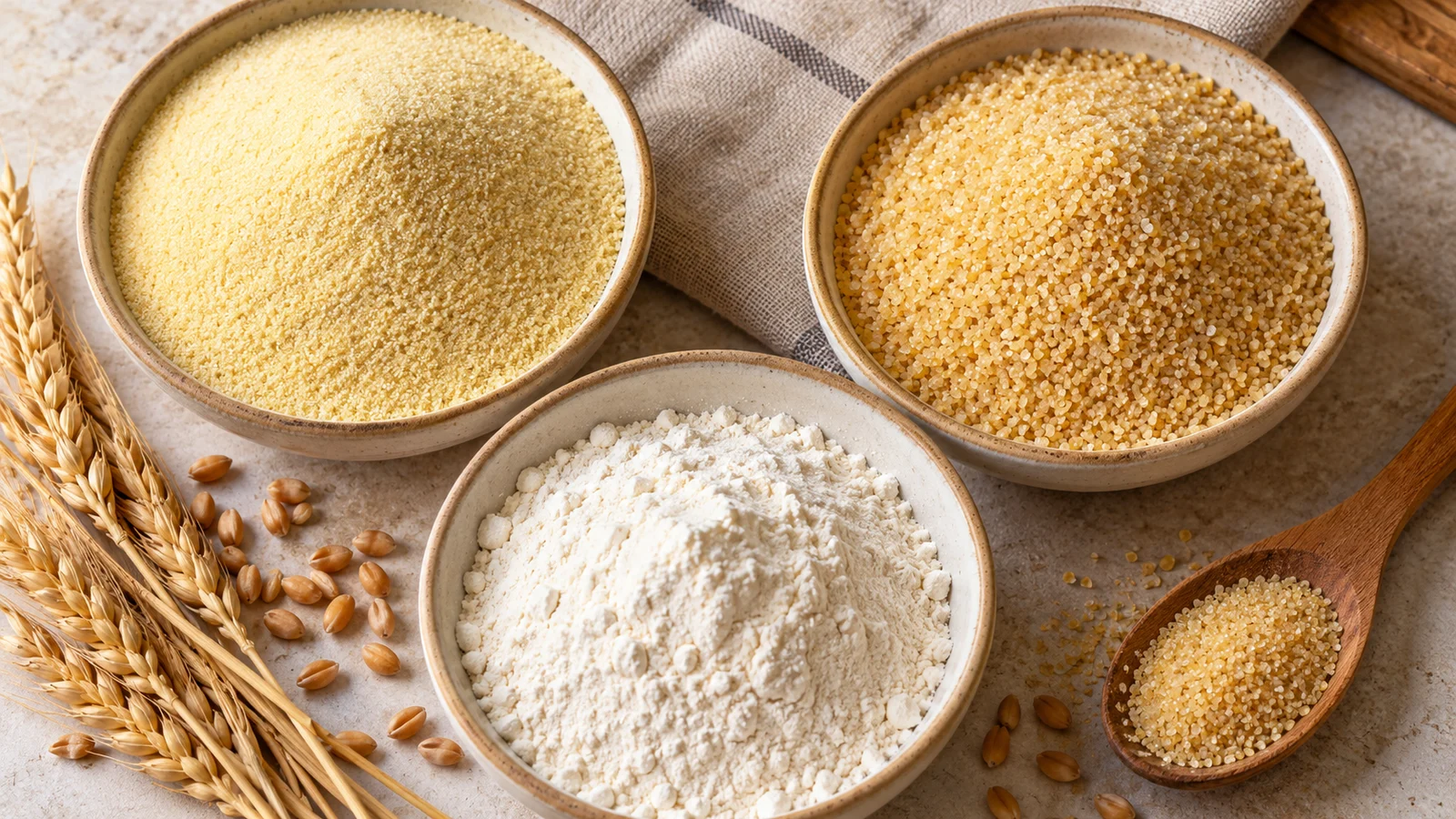
AI-generated ingredient illustration; grain sizes are illustrative.
A recipe written for fine semolina can behave differently with a much coarser product. Check the bag you actually used, rather than the word you remember from the shopping list. The word “semolina” alone does not tell you everything about the grind.
Our fine versus coarse semolina guide explains what to look for. If you substituted the ingredient, write that down before changing yeast or heat. Otherwise, the next batch may repeat the same problem even after a successful pan adjustment.
Recheck the measurements
Look for the ordinary mistakes first: a cup filled differently, a quantity doubled on only one line, or a spoon confused with a smaller measure. When working from a recipe page, make sure its serving-size selector did not change halfway through preparation.
If the dry mixture is still available, compare your written quantities with the recipe. If everything is already blended, avoid pretending you can calculate precisely what went in from the pancake’s appearance. A smaller fresh batch is sometimes a better use of ingredients than a long series of uncontrolled additions.
Follow the leavening system in your recipe
Some baghrir formulas use yeast and baking powder together. Others vary the method. Cooking With Alia’s baghrir preparation is one published example to compare with your chosen formula.
Check which yeast your recipe names and how it is incorporated. Follow the packet’s directions where relevant. Very hot water, old yeast or an omitted ingredient are worth investigating, but a pancake without holes does not prove which one occurred.
Do not keep adding baking powder until the surface looks right. That changes the formula, can affect taste, and leaves you without a repeatable method. If you suspect a measuring error, confirm the original amounts before considering another addition.
Give resting time a clear purpose
Use your recipe’s resting instructions and its visual cues together. A cool room and a warm room do not necessarily produce the same change on the same schedule. Set a timer, inspect the bowl, and note what you see rather than leaving it indefinitely while trying unrelated fixes.
The useful question is whether the batter has reached the condition described by the author. “Rest longer” is too vague when you do not know the starting temperature, yeast type or batter texture.
Use the first pancake to learn about the pan
Choose a pan suitable for the recipe, follow the manufacturer’s heating guidance, and use a modest portion. Keep the burner setting steady for this first test. Observe the bottom and top separately: a browned underside does not establish that the upper batter has set.
If the bottom colors well before the top is ready, lower the heat for the next attempt and use a comparable portion. If the batter barely responds, check whether the pan was adequately heated. Allow the new setting to take effect before pouring again.
Avoid comparing a tiny pancake cooked in the center with a much larger one extending toward a cool edge. The difference in size adds another variable. Pick a manageable portion and keep it consistent during troubleshooting.
Should you flip baghrir?
The familiar honeycomb version is generally cooked on one side, though variations exist. Follow your recipe rather than treating it like an American pancake. Turning a wet-topped pancake over may cook the surface, but it does not tell you why the expected holes failed to develop.
Make sure there are no wet batter patches before serving. If a pancake cannot finish cooking without the base scorching, change the heat or portion for the next test instead of accepting a raw center.
Make a simple two-test comparison
For a consistency test, use a tablespoon measure so the change has a clear size: one tablespoon is 15 ml. Use it only where the selected formula allows a water adjustment, and consider the batch size. A spoonful added to a tiny sample is a much larger change than a spoonful added to a full bowl. Keep the untreated comparison beside it.
You do not need a laboratory setup. Two labeled cups and a note on your phone are enough to make the next decision clearer.
- Keep one small portion of the original batter as a comparison.
- Choose one change: a recipe-supported consistency adjustment, additional recipe-directed rest, or a different pan setting.
- Cook similarly sized test pancakes.
- Compare holes, underside color and whether the top sets fully.
- Apply a change to the remaining batter only if the comparison supports it.
If you change water, resting time and heat together, you may get a better pancake but still have no idea why. That makes the next attempt harder. A brief note such as “same portion, lower heat, top set before base darkened” is more useful than “worked eventually.”
What to do with a disappointing batch
If the pancakes are fully cooked and have been handled appropriately, imperfect holes are a texture issue. Try a small piece before deciding whether you want to serve them. A topping can make a plain pancake more enjoyable, but it cannot repair raw batter or unsuitable storage.
If the flavor is unpleasant after repeated leavener additions, or the mixture no longer resembles your formula, stop adjusting. Record what happened and begin again with a smaller quantity. Keep the successful recipe page and the ingredient packet together for that second attempt.
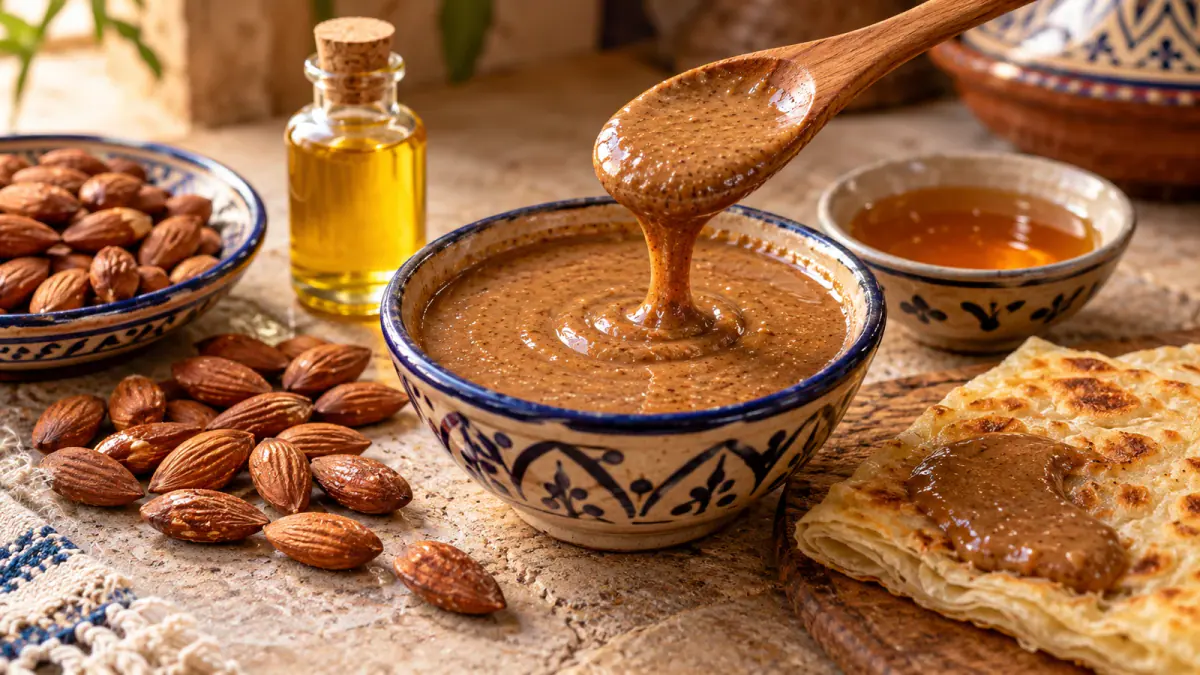
For serving ideas, our Moroccan breakfast guide explains where baghrir fits beside other breads. The amlou guide offers another accompaniment if you enjoy an almond spread.
Questions that come up during cooking
Do the holes have to be large?
No single hole size is a universal target. Look for a porous surface and a cooked, soft interior rather than counting holes or trying to reproduce an illustration exactly.
Can coarse semolina be rescued by more blending?
It may change the texture, but it is not a dependable substitute for buying the grind your recipe specifies. For the next batch, correct the ingredient first.
Why did only the first pancake turn out well?
Compare what changed afterward: burner setting, time between pours, portion size, pan residue or batter consistency. Use the first success as a reference and investigate one difference at a time.
Is a thick American pancake batter suitable?
It is not a useful target for the familiar thin, porous baghrir. Compare with the chosen baghrir method rather than a different type of pancake.
Keep the next batch easier to diagnose
Save the recipe, note the semolina product and write down the change that helped. For background on the ingredient itself, King Arthur Baking’s semolina explanation describes how milling and wheat type relate to its baking use. With that information recorded, the next breakfast begins with a known method instead of another round of guessing.