If your batbout will not puff, inspect the dough’s rise, the thickness of the shaped rounds, their surface condition and the pan heat. A pocket needs the bread to expand without losing that expansion through a damaged surface. Start with one round and keep the rest covered while you investigate.
Batbout is a Moroccan stovetop bread often made with a pocket for filling. A fully cooked round without a perfect pocket may still be useful, so separate the presentation problem from doneness. This guide helps with a recipe you already follow rather than supplying another competing set of ingredient quantities.
Match the symptom to the next check
| What you see | First check | A practical next step |
|---|---|---|
| Dough shows little change during rising | Yeast, temperature and recipe instructions | Review the leavening method before shaping more rounds |
| Some rounds puff, others do not | Thickness and handling differences | Compare a successful round with the next one |
| One side puffs but the other stays thick | Uneven shaping | Roll the next round more evenly |
| Bread cracks as it expands | Surface drying or damage | Protect the remaining dough and transfer more gently |
| Dark patches appear immediately | Pan heat | Lower the setting and let the pan adjust |
| Bread cooks slowly and stays dense | Preheating and dough condition | Check both rather than adding more yeast blindly |
The table gives you an order of investigation. It cannot determine the cause without knowing the formula, room conditions and dough handling.
Check which batbout method you chose
Cooking With Alia’s batbout preparation and Christine Benlafquih’s batbout recipe illustrate different published approaches. Read the complete method you selected, including where it places its resting and rising stages.
Do not take the short rest from one formula and the shaped-round rise from another as if they were identical instructions. Different doughs and flour proportions need their own process. Keep the ingredient list and all stages together for your first attempt.
Review substitutions before the pan
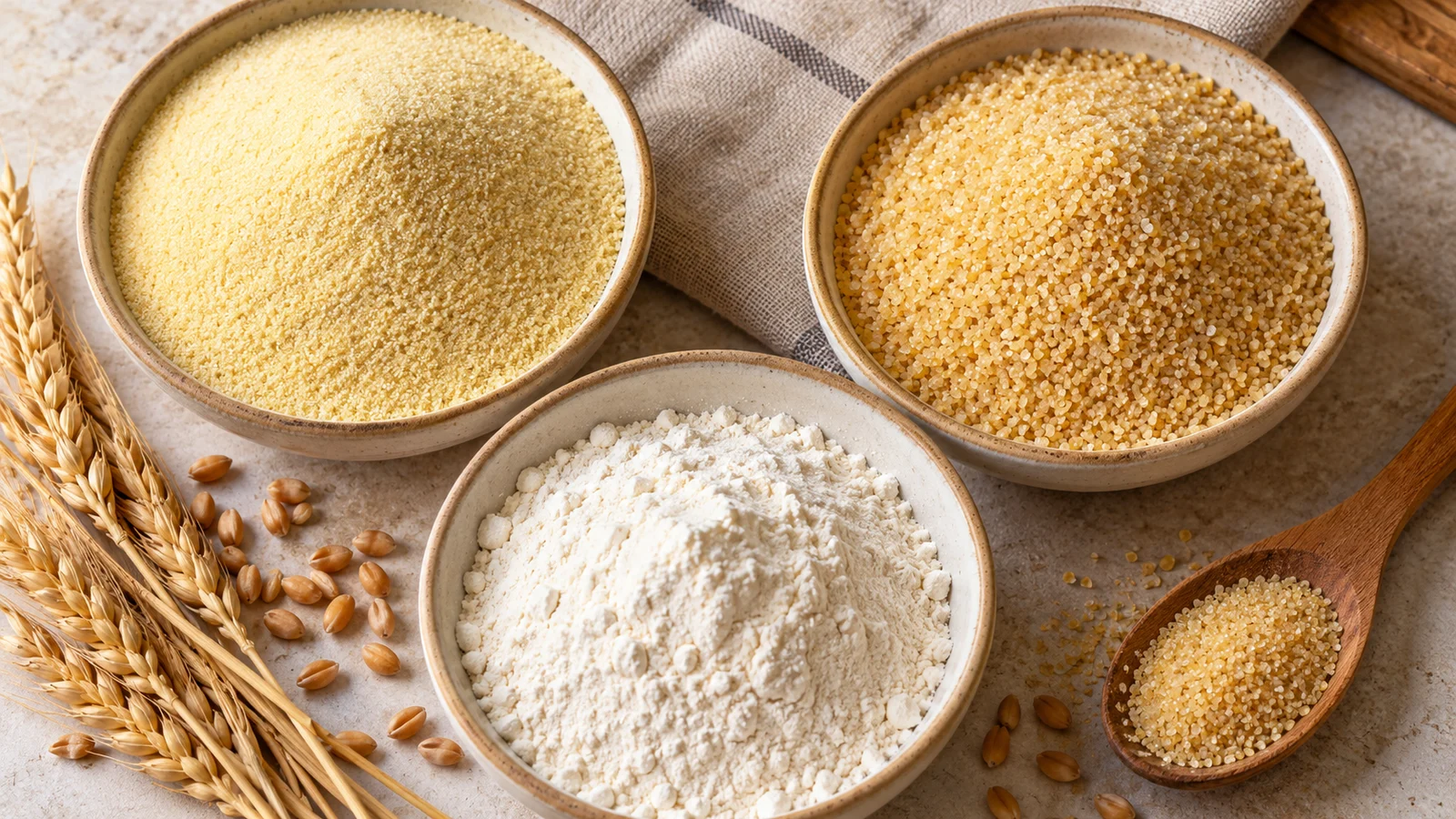
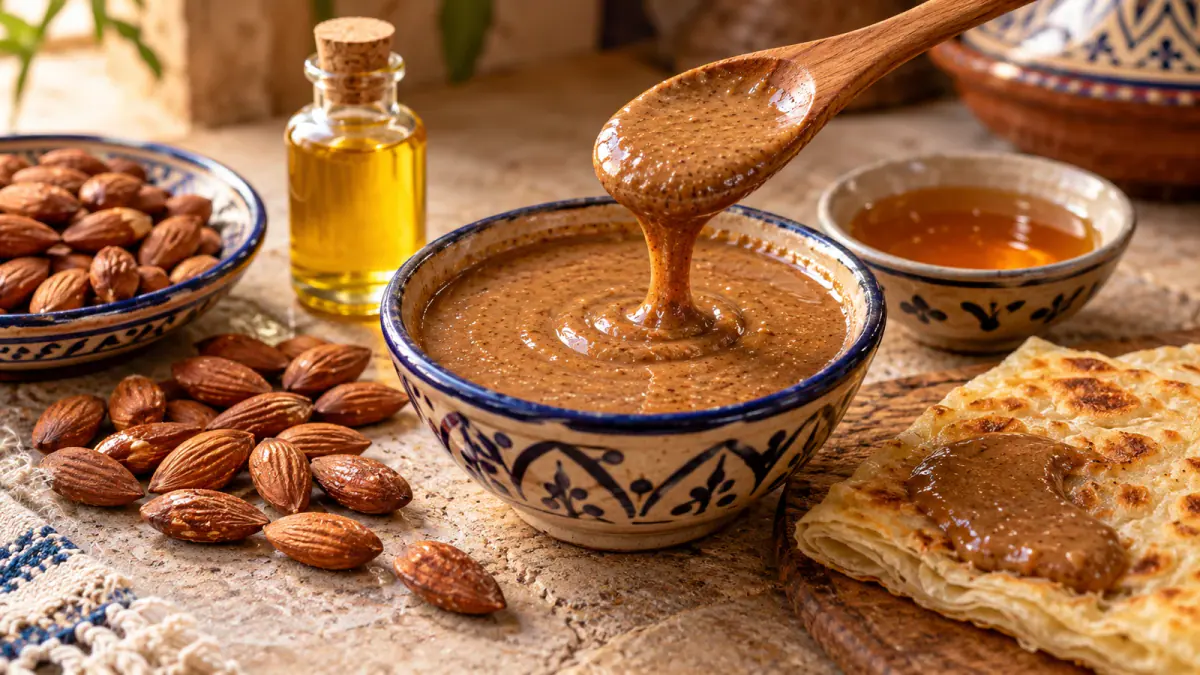
AI-generated ingredient illustration.
Did you change the semolina, use a different flour blend or omit a stated ingredient? Record those changes. Our semolina guide for Moroccan breads explains why a name on the front of a packet is not always a precise match for a recipe.
Use a small batch when testing a substitution. If an unfamiliar flour blend produces a difficult dough, it is easier to learn from a few rounds than to keep adjusting a large bowl without reliable quantities.
Evaluate the dough before rolling
Follow the author’s texture cues while kneading. A mixture that is stiff, rough or full of dry pockets needs attention before you expect an even pocket. Avoid adding a large amount of flour just because the dough briefly sticks during handling.
Check that you measured the liquid and dry ingredients consistently. If you use cups, filling and leveling them differently can change the formula. A scale helps you record what you used, although texture cues still matter.
Check the yeast instructions
Review the packet’s yeast type, date and preparation directions. Compare them with the recipe. If the method calls for a preliminary yeast mixture, observe that stage before using it. If it uses instant yeast mixed into dry ingredients, follow that method instead of inventing an unrelated proofing step.
Do not conclude that old yeast caused every flat round. If the dough rose normally but one bread failed while its neighbors puffed, local shaping or handling differences deserve attention first.
Watch the rise rather than the timer alone
Use the recipe’s stated time as a guide and inspect the dough for the condition it describes. A cold kitchen can change the schedule. A hot, dry room may create a different problem: a surface that needs protection while the rounds wait.
Keep the dough covered appropriately. Record the room conditions if you are troubleshooting an inconsistent result. “Cold kitchen, slower rise” is useful information; simply waiting longer without looking at the dough is less informative.
Shape rounds with a consistent thickness
An even round gives you a fairer cooking test than one with a heavy middle and thin rim. Follow the recipe’s thickness guidance. For your first diagnostic test, choose a size that is easy to lift and turn without stretching it.
If you cut circles from a larger rolled sheet, distinguish those first circles from rounds made with reworked scraps. They may have been handled differently. Follow the author’s directions for resting and rerolling scraps rather than forcing them immediately into shape.
Protect the surface while it waits
Cover shaped rounds as directed so they do not sit exposed while you cook the first ones. Use enough space that they are not stuck together or crushed. When you lift one, support it instead of pulling at the edge.
Benlafquih’s batbout notes identify gentle handling, sufficient preheating and thickness as useful controls. The practical implication is to inspect the next uncooked round before assuming the entire recipe needs changing.
Avoid pressing the rising bread
A puffing round can tempt you to push it flat to make it easier to turn. Handle it gently and follow the recipe’s turning method. The surface and interior contain hot steam, so keep fingers away from cracks and escaping steam.
Use suitable utensils, keep the pan stable and make one deliberate turn rather than repeatedly poking at the bread. Better handling is a worthwhile test because it does not require altering the remaining dough.
Establish the pan setting with one bread
Preheat the pan as your recipe and manufacturer direct. Do not exceed the pan’s guidance while trying to achieve a dramatic puff. A very hot exterior can darken before the dough cooks through.
Cook one round first. Observe how quickly the surface sets, how the color develops and whether it expands. If it darkens rapidly, reduce the heat and allow the setting to take effect before the next round.
If little happens, check whether the pan was preheated and whether the dough had reached its intended stage. Change one factor for the next test. Increasing heat, adding yeast and rerolling every round at once gives you no clear explanation of what helped.
Follow the appropriate turning method
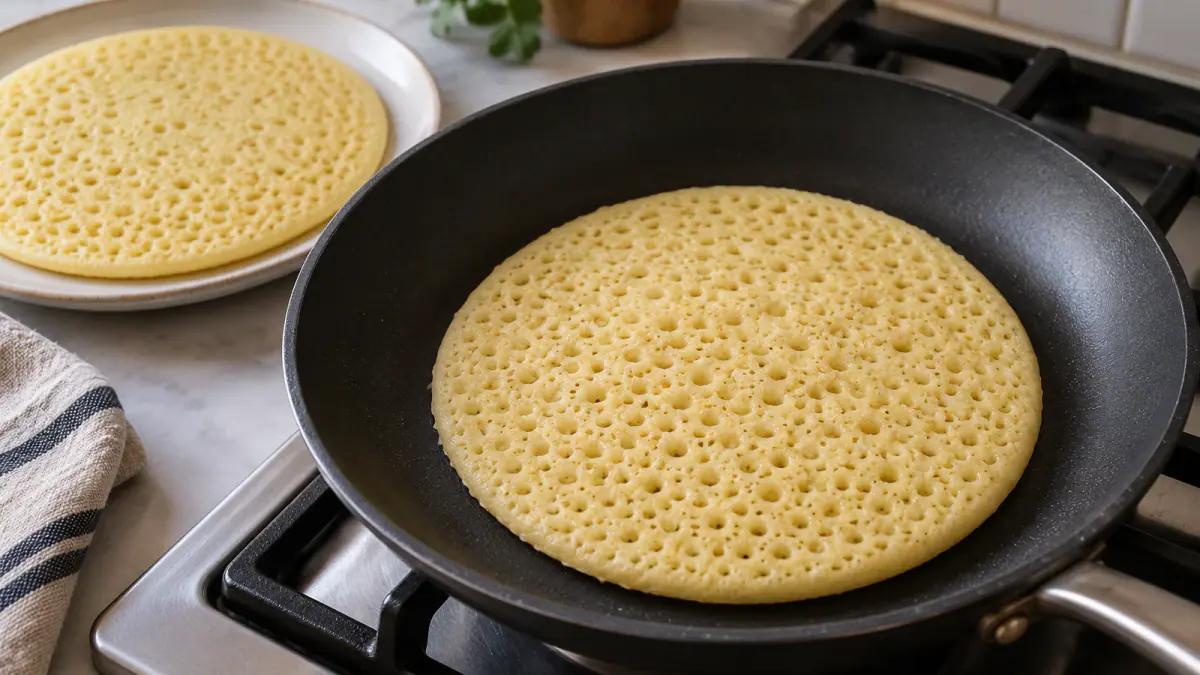
The linked batbout references describe turning during stovetop cooking. Follow the complete directions of your chosen recipe. Do not borrow baghrir’s one-sided approach just because both foods are round and cook in a skillet.
Our breakfast bread comparison explains those different structures. Keeping the cooking methods distinct is more useful than applying one generic “Moroccan pancake” technique to every bread.
When only part of the batch puffs
Compare a successful bread with a failed one while the differences are still fresh. Were they the same diameter and thickness? Did the failed round sit exposed longer? Was it pulled out of shape during transfer? Did the pan setting change?
A working round is evidence that at least some of the dough can produce the result under those conditions. That makes comparisons within the batch valuable. You may be able to improve the next rounds without changing the formula at all.
Write down one specific difference and test it. For example, keep the next shaped round covered until the moment of transfer and support it with a broad utensil. Compare that result before deciding to remake the entire batch.
What to do with flat batbout
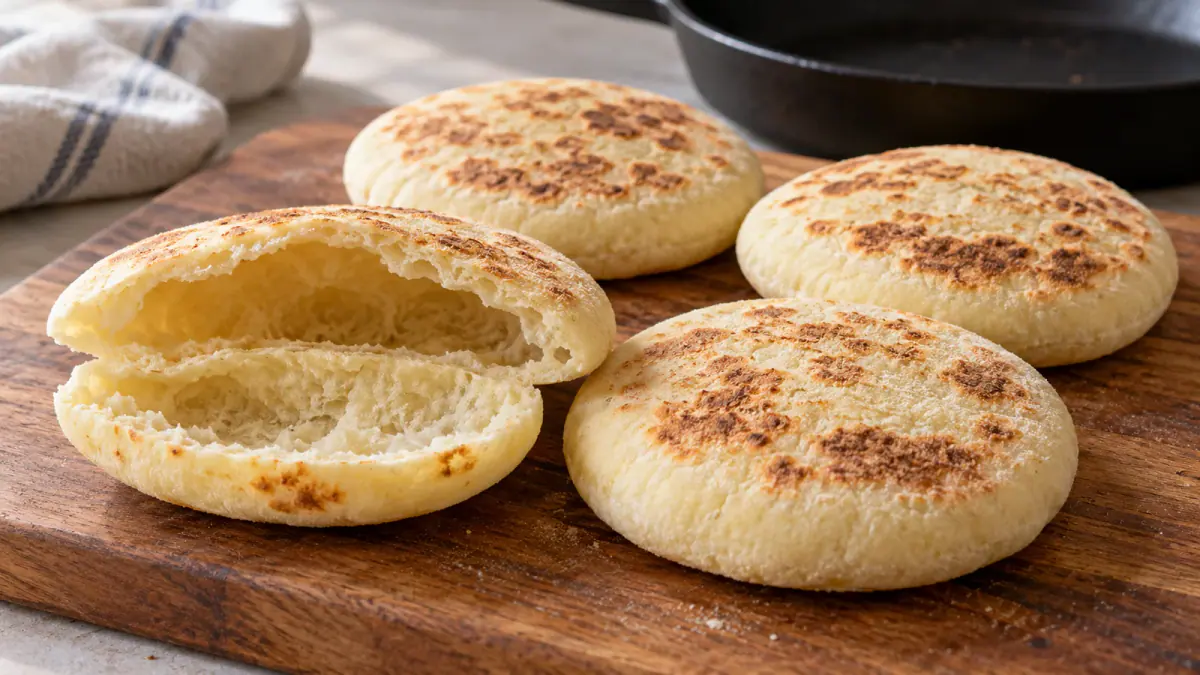
Check that the bread is fully cooked before considering how to serve it. A hollow pocket and a cooked center are separate observations: a bread can lack the first without being raw, but exterior color alone is not proof of the second.
If it is cooked through, try serving it with a topping instead of filling a pocket. Depending on its texture, you may be able to slice it carefully. Do not force a split through a hot thick center or use a filling to conceal an undercooked crumb.
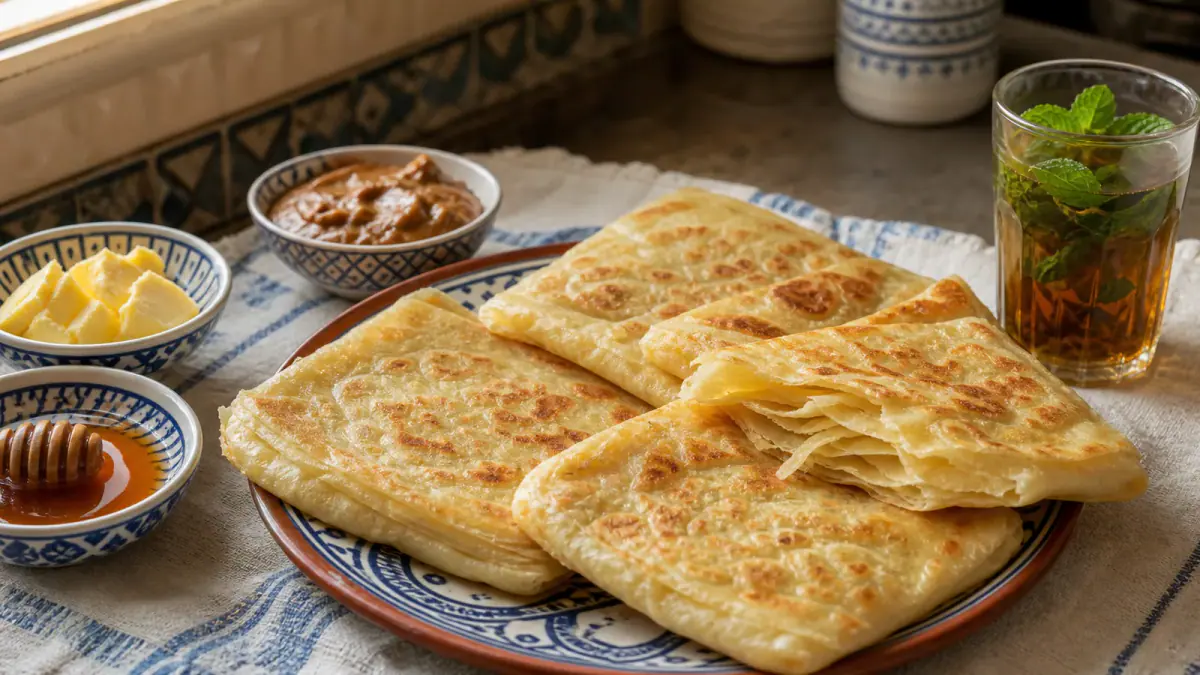
Our Moroccan breakfast guide offers simple pairings. Start with a small accompaniment rather than turning every imperfect round into a heavily filled sandwich.
Questions about the pocket
Does every batbout have to be hollow?
Naming and styles vary, and some breads are deliberately thicker. If you follow a pocket-bread recipe, use its result as the target rather than judging all batbout by one illustration.
Can adding yeast after shaping fix the rounds?
It is not a useful quick correction for individual shaped breads. Review the original dough and method, and begin a smaller fresh batch if the leavening was omitted.
Can I use only white flour?
Choose a formula designed for your flour choice. Do not assume that removing the semolina from the selected recipe leaves the same method and texture unchanged.
Why does my bread deflate after cooking?
A pocket does not have to remain inflated like a balloon on the plate. Inspect whether it can be opened once appropriately cooled, and distinguish ordinary settling from a dense uncooked center.
Record the successful combination
Keep the recipe, flour blend, shaped thickness and pan together in your notes. For background on the ingredient, King Arthur Baking’s semolina guide explains its durum-wheat basis. The useful next attempt is a controlled repeat of what worked, with one change if you still need it.