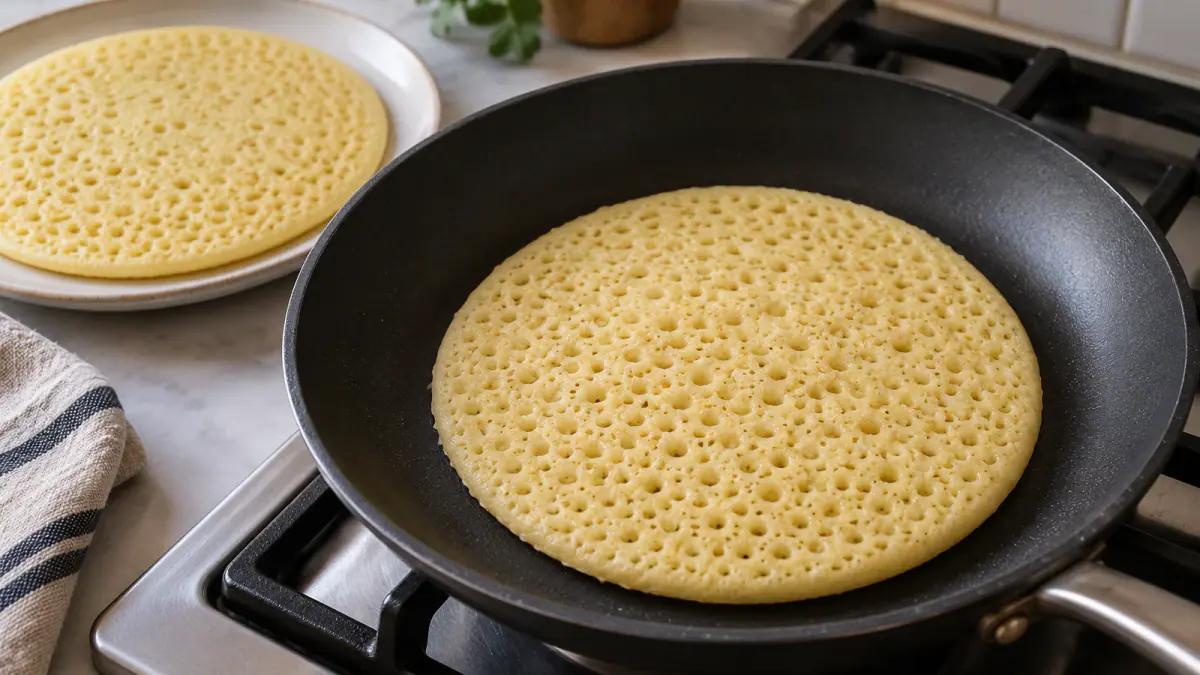
To freeze and reheat msemen, portion the cooked flatbreads with separators, pack them airtight and warm only what you need. For plain msemen, a pan gives you a convenient way to check the center and surface separately. Start gently, then finish the exterior to the texture you prefer rather than blasting a frozen piece with high heat.
The aim is a warm, flexible middle with a lightly crisp surface. Thickness, fillings and appliance power make a fixed reheating time unreliable. This guide covers cooked msemen; follow our msemen recipe for mixing, resting, folding and the first cooking.
Choose the method that fits the portion
| Situation | Convenient approach | What to watch |
|---|---|---|
| One or two plain pieces | Skillet or griddle | Warm the middle before over-browning the outside |
| Several plain pieces | Covered oven warming, then check individually | Avoid leaving thin edges exposed for too long |
| A quick soft serving | Short microwave intervals | Check texture and center after each interval |
| Air fryer available | A cautious single-piece test | Moving hot air can dry the layers quickly |
| Msemen with perishable filling | Follow appropriate leftover-reheating guidance | Warm exterior color does not establish a safe center |
This table describes choices rather than tested settings. Use the appliance manufacturer’s instructions and adjust to the actual bread in front of you.
Freeze portions you can separate easily
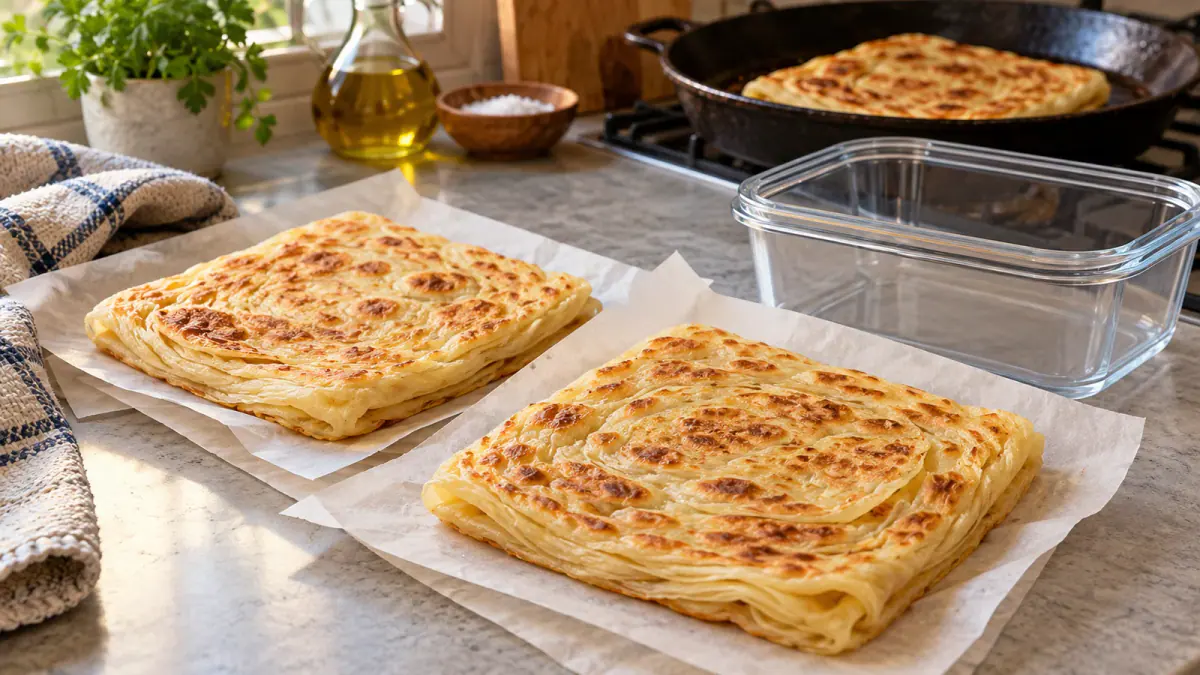
Once the plain cooked msemen has cooled, place suitable food-safe separators between pieces. Pack in a freezer-safe bag or container with a good seal. Keep the pieces reasonably flat so you do not have to break a brittle frozen corner to release one.
King Arthur Baking’s freezing guide recommends airtight packing and portioning for bread. Those general storage principles are helpful here, though its loaf and slice instructions are not a tested msemen reheating schedule.
Label before it goes into the freezer
Write the preparation date and whether the pieces are plain or filled. If there is a filling, name it. A bag that looks like ordinary bread can otherwise be handled without the precautions its contents require.
Include any useful serving note: “small plain squares” or “thick pieces with filling” is enough to remind you why the method may differ. Store food according to relevant safety guidance and your freezer’s instructions; a label does not establish an unlimited shelf life.
Keep the portion practical
If breakfast usually needs two pieces, pack so two can be removed. You can separate a larger bag with parchment, or use smaller portions. The goal is to avoid thawing the entire supply whenever you want a single breakfast.
Check that a bag will close around the bread without crushing it. If a box contains a lot of unused air, choose a better-fitting container. Keep the food protected rather than treating the separator as its only wrapping.
Reheat plain msemen in a pan
Use a skillet or griddle appropriate for your stovetop. Place a single layer of bread in it and begin with gentle heat. Turn periodically and check whether the center is becoming warm and flexible before deciding the exterior needs more color.
If starting from frozen, allow additional warming time at the gentler setting. A short covered stage may help retain warmth and moisture if your pan and lid are suitable; uncover for a surface finish once the interior has warmed. Avoid piling several frozen pieces together and expecting the center ones to heat like the outer ones.
Check the middle, not just the browned patches
Msemen already has color from its first cooking. Those browned patches can make it look ready immediately, even when the center is still cold. For plain bread, check the thickest folded area rather than judging by the edge alone.
If the outside becomes stiff while the middle stays cool, use lower heat and a longer gentle stage next time. If the entire piece is warm but softer than you like, a brief uncovered finish gives you a separate opportunity to change the surface.
Add toppings after warming
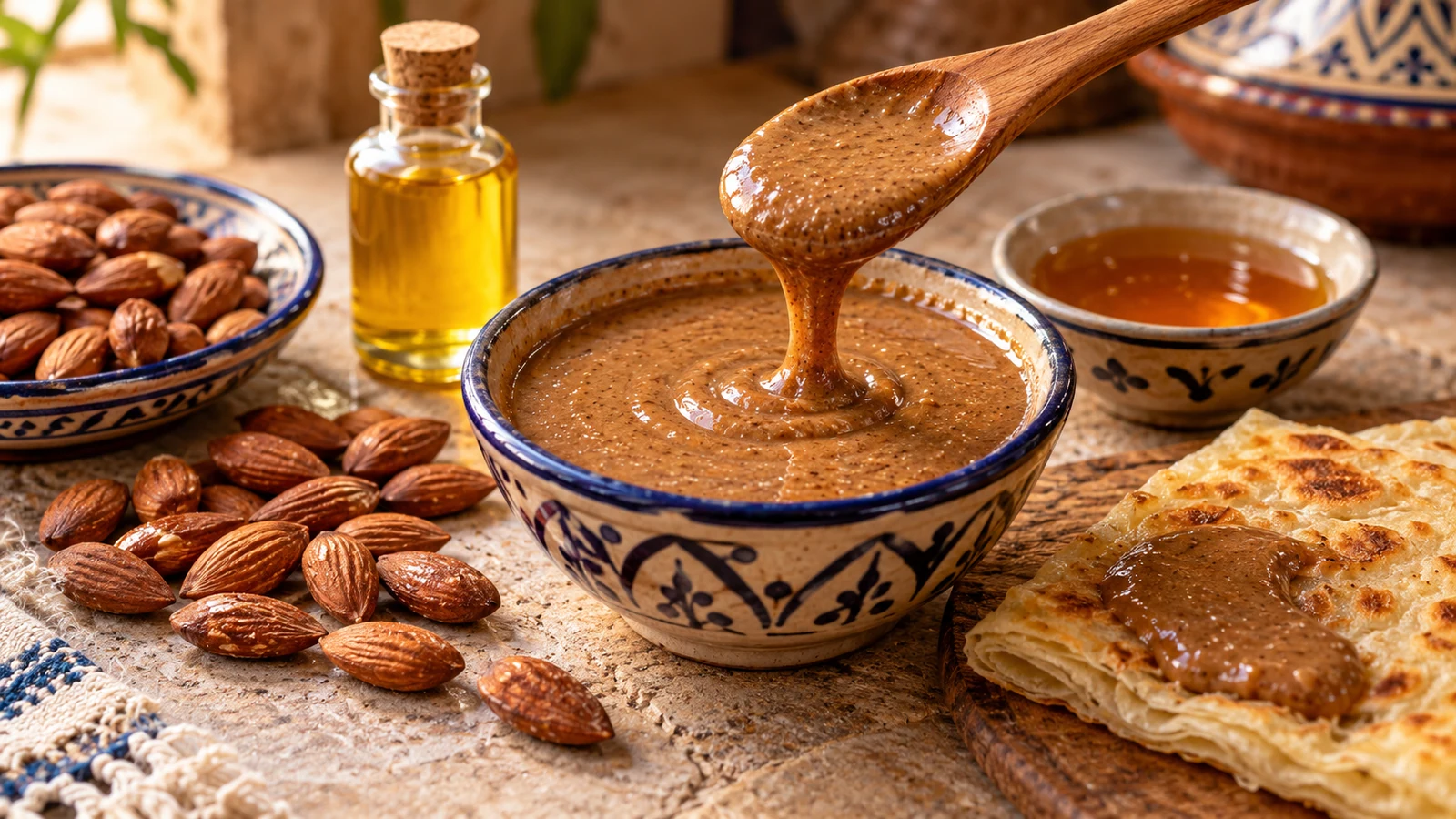
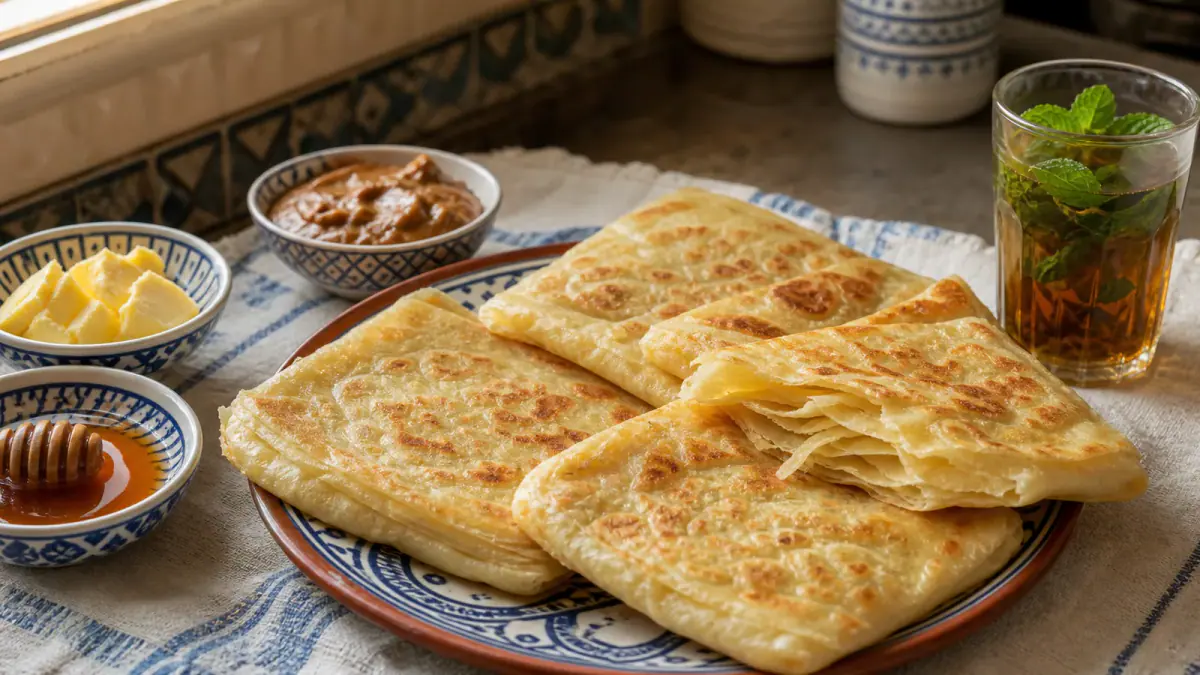
AI-generated serving illustration.
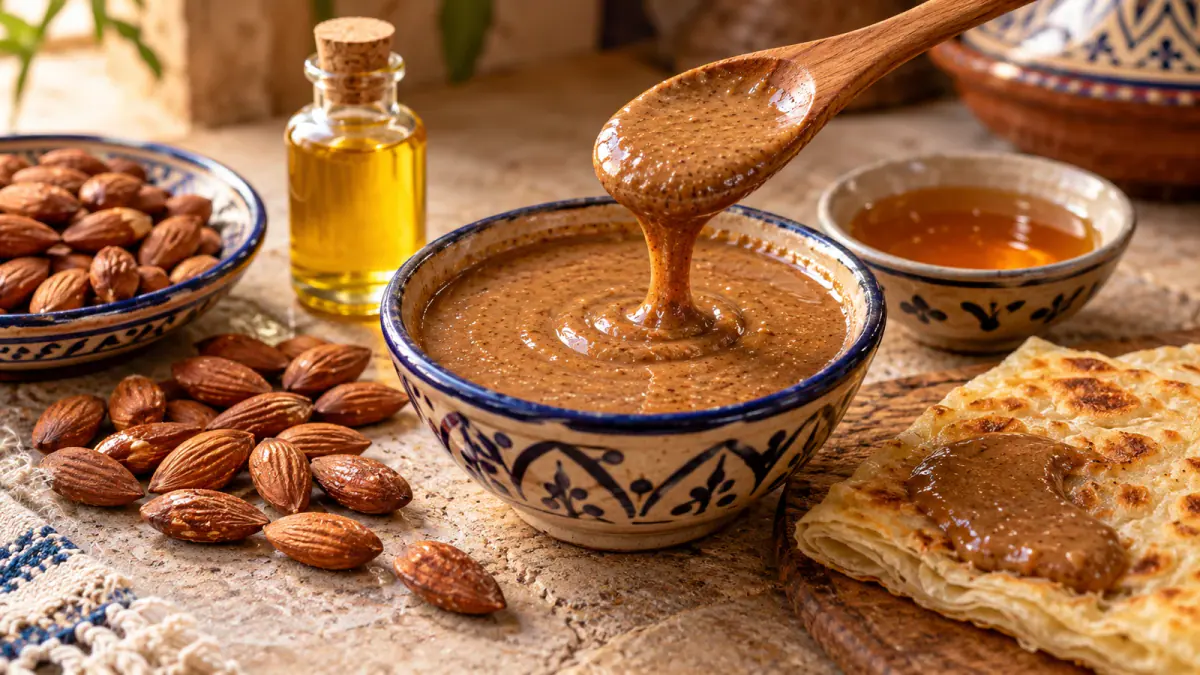
Warm the plain bread before adding honey or a spread. This gives you a clearer view of the surface and avoids treating a sweet topping as part of the pan-reheating method. Our amlou guide explains a traditional accompaniment.
For a breakfast set, prepare the drink and toppings while the bread warms. Serve the warmed pieces as they become ready instead of letting the first ones dry while waiting for a large batch.
Oven warming for several pieces
An oven can be convenient when a skillet would require many rounds. Use an oven-safe tray and a suitable loose cover to reduce direct exposure during the initial warming stage. Keep the pieces accessible so you can check the middle of one before serving.
Finish uncovered only if the surface needs it. Stop when the bread is warmed and has the texture you want; leaving it in the oven simply because breakfast is delayed can undo that result. Thin flatbread is not a thick loaf, so do not copy a loaf’s long warming time.
If pieces vary greatly in size or thickness, expect to remove them at different times. A small thin square and a much thicker folded piece are not a useful pair for establishing one universal setting.
Microwave and air fryer choices
Microwave: convenient for softness
Use a microwave-safe plate and any covering according to the appliance’s instructions. Heat in short intervals, turn or reposition the bread, and inspect the center between intervals. The result will generally be softer than a pan-finished exterior.
If you want more surface texture, follow the warming with a brief skillet stage. Do not keep microwaving merely to make it crisp; that is a different goal. Appliance power and portion size mean that a time copied from another kitchen may not suit yours.
Air fryer: test conservatively
Moving hot air can brown and dry a thin bread before its middle has warmed. Try one plain piece first, use an appropriate setting for your appliance and check early. Do not place loose paper in an air fryer or use a liner contrary to its instructions.
If the first test comes out brittle, reconsider the method instead of increasing the heat. The pan option gives you easier access for turning and checking. Choose the appliance that produces the texture you actually enjoy.
Filled msemen needs its own safety check
This guide’s texture advice for plain bread is not enough for msemen filled with meat, poultry, eggs or other perishable ingredients. For those, use appropriate storage and reheating guidance for the filling.
The USDA’s leftover food-safety guidance calls for prompt refrigeration of perishable leftovers and reheating to 165°F / 74°C, checked with a food thermometer. It also specifies shorter room-temperature limits in hot conditions. A crisp outside or hot-to-touch edge cannot confirm the temperature inside a filled flatbread.
Do not leave filled bread out while waiting for it to cool completely. Package and refrigerate perishable foods within the safety limits, using shallow portions where appropriate. If storage history is uncertain, reheating cannot be assumed to make the food safe.
For appliance-specific context, USDA also provides air fryer safety guidance. Follow food-safety instructions alongside the appliance manual rather than using exterior browning as the only test.
Troubleshooting the reheated texture
| Result | Likely practical issue | Change for the next portion |
|---|---|---|
| Stiff edges, cold middle | Exterior heated too aggressively | Use a gentler initial warming stage |
| Pieces stuck in one frozen block | Portioning was difficult to separate | Pack with separators next time |
| Warm but soft surface | Warming method favored moisture | Finish briefly in a pan if desired |
| Dry throughout | Too much exposure or warming time | Protect the initial stage and check sooner |
| Several pieces warm unevenly | Different thickness or stacking | Warm comparable pieces in a single layer |
If the bread was very dry before freezing, reheating will not necessarily restore it. Record the first-cooking result as well as the reheating method. That helps you avoid blaming the freezer for a texture that was already present.
Questions about making breakfast ahead
Must plain msemen thaw first?
It can be warmed from frozen, but expect the center to take longer. Use a gentler start and inspect the result. Follow appropriate guidance separately for filled pieces.
Should I freeze raw or cooked msemen?
This guide is for cooked pieces. Raw dough needs a method designed for it; the same packing and warming instructions do not complete its first cooking.
Can I warm the entire bag and freeze what is left?
Removing only the needed portion is simpler and gives more control over quality and handling. For any perishable filling, follow the relevant thawing and refreezing safety guidance.
What should I serve with warmed msemen?
Choose a small accompaniment and a drink from our Moroccan breakfast guide. The mint tea preparation guide can help you plan the drink while the bread warms.
Save the setting that works for your bread
Note the appliance, whether the piece started frozen, and how thick it was. Once you find a useful approach, use that as a starting point for similar portions. Your own bread and appliance are a better reference than a universal minute count that ignores both.