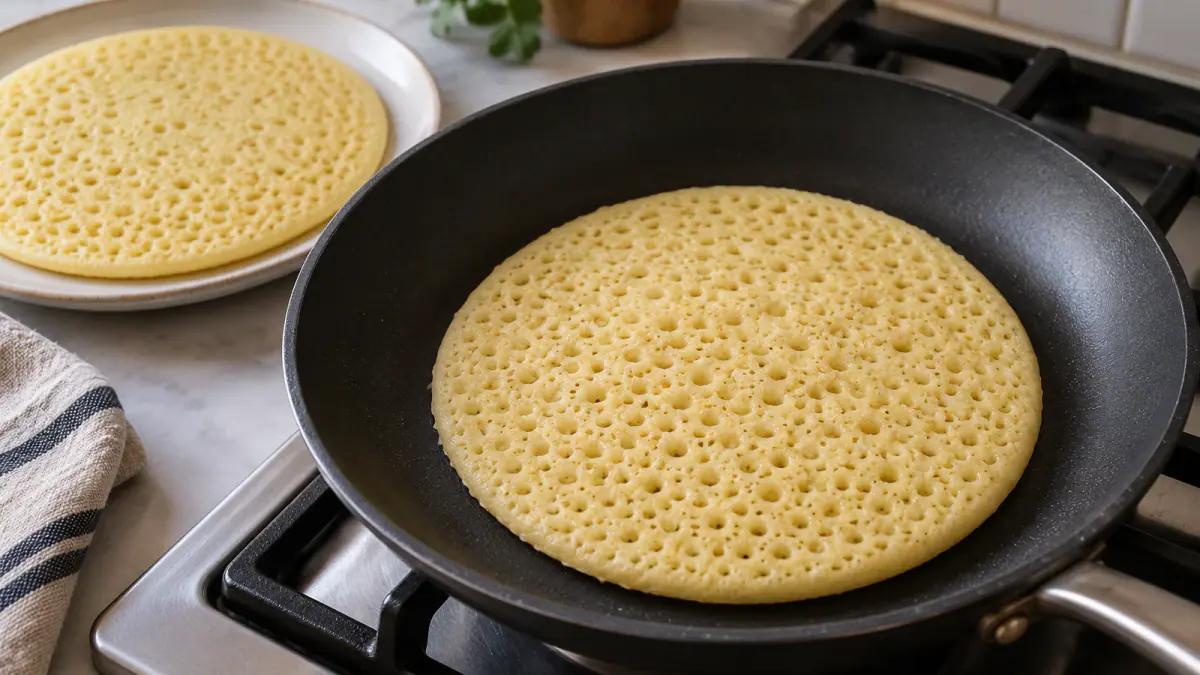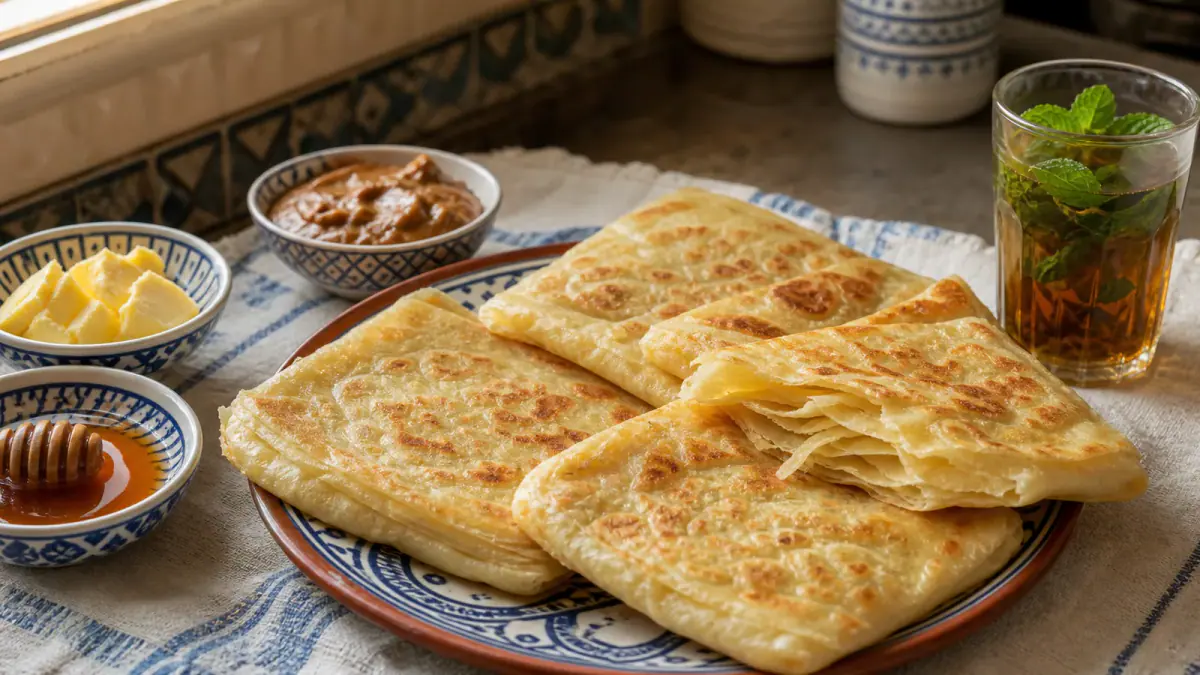
Yes, you can freeze cooked baghrir. Let the plain pancakes cool, separate them with parchment, seal them in a freezer-safe bag or container and remove only the portion you need. Reheat gently in a microwave, low oven or skillet, then add butter, honey or another topping after warming.
For the best texture, store baghrir plain rather than already soaked in a topping. The open honeycomb surface absorbs moisture easily, and condensation can make a warm stack sticky. This guide covers cooked baghrir, also spelled beghrir; it is not a method for preserving raw yeast batter.
Baghrir storage at a glance
| Situation | Practical approach | Planning window | Main texture risk |
|---|---|---|---|
| Serving later the same day | Cool, cover and keep away from heat | Use promptly | Dry edges or condensation |
| Refrigerating plain baghrir | Separate, seal airtight and refrigerate | Aim to use within 2 days for quality | A firmer, drier sponge |
| Freezing plain baghrir | Separate into usable portions and seal well | Up to 3 months, based on the cited recipe | Freezer drying |
| Storing baghrir with a perishable topping | Refrigerate promptly under leftover guidance | Depends on every ingredient | Safety and sogginess |
The two-day refrigerator target is a conservative quality plan, not a universal safety deadline. Recipe authors differ: some suggest a day or two, while general USDA guidance gives many refrigerated leftovers three to four days. Your recipe, toppings, room temperature and handling still matter. Epicurious’s baghrir recipe specifically says covered baghrir can be frozen for up to three months and offers microwave or low-oven reheating.
Cool baghrir before stacking it
Move each cooked pancake to a clean surface where air can circulate, keeping the porous face upward. Wait until no warmth or visible steam remains before packing. A warm sealed stack traps moisture, which can soften the surfaces and make them cling together.
Do not treat cooling as permission to leave a topped or filled batch at room temperature indefinitely. If the baghrir contains or is covered with a perishable ingredient, follow the safe holding time for that complete dish. The USDA’s leftover safety guidance says perishable leftovers should be refrigerated within two hours, or within one hour when the temperature is above 90°F / 32°C.
If you are still cooking the batch, avoid placing a fresh hot pancake directly onto a cold one. Use more than one cooling spot and begin packing only after the last pieces have cooled. This preserves the holes better than compressing a steaming pile.
How to refrigerate baghrir without sticking
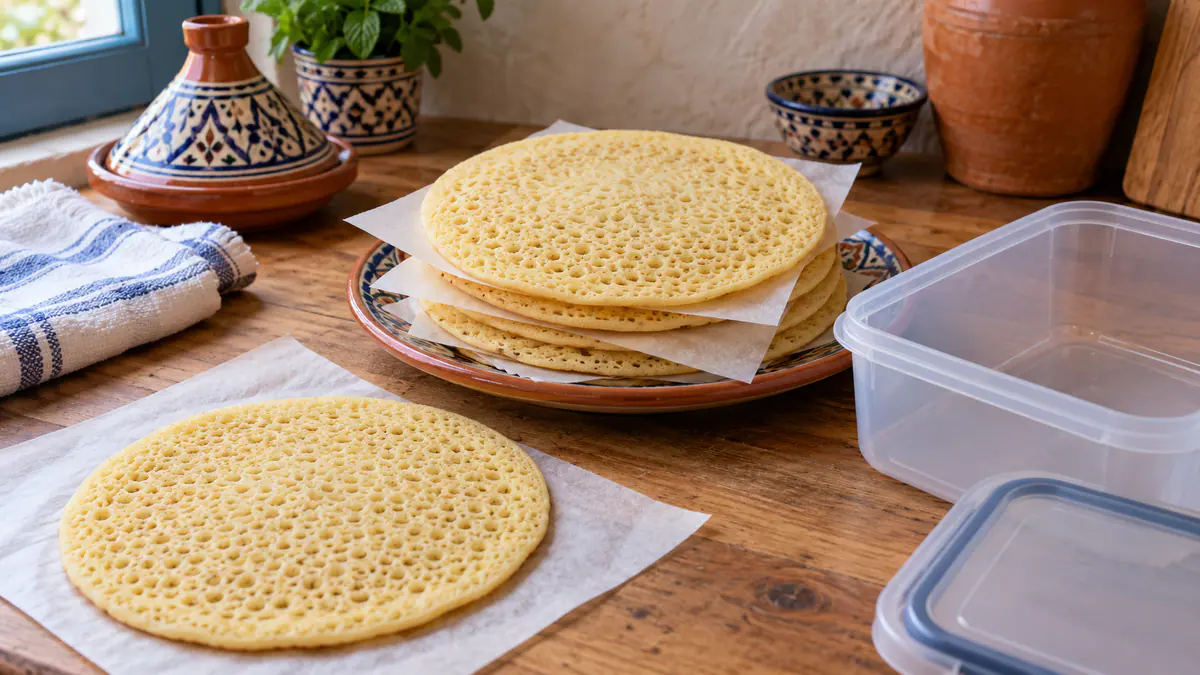
Put a piece of food-safe parchment between pancakes, especially if you want to remove them one at a time. Transfer the stack to an airtight container or well-sealed bag. A towel can protect a short-lived serving stack, but it is not an airtight refrigerator package.
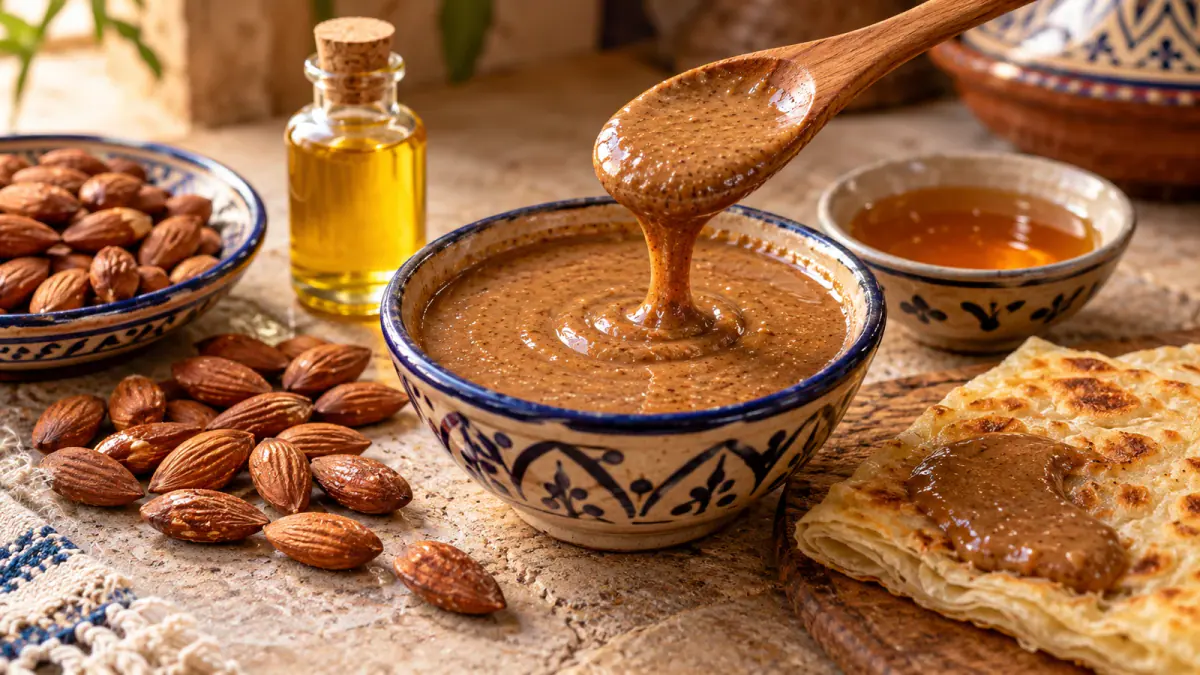
Keep butter-honey sauce, amlou, jam and other moist toppings in their own suitable containers. Separating the topping protects the porous face and lets you reheat only the pancake. Label the package with the date so you are not relying on memory.
When serving refrigerated baghrir, inspect it before reheating. Discard food with mold, an unusual odor or uncertain handling history. Warming changes temperature and texture; it does not reverse spoilage.
How to freeze baghrir step by step
- Finish cooking it fully. The top should no longer have wet batter patches.
- Cool each pancake. Keep the honeycomb side facing up and do not seal it while warm.
- Choose useful portions. Pack the number you normally serve at one breakfast rather than one unmanageable block.
- Add parchment separators. Cut sheets roughly to the size of the pancakes so an edge remains easy to lift.
- Seal out excess air. Use a freezer-safe bag or close-fitting container without crushing the pancakes.
- Date and identify the package. Note that it contains plain cooked baghrir and record the freezing date.
- Freeze flat. Once firm, the package can be repositioned without bending the delicate rounds.
Parchment is a separator, not the outer wrapping. The sealed package limits drying and protects the baghrir from odors. USDA freezing guidance explains that food kept frozen continuously remains safe indefinitely, while quality can decline during long storage. The three-month figure here is the recipe-specific quality window from Epicurious, not an expiration guarantee for every batch.
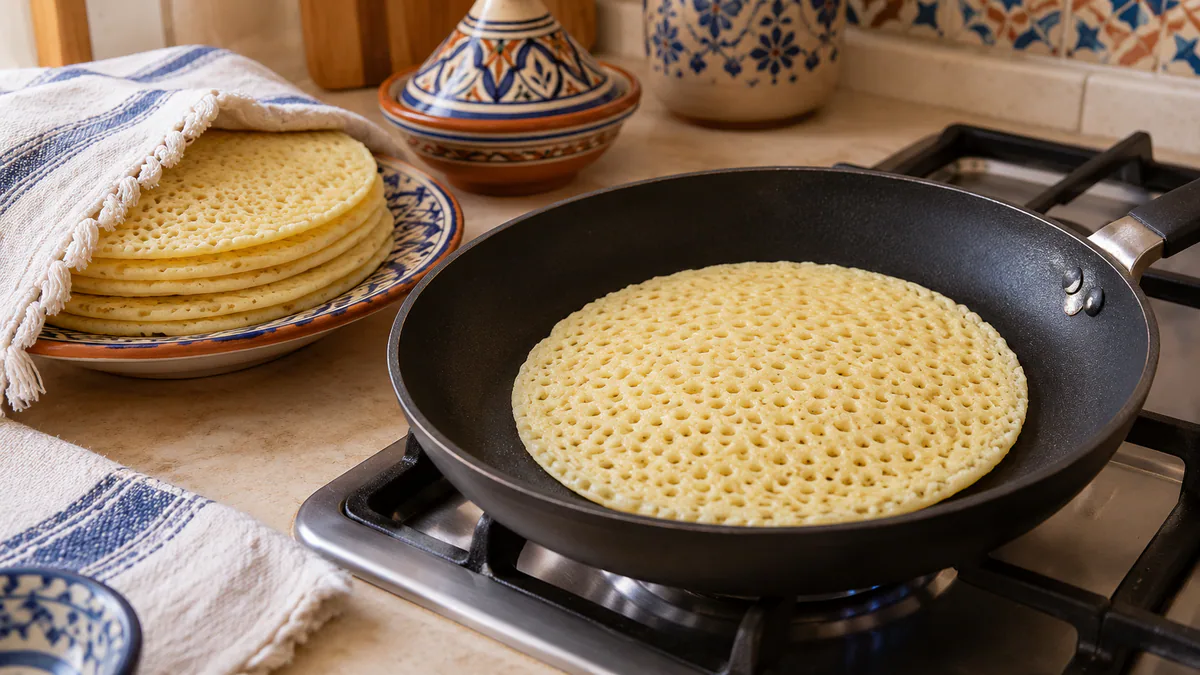
Reheat baghrir three ways
| Method | Best for | How to start | Stop when |
|---|---|---|---|
| Microwave | One or two soft pancakes | Use a microwave-safe plate, cover appropriately and heat in a short interval | Warm and flexible, not steaming dry |
| Dry skillet | One pancake with direct texture control | Use low heat with the honeycomb side upward; cover briefly if suitable | The center is warm without a crisp, dark base |
| Low oven | A larger stack | Wrap or cover the stack to limit drying and warm gently | The middle pancakes are warm |
These are method choices, not a universal timing chart. A thin fresh baghrir and a thick frozen stack will not warm at the same rate, and microwave power varies. Test one piece before reheating the whole supply.
Microwave for a soft result
Epicurious suggests about 30 seconds in a microwave, but treat that as a reference for its recipe and portion rather than a promise for yours. Begin with a short interval, check the center, then add small increments if needed. Use only microwave-safe materials and follow the appliance instructions.
A light cover can reduce drying. Do not soak the pancake first and then keep microwaving it in search of a crisp surface. Warm the plain baghrir, transfer it to the plate and add the topping there.
Use a skillet for one piece
Place one plain pancake in a dry skillet over low heat with the hole-covered side facing up. A suitable lid can help warm the top without turning the delicate face onto the pan. Check early; the underside has already been cooked and can become tough or dark before the center feels warm.
This skillet sequence is cautious editorial guidance, not a tested temperature-and-minute formula. If a frozen pancake stays cold in the middle while its underside colors, let it thaw in the refrigerator next time or use a gentler covered warming method.
Use a low oven for a stack
Epicurious recommends wrapping a stack in a clean dish towel and warming it in a low oven. Make sure any towel or covering is suitable for oven use and kept away from heating elements; otherwise use an oven-safe covered dish. Check a pancake from the middle of the stack rather than judging by the exposed top piece.
Do not copy a long bread-loaf warming time. Baghrir is thin and loses moisture quickly. Remove it when flexible and warm, then serve rather than holding it in the oven throughout breakfast.
Can you reheat baghrir from frozen?
Yes. The Epicurious method allows a quick microwave reheat or low-oven warming without specifying a separate overnight thaw. Working from frozen takes longer, so reheat a small portion and check the middle before serving.
Refrigerator thawing is also an option when you want more control over a larger stack. Keep it sealed while thawing so condensation forms on the packaging rather than drying the pancakes in open refrigerator air. Remove only the number you plan to use.
For food with a perishable filling or topping, use the relevant leftover instructions as well as this texture advice. USDA guidance calls for reheating leftovers to 165°F / 74°C and checking with a food thermometer. That temperature is a safety rule for perishable leftovers, not a claim that every plain bread must be heated that far for acceptable texture.
Common storage mistakes
| Problem | Likely cause | Better plan next time |
|---|---|---|
| Pancakes freeze into one block | No separators or packed while damp | Cool completely and place parchment between portions |
| Honeycomb surface becomes wet | Warm stack trapped condensation or topping was added early | Store plain and top after reheating |
| Edges become leathery | Package admitted air or reheating was too aggressive | Seal more closely and warm more gently |
| Underside burns before center warms | Skillet heat was too high | Lower the heat or thaw first |
| Baghrir tastes stale after warming | It was already dry or stored too long | Freeze earlier and shorten the quality window |
If the holes never formed during the first cooking, freezing will not create them. Use our baghrir no-holes troubleshooting guide for batter, resting and pan checks. Storage is only meant to preserve a fully cooked result.
Frequently asked questions
Should I freeze cooked baghrir or the batter?
Freeze the cooked pancakes unless your exact recipe provides tested instructions for its batter. Baghrir batter commonly uses yeast and may also use baking powder, so storing or freezing it can change the leavening behavior and timing.
Can I freeze baghrir with honey and butter on it?
Plain baghrir is easier to separate and reheat. Freeze the pancakes without the sauce, then prepare or warm the topping separately. This also lets you choose a different accompaniment for each portion.
Do I need parchment between every pancake?
It is the simplest way to remove one piece without bending a frozen stack. If you freeze small serving portions separately, one separator between those portions may be enough.
How long does baghrir last in the freezer?
Epicurious gives up to three months for covered baghrir. Treat that as a quality target: use airtight packaging, label the date and shorten the window if you notice drying or freezer odors.
What is the best way to reheat baghrir?
Use the microwave for softness and speed, a gently heated dry skillet for one-piece control, or a covered low oven for several pancakes. No single method is best for every preferred texture and portion.
Make the next breakfast easy
Freeze plain, fully cooled baghrir in the portions you actually use. Keep a note on the package, warm a single test piece and add toppings at the table. That gives you a repeatable routine without pretending one appliance time fits every pancake.
For serving choices, see our Moroccan breakfast guide. If you are deciding which porous bread you have, baghrir versus crumpets compares their batter, shape and cooking methods.
Sources and scope
- Epicurious: Baghrir (1,000-Hole Pancakes) — baghrir-specific freezer window and microwave/low-oven reheating suggestions.
- USDA FSIS: Leftovers and Food Safety — prompt refrigeration and reheating guidance for perishable leftovers.
- USDA FSIS: Freezing and Food Safety — general freezing, thawing and quality context.
Source review: 21 October 2026. The article does not report a kitchen test, and its texture suggestions do not replace ingredient-specific food-safety advice.