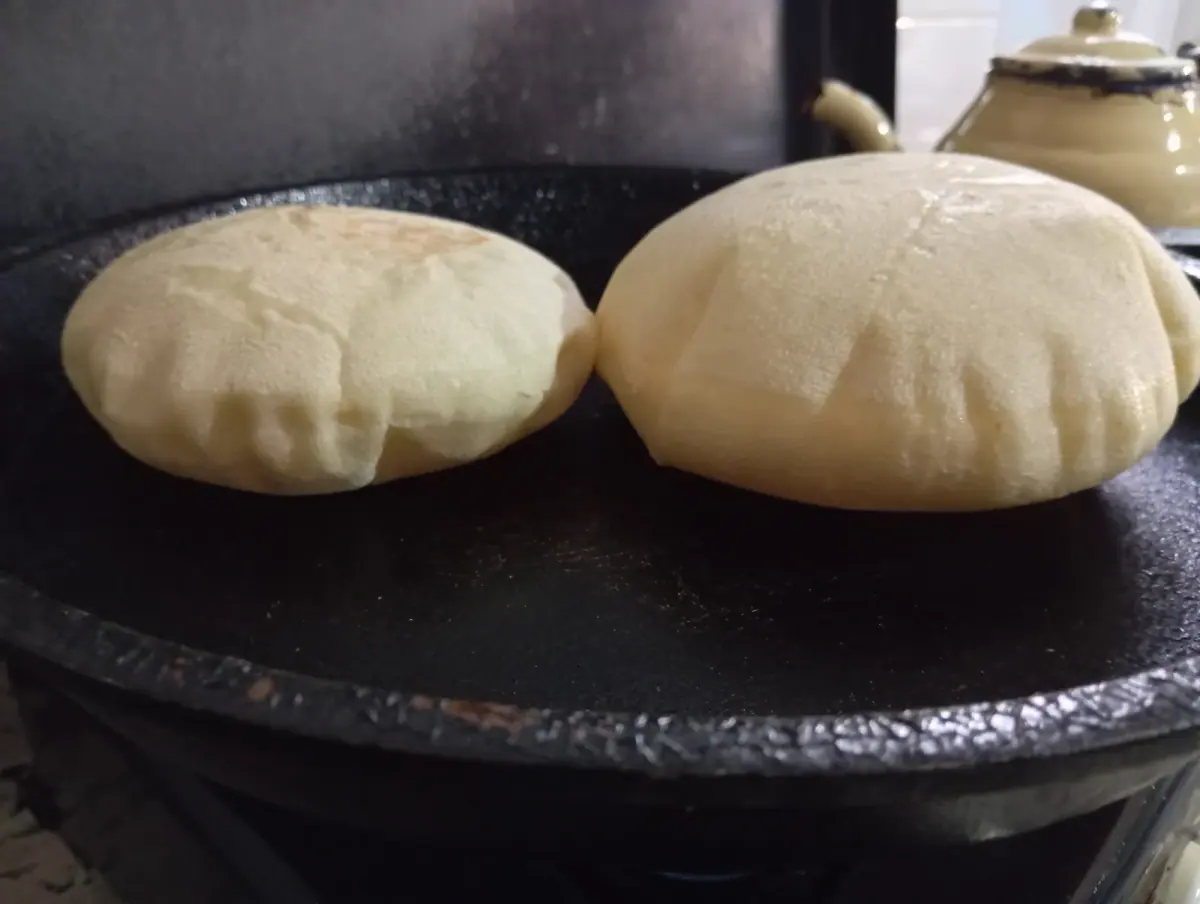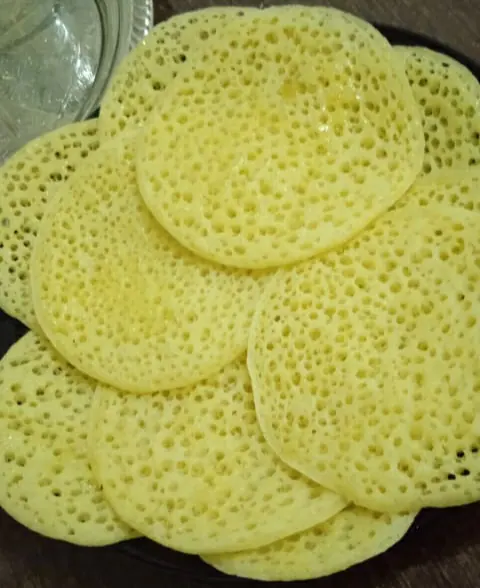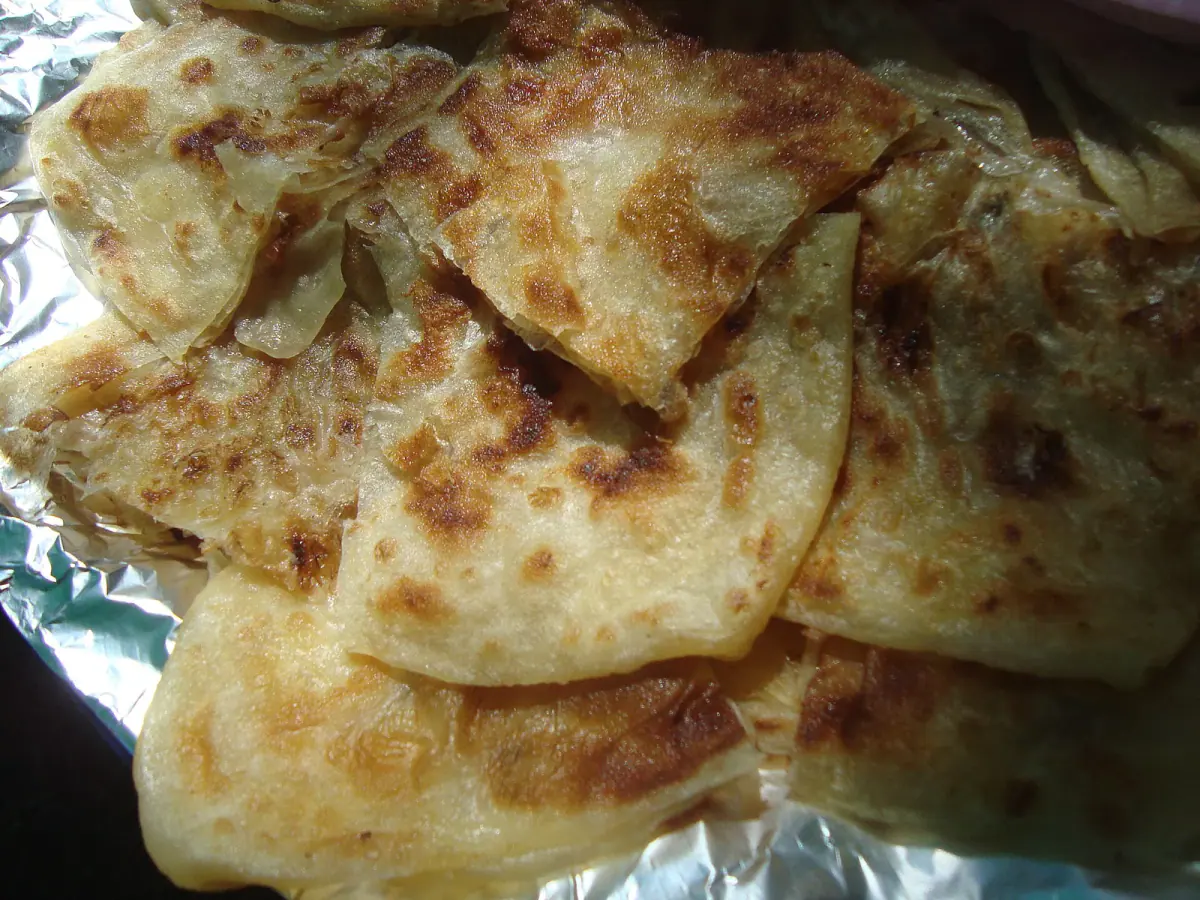
Msemen and paratha are both layered flatbreads cooked on a griddle or pan, but their usual shaping and dough traditions are different. Moroccan msemen is typically stretched very thin, lubricated with oil or butter and semolina, then folded into a square. Plain paratha is often made with whole-wheat atta, rolled and folded into a round, square or triangle, with oil or ghee between the layers. Both can be crisp outside and tender inside; neither has one compulsory recipe.
The closest point of comparison is a plain layered paratha, not every stuffed, flaky or restaurant-style variation sold under the wider paratha name. If you are choosing a recipe, follow its full ingredient list and method rather than swapping flour, water or fat by analogy.
Msemen and paratha at a glance
| What matters? | Moroccan msemen | Plain paratha |
|---|---|---|
| Common starting flour | Wheat flour with fine semolina or durum flour in many methods | Whole-wheat atta in many home-style methods; other flours also exist |
| How layers are made | A very thin sheet is oiled or buttered, dusted with semolina, then folded | Dough is rolled and folded with oil or ghee, then rolled again |
| Familiar outline | Square | Often round or triangular; shape depends on the fold |
| Cooking | Griddle or heavy pan, turned until the centre is cooked | Tawa, griddle or pan, often with fat added as it cooks |
| Typical eating experience | Thin folded layers, with a chewy centre and crisp browned spots | Layered and pliable or crisp-edged, depending on thickness and fat |
| Common place at the table | Breakfast, tea or alongside dishes such as rfissa | Breakfast, snacks or alongside curries, dals and vegetables |
The table describes common published methods, not a rulebook. Taste of Maroc’s msemen method uses white flour, fine semolina, oil and soft butter; Dassana’s plain paratha method uses whole-wheat atta and oil or ghee. A particular family recipe, café or packaged bread may work differently.
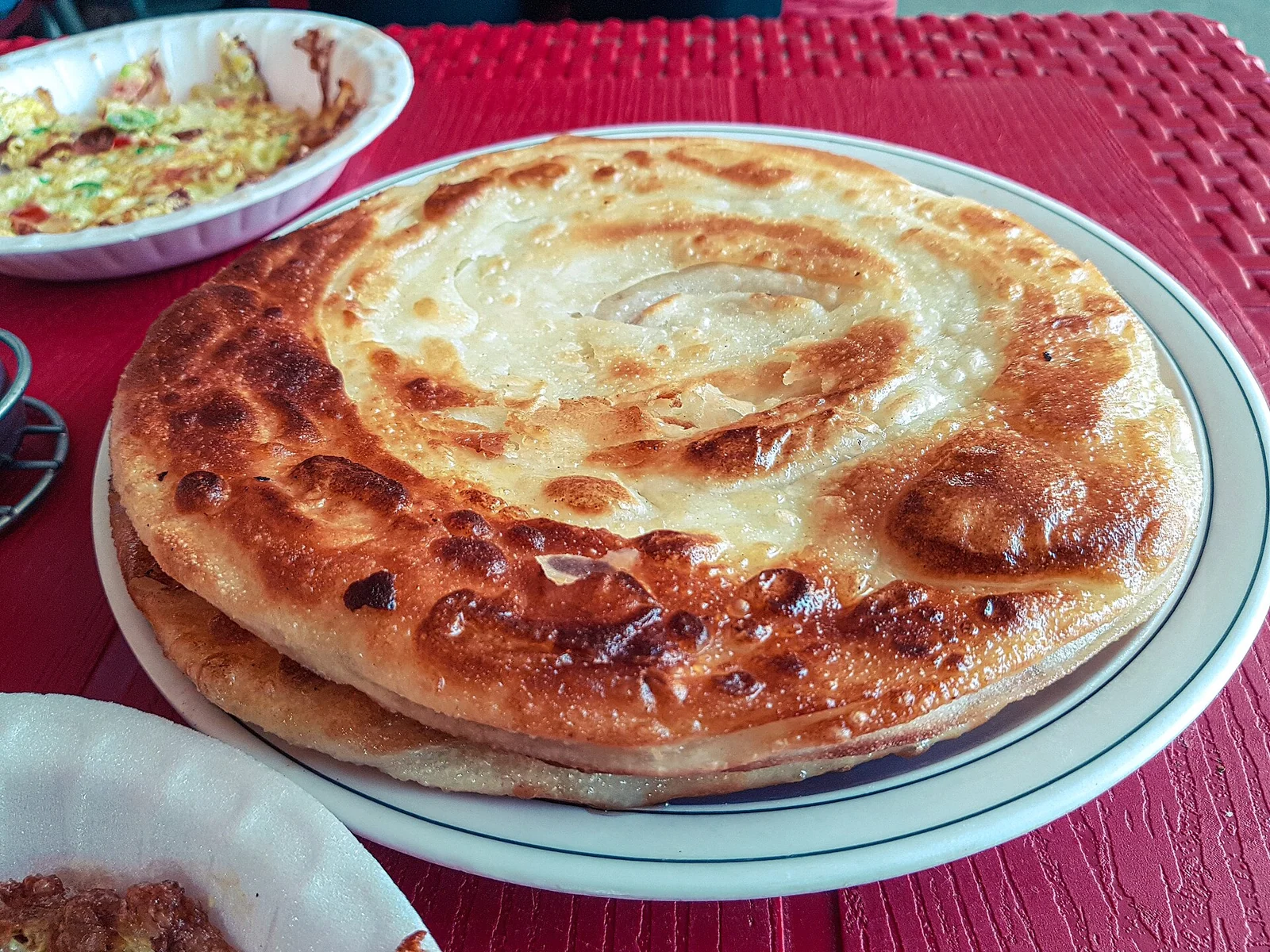
How the folds change the bread
Msemen: stretch first, then fold the thin sheet
Msemen’s defining move is stretching a rested dough ball over an oiled surface until it is very thin. In the Taste of Maroc method, the sheet receives oil, soft butter and semolina before it is folded in thirds in both directions. The final square is flattened gently and cooked on a griddle.
That process is why msemen often has many fine, close layers instead of a few bold separations. It also explains why fine semolina matters in a method that calls for it: it sits between the folds as well as appearing in the dough. Our semolina guide for Moroccan breads explains why a packet labelled simply “semolina” is not enough information to select a grind.
The square is a helpful clue, but not a quality test. A square msemen can still be thick, lightly layered or more deeply browned depending on the dough, amount of fat, resting time and heat. For the complete folding sequence, see our Moroccan msemen guide.
Paratha: roll and refold the dough
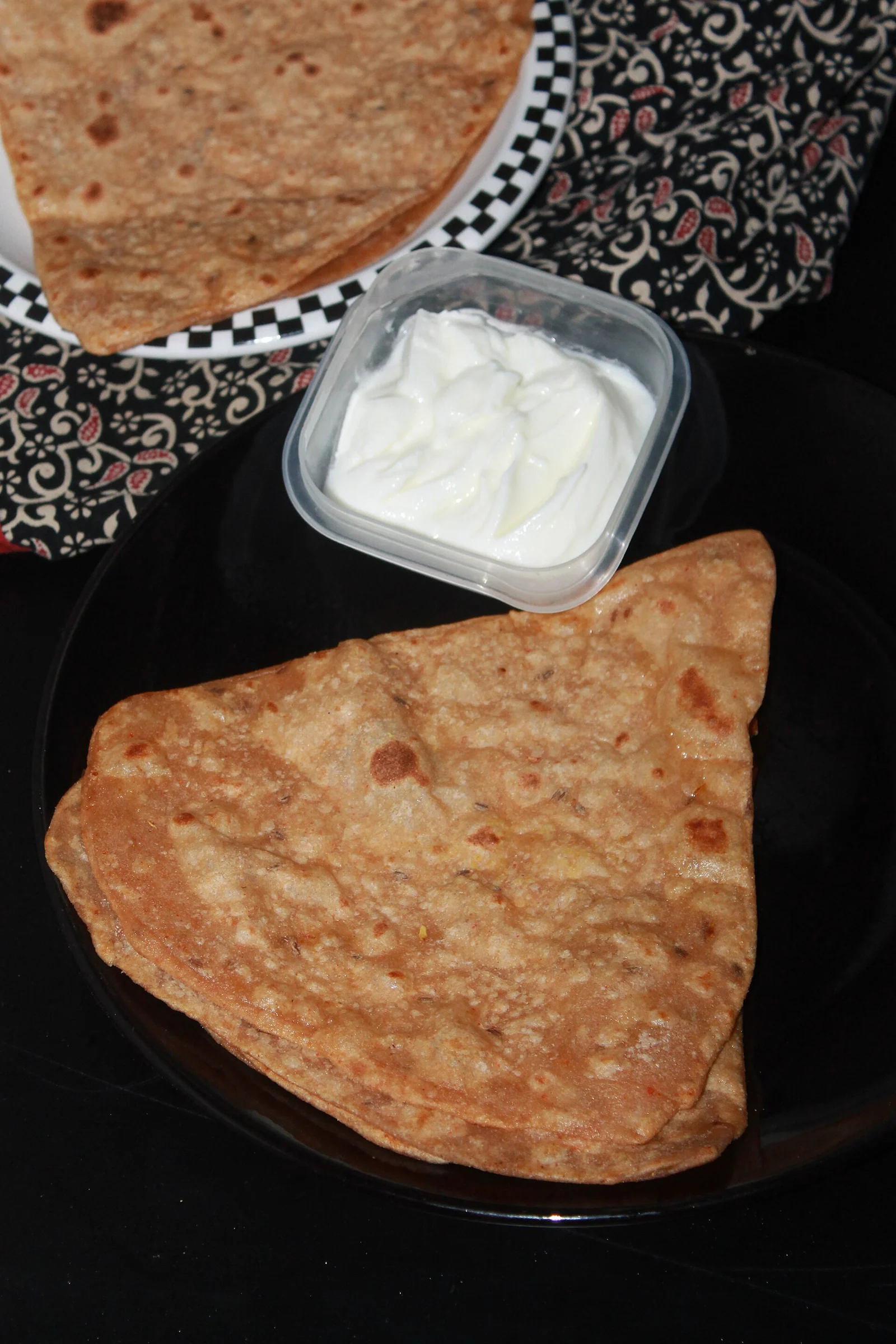
Plain paratha has many regional forms. Dassana’s method starts with whole-wheat atta dough, rolls it, applies oil or ghee and folds it into a square or triangle before rolling it again. Swasthi’s plain paratha guide likewise presents oil or ghee between folds and a triangular fold as one option. Those examples make paratha a useful comparison, but they do not cover stuffed parathas, lachha paratha or every regional name.
The visible layers can be more obvious when a triangle is folded and rolled, while a thin paratha may feel closer to a flexible everyday flatbread. Thickness and the amount of cooking fat make a major difference, so avoid a blanket claim that paratha is always richer, crispier or softer than msemen.
Dough and fat: where comparisons usually go wrong
It is tempting to reduce the difference to “semolina versus atta” or “butter versus ghee.” That shorthand misses too much.
- Msemen recipes vary. Some use all-purpose flour and fine semolina; others change the proportion, use durum flour or include a small amount of yeast. Oil and butter may appear together, but an oil-only version also exists.
- Paratha recipes vary. Whole-wheat atta is common in plain paratha, yet flour blends, all-purpose flour and stuffed versions exist. Oil and ghee are both used; a particular method tells you which one and when to add it.
- Fat is part of the structure. In both breads, it helps keep folds distinct. It is not merely a topping applied after cooking.
For a first attempt, choose one complete recipe. Keep its flour, hydration, resting and cooking instructions together. Replacing fine semolina with atta, or ghee with a different fat, can be a reasonable experiment only after you understand the original version; it is not a neutral one-for-one conversion.
Texture and serving: similar role, different instincts
Both breads can be breakfast food or part of a savoury meal. That shared role is probably why the comparison is so tempting. At the table, though, they bring different shapes and habits.
Msemen is often cut or torn into portions and served warm with honey, butter, amlou, cheese or tea. It can also sit under rfissa, where the layers absorb broth. Paratha is commonly torn and eaten with a curry, dal, vegetable dish, pickle, yoghurt or egg. Stuffed paratha makes a more self-contained meal than plain msemen, but it is a different comparison because the filling changes the dough’s job.
Neither bread needs a fixed pairing. If you have plain, freshly cooked pieces, start with a small portion of whatever you are serving. A thick, well-layered bread may suit scooping; a thinner one may be easier to fold around a bite. The exact bread on the plate matters more than the category name.
Can you substitute msemen and paratha?
Usually, you can swap them as a warm flatbread beside a meal, but not as interchangeable dough recipes. This distinction saves a lot of frustration.
For serving, either can accompany eggs, vegetables, a stew or a dip. Plan portions by size and thickness rather than counting “one bread” against “one bread.” A large paratha and a small square of msemen do not hold or absorb the same amount.
For cooking, treat a swap as a new recipe. Msemen needs dough that can stretch into a broad thin sheet without tearing. A paratha formula may be designed to roll neatly and take repeated folds. The cooking fat, pan heat and time also follow the chosen method. Use an established msemen method when you want msemen, and an established paratha method when you want paratha.
Choose by the meal you actually want
I want the thin, square Moroccan bread
Choose msemen. Allow space to stretch the dough, keep the dough balls and folded squares covered, and use a method that specifies fine semolina if it calls for it. Our msemen versus meloui comparison is useful if you are deciding between a folded square and a coiled Moroccan bread.
I want a whole-wheat flatbread for curry or dal
Choose a plain paratha recipe written for atta and your pan. Decide whether you want a round, square or triangular fold from that method; there is no need to force it into msemen’s square shape.
I have leftovers and only need something on the table
Use either as the bread accompaniment, then adapt the portions to the filling or sauce. If you have cooked msemen to keep, our freezing and reheating guide covers storage and warming separately from the dough method.
Frequently asked questions
Is msemen the Moroccan version of paratha?
They are comparable layered griddle breads, but it is clearer to call them distinct traditions than versions of one another. Their common ground is lamination and pan cooking; their usual flours, folds, shapes and meal contexts differ.
Does msemen always have semolina?
No. Fine semolina or durum flour is common in many methods, including the linked Taste of Maroc recipe, but ingredient proportions vary. Follow the formula you select instead of assuming the name gives you a fixed ratio.
Is paratha always made with ghee?
No. Many methods use ghee, oil or a choice of either. The linked plain-paratha recipes make that variation explicit. Check the actual ingredient list, especially if you are cooking for a dietary preference.
Which bread is healthier?
The names do not answer that question. Compare the recipe’s flour, added fat, serving size and what you eat with it. A plain small portion and a large stuffed bread are not equivalent meals.
Can I make msemen with paratha dough?
You can experiment, but it will not reliably produce msemen. The stretch, semolina dusting and square folds are part of the intended technique. Start with a complete msemen method if that texture is the goal.
Photograph credits and method notes
The cover is Msemmen by Juan Emilio Prades Bel, CC BY-SA 4.0. The two body photographs are credited in their captions. All are documentary photographs licensed for reuse under their linked Creative Commons licenses; they are not public-domain images. Each was resized and converted to WebP without content retouching, and the responsive derivatives retain the applicable share-alike license.
This comparison was reviewed against the linked published msemen and paratha methods on 18 November 2026. It intentionally avoids a universal recipe, tasting claim or cultural hierarchy: a better choice is the bread and method that match the meal you want to make.